I came across a story earlier this morning while reading some posts in an on-line classic TV community I belong to on Facebook. The article came from Variety magazine and it's about a revival of "The Flintstones" as a weekly animated series. The franchise began back in 1960 and ran in prime-time on ABC-TV for six seasons. It was originally meant to be an animated take-off on Jackie Gleason's series, "The Honeymooners". The producers, Bill Hanna and Joe Barbera, were legends in the animation industry and this was television's first attempt at programming an animated series in a time slot reserved for adults. The show was a hit...and it spawned numerous sequels and incarnations over the decades...all of those sequels came and went but yet the original 1960-1966 series continues airing in syndication almost 60 years later. Sheer longevity alone enables "The Flintstones" to rank along side "Tom and Jerry", "Scooby Doo", and "The Smurfs" when it comes to Hanna-Barbera's greatest franchises. I'm somewhat willing to take a look at revivals of animated cartoons but the sub-par voice acting turns me off. I'm not into reboots and I don't care for C.G.I. and so I rarely watch most modern-day "cartoons". However, once this proposed revival of "The Flintstones" becomes something of a reality and I read more about it I'll more than likely have my mind made up ahead of time based on the information that becomes available. I didn't see the word 'reboot' or the dreaded acronym 'C.G.I.' in the Variety article, though...so that right there is a good start for me.
The original voice cast has long since passed away. Alan Reed as Fred Flintstone, Jean Vander Pyl as Wilma Flintstone, Mel Blanc as both Dino and Barney Rubble, Bea Benaderet as Betty Rubble, and John Stephenson as Mr. Slate. Along the way there were replacement vocal performers. Bea, a familiar face on sitcoms who had been a familiar voice on radio, became the focal point of the CBS sitcom, "Petticoat Junction", and the increased workload caused her to step away from voicing Betty following the 1963-1964 season. She was replaced by Gerry Johnson. Alan Reed had also been a very familiar voice on radio and he returned to voice Fred Flintstone in some of the early 1970s revivals but after his death Henry Corden became the new voice of Fred starting in 1977. Henry would continue voicing Fred in numerous television specials and commercials until shortly before his own death in 2005. Gerry Johnson had been replaced as Betty in 1971 with Gay Autterson and she would remain the voice in the various television specials and limited series until 1981. She would be replaced with Julie Dees when the character resurfaced in 1986. Jean Vander Pyl voiced Wilma Flintstone starting in 1960 and she remained the official voice of Wilma until her death in 1999. Tress MacNeille took over the character's voice in 2000.
Mel Blanc voiced Barney Rubble from the series 1960 debut and remained the voice of the character through all the television specials, revivals, and television commercials until his death in 1989. Frank Welker as well as Jeff Bergman, depending on the whim of the production company, alternated as Barney Rubble for roughly the same amount of time (1990-2006 for Welker; 1990-2009 for Bergman). Kevin Michael Richardson is considered the official voice of Barney (his tenure began in 2001...so it over-lapped with productions that utilized the vocals of Frank Welker and Jeff Bergman). Mel was also credited with the yelping and barking of Dino for nearly 30 years (1960-1987) although Frank Welker provided some yelps and growls and barks in specific productions of the franchise during a 20 year period (1981-2001). There were a lot of secondary characters that shown up in the franchise and most of those recurring or one-shot characters were voiced by the principal voice actors already starring on the show. Don Messick was heard as Bamm-Bamm Rubble as well as newspaper boy Arnold...plus an assortment of incidental characters. John Stephenson voiced Mr. Slate as well as countless other incidental characters. John continued to provide the voice of the short-tempered Mr. Slate, whenever needed, well into the mid 2000s. Internet sites state that his final performance as the character arrived in 2004 for an episode of "Johnny Bravo" titled 'A Page Right Out of History'. You can see that animated short on YouTube. He passed away in 2015.
Click HERE to read the Variety article on the proposed revival of "The Flintstones".
Showing posts with label Mel Blanc. Show all posts
Showing posts with label Mel Blanc. Show all posts
Saturday, July 13, 2019

Sunday, September 30, 2018
The Flintstones: September 30, 1960...
Hello one and all...on this date in 1960 the first-ever animated series to air in prime-time made it's debut on ABC-TV. "The Flintstones" hit the airwaves as a satirical mix of contemporary life set in the prehistoric stone-age. The series is from the legendary duo, Bill Hanna and Joe Barbera, and it's based on Jackie Gleason's immortal sitcom, "The Honeymooners". The vocal cast of the original series consisted of Alan Reed as Fred Flintstone, Jean Vander Pyl as Wilma Flintstone; Mel Blanc as Dino and Barney Rubble; and Bea Benaderet as Betty Rubble. The extended voice cast consisted usually of Don Messick, Howard Morris, Hal Smith, Doug Young, and in numerous authority figure roles [including Fred's boss, Mr. Slate], John Stephenson.
The series aired for 6 seasons...it's last prime-time episode airing April 1, 1966...with a grand total of 166 episodes. The topic of pregnancy surfaced in the third season with Wilma giving birth to a baby, Pebbles. Pregnancy was certainly an unusual topic for animated cartoons of the era...and to give it an even more real life, human drama there was a story written in the 4th season about how Barney and Betty were unable to have children and so the two ultimately adopt a baby left on their door-step. The baby is super-strong and was named Bamm-Bamm (voiced by Don Messick).
There were cast changes/additions in later seasons...particularly in the role of Betty Rubble. Gerry Johnson took over the role for the final two seasons on ABC. In January 1961 on Sunset Blvd. Mel Blanc was involved in a near fatal car accident. He was in a coma for several days but eventually came out of it but spent months in a full body cast. Once the doctors felt he was able to leave the hospital he remained somewhat bed ridden in his house for several more months. His son, Noel Blanc, got the idea of having a make-shift recording studio installed in Mel's bedroom so he could continue working during his recovery. In a famed photograph from the time period Mel can be seen lying in bed with a microphone hovering above while the other three vocal performers are standing on either side of the bed with script in hand.
In five episodes from season two another vocal legend, Daws Butler, performed the role of Barney Rubble in a voice similar to Art Carney's Ed Norton. Mel had been performing the character with a much different vocalization more along the lines of the sarcastic best friend forever needling Fred's ego. Once Mel returned to the series he adopted some of the inflections that Daws installed but Mel added a much more dopier voice to it...without it being an exact replica of Ed Norton...and Mel also gave the character a distinctive laugh. The sponsor of the series in it's earliest years was Winston Cigarettes. It's been reported that when the producers and the network realized that the series was becoming increasingly popular with children the decision was made to switch advertisers from Winston to Welch's. In so doing the integrated commercials were much more family-oriented and kid friendly. You can see Winston commercials with Fred and Barney on various video sites from the early 1960s and you will also see the ignorant comments made by people completely unaware that the series original target audience were adults.
After the series ended it's original prime-time run in 1966 it eventually became a long running franchise in local syndication and on cable television. A lot of incarnations of the series popped up on Saturday morning television throughout the 1970s and 1980s in addition to the reruns of the 1960s episodes. Alan Reed, the original voice of Fred, passed away in 1977 and so the role was taken over by Henry Corden and he ended up being the voice of the character for almost 30 years thereafter in animated programming for both network and cable television as well as direct-to-video projects and dozens of television commercials for both Fruity and Cocoa Pebbles cereal. He passed away in 2005. In some of the 1980s incarnations Mel Blanc provided the voice of Captain Caveman as he previously had done in a late 1970s animated series. In these 1980's episodes Captain Caveman is without the Teen Angels from the 1970's series and it's meant to be a look at Captain Caveman's life in the stone-age before he was frozen in a block of ice and discovered by the Teen Angels millions of years later in the late 1970's. A youth-driven incarnation called "The Flintstone Kids" (1986-1988) features Captain Caveman and his son as a pair of super-heroes starring in a show that Fred, Wilma, Barney, and Betty gather around their stone-age TV to watch. Mel returned to voice the Captain while also providing the voice of Barney's father. Jean Vander Pyl remained the voice of Wilma in all the incarnations (except "The Flintstone Kids" series) until her death in 1999.
The pilot of the series was an animated short subject called The Flagstones. Interestingly all of the voices were done by Daws Butler and June Foray. When the series was picked up by ABC there were obviously major changes in store not only in vocal cast but series title. In the later years of the series stone-age caricatures of contemporary television programs and celebrities began to grace Bedrock, the fictional town where the series took place. Harvey Korman became the voice of The Great Gazoo, a tiny green alien that can only be seen by Fred, Barney, and the children. This character became the focal point of much anger and resentment but in all honesty I find the character hilarious...so I've never been on the anti-Gazoo bandwagon that exists. One of the most celebrated episodes of it's later years is when Samantha and Darrin of "Bewitched" have guest appearances. While reading this you may be wondering about "The Simpsons". That particular series has long since took over the history books when it comes to prime-time animated programs. "The Flintstones" were basically doing the same kind of things, as far as concept and satire, decades before "The Simpsons" came along, though, but it doesn't often get credit for it because the passage of time has presented "The Flintstones" more and more as a series aimed at children rather than teenagers and adults.
The series aired for 6 seasons...it's last prime-time episode airing April 1, 1966...with a grand total of 166 episodes. The topic of pregnancy surfaced in the third season with Wilma giving birth to a baby, Pebbles. Pregnancy was certainly an unusual topic for animated cartoons of the era...and to give it an even more real life, human drama there was a story written in the 4th season about how Barney and Betty were unable to have children and so the two ultimately adopt a baby left on their door-step. The baby is super-strong and was named Bamm-Bamm (voiced by Don Messick).
There were cast changes/additions in later seasons...particularly in the role of Betty Rubble. Gerry Johnson took over the role for the final two seasons on ABC. In January 1961 on Sunset Blvd. Mel Blanc was involved in a near fatal car accident. He was in a coma for several days but eventually came out of it but spent months in a full body cast. Once the doctors felt he was able to leave the hospital he remained somewhat bed ridden in his house for several more months. His son, Noel Blanc, got the idea of having a make-shift recording studio installed in Mel's bedroom so he could continue working during his recovery. In a famed photograph from the time period Mel can be seen lying in bed with a microphone hovering above while the other three vocal performers are standing on either side of the bed with script in hand.
In five episodes from season two another vocal legend, Daws Butler, performed the role of Barney Rubble in a voice similar to Art Carney's Ed Norton. Mel had been performing the character with a much different vocalization more along the lines of the sarcastic best friend forever needling Fred's ego. Once Mel returned to the series he adopted some of the inflections that Daws installed but Mel added a much more dopier voice to it...without it being an exact replica of Ed Norton...and Mel also gave the character a distinctive laugh. The sponsor of the series in it's earliest years was Winston Cigarettes. It's been reported that when the producers and the network realized that the series was becoming increasingly popular with children the decision was made to switch advertisers from Winston to Welch's. In so doing the integrated commercials were much more family-oriented and kid friendly. You can see Winston commercials with Fred and Barney on various video sites from the early 1960s and you will also see the ignorant comments made by people completely unaware that the series original target audience were adults.
After the series ended it's original prime-time run in 1966 it eventually became a long running franchise in local syndication and on cable television. A lot of incarnations of the series popped up on Saturday morning television throughout the 1970s and 1980s in addition to the reruns of the 1960s episodes. Alan Reed, the original voice of Fred, passed away in 1977 and so the role was taken over by Henry Corden and he ended up being the voice of the character for almost 30 years thereafter in animated programming for both network and cable television as well as direct-to-video projects and dozens of television commercials for both Fruity and Cocoa Pebbles cereal. He passed away in 2005. In some of the 1980s incarnations Mel Blanc provided the voice of Captain Caveman as he previously had done in a late 1970s animated series. In these 1980's episodes Captain Caveman is without the Teen Angels from the 1970's series and it's meant to be a look at Captain Caveman's life in the stone-age before he was frozen in a block of ice and discovered by the Teen Angels millions of years later in the late 1970's. A youth-driven incarnation called "The Flintstone Kids" (1986-1988) features Captain Caveman and his son as a pair of super-heroes starring in a show that Fred, Wilma, Barney, and Betty gather around their stone-age TV to watch. Mel returned to voice the Captain while also providing the voice of Barney's father. Jean Vander Pyl remained the voice of Wilma in all the incarnations (except "The Flintstone Kids" series) until her death in 1999.
The pilot of the series was an animated short subject called The Flagstones. Interestingly all of the voices were done by Daws Butler and June Foray. When the series was picked up by ABC there were obviously major changes in store not only in vocal cast but series title. In the later years of the series stone-age caricatures of contemporary television programs and celebrities began to grace Bedrock, the fictional town where the series took place. Harvey Korman became the voice of The Great Gazoo, a tiny green alien that can only be seen by Fred, Barney, and the children. This character became the focal point of much anger and resentment but in all honesty I find the character hilarious...so I've never been on the anti-Gazoo bandwagon that exists. One of the most celebrated episodes of it's later years is when Samantha and Darrin of "Bewitched" have guest appearances. While reading this you may be wondering about "The Simpsons". That particular series has long since took over the history books when it comes to prime-time animated programs. "The Flintstones" were basically doing the same kind of things, as far as concept and satire, decades before "The Simpsons" came along, though, but it doesn't often get credit for it because the passage of time has presented "The Flintstones" more and more as a series aimed at children rather than teenagers and adults.
Sunday, July 30, 2017
June Foray: 1917-2017

Some of her famed roles for those studios included Lucifer the Cat in 1950's Cinderella and several characters in Goofy and Donald Duck cartoons...and in one of those Donald Duck cartoons, 1952's "Trick or Treat", she portrayed a character named Witch Hazel (not to be confused with another character by that name...more on that, later...); she gave voice to a couple of characters named Mary in the MGM cartoons "One Cab's Family" (1952) and "Little Johnny Jet" (1953), both directed by Tex Avery. In 1955 she gave voice to the Warner Brothers character, Granny, for the first time. She replaced original voice artist, Bea Benaderet. The cartoon in which June makes her Granny debut is 1955's "Red Riding Hoodwinked" (directed by Friz Freleng; starring Sylvester and Tweety). Her next vocal appearance as Granny arrived later that same year in Friz Freleng's "This Is a Life?". In this cartoon Granny played the part of an audience member becoming increasingly disgusted/irritated with Daffy's obnoxious comments and opinions about Bugs Bunny and in a recurring visual gag she hits Daffy on the head with her umbrella several times to get him to be quiet. In the cartoon Bugs is being given the star treatment in a spoof of This Is Your Life. The following year, 1956, Warner Brothers released the Chuck Jones directed cartoon, "Broom-Stick Bunny". In this cartoon June takes over the role of Witch Hazel. The character had previously appeared in Chuck's "Bewitched Bunny" (1954) voiced by Bea Benaderet. June originally turned down the role of the Chuck Jones character of Witch Hazel because she felt he stole it from Disney. She'd voice the Chuck Jones character in three cartoons: "Broom-Stick Bunny" (1956), "A Witch's Tangled Hare" (1959); and "A-Haunting We Will Go" (1966) although the final appearance happened to be in a cartoon directed by Robert McKimson. June would next voice Witch Hazel in an episode of the Duck Dodgers series in 2003.
The same year that she took over the role of Witch Hazel (1956) she originated the roles of Knothead and Splinter in the Woody Woodpecker series. This series was released through Universal Studios, directed by Paul J. Smith, and produced by Walter Lantz. Knothead and Splinter are the niece and nephew of star character, Woody, and they're usually creating mischief...often appearing to be too smart for the villain of the episode. She voiced the siblings during all of their theatrical appearances...their first being "Get Lost" in 1956.

In time the series changed networks and title. Jumping from ABC to NBC in 1961 the series became "The Bullwinkle Show" with only slight differences. June later added the roles of Ursula and Marigold to her growing list of characters. Ursula was the mate of George, a Tarzan-like character, in Jay Ward's "George of the Jungle". In a supporting segment, Tom Slick, June voiced Tom's girlfriend, Marigold. The oddity in these characters is that, vocally, they're the same as Dudley Dorite and Nell Fenwick and yet it's not something that you actually think of when you watch the cartoons. The show is still funny but at the same time you love hearing those voices...and Jay Ward knew that.
In an interview June gave in 1987 for a Daws Butler documentary she commented that both she and Daws had performed the same voices several times for multiple characters in one session. She remarked that they recorded 5 episodes of Fractured Fairy Tales a night and they brought it to Jay's attention that she did a voice similar to Marjorie Main in 2 episodes and that Daws did his Charles Butterworth impression on several episodes in the session. After inquiring if Jay would like them to re-record the lines with different voices so there wouldn't be a feeling of sameness Jay replied that he wanted those voices. You can't fault him for that. As I watch the DVD of Season 2 of "Rocky and Bullwinkle" it never enters my mind that there's a voice similar to another character...I'm too busy grinning, giggling, or laughing to even care to notice. The same is true for Jay's other main series, "George of the Jungle".
There is another series, "Fractured Flickers", which a lot of the Jay Ward fans rate pretty high but I'm not as familiar with it because it didn't play on TV much, if at all, during my childhood (the '80s and early '90s). It's a live-action series hosted by Hans Conried in which footage of old movies (mostly silent films) are played with re-dubbed, comically-infused dialogue from June, Paul Frees, and Bill Scott. Here's an episode...June can be heard in the first re-dubbed presentation. Paul is the narrator.
June's autobiography, Did You Grow Up With Me, Too?, which you see in the photo above arrived nearly 50 years after the debut of "Rocky and His Friends". The book hit in 2009. I wrote a review of it back then and posted it on Amazon's website in addition to posting the review here on my blog. She never received any industry awards (speaking of Oscar or Emmy recognition) at the time of the book's release but several years later, in 2012, she received her first Emmy trophy at the Daytime Emmy Awards. She won for her role as Mrs. Cauldron in the CGI "The Garfield Show". At the time of her win she was 94. Speaking of industry accolades...she was instrumental in getting animation included in several awards organizations. In 1988 she received the Bob Clampett Humanitarian Award (given out during The Eisner Awards). In 1995 the organization she created in 1972, The Annie Awards, began awarding The June Foray Award. The Oscars began recognizing animated feature films on a more consistent basis starting in 2001...and a lot of that had to do with June's behind the scenes efforts at getting the Academy Awards to consider animated films in the same light as live-action films. There's drama and comedy in live-action films and there's animated films that are either dramatic or comedic...so what's the difference? In both cases you have actors (on-screen or voice-over) and you have characters (live-action or animated). In 2013 she received the Governor's Award at the Creative Arts Emmy gala. The Creative Arts Emmy Awards spotlight mostly non-traditional categories which rarely get spotlighted on the televised Prime Time Emmy Awards.

June was involved in a car accident sometime in 2015...and although she survived you could say it ended her prolific, legendary career. She never lent her voice to any animated program or video game after 2014. Her voice lives on, though, in numerous animated programs and video games. How many people, I wonder, learned through her obituary that she was the voice of Talky Tina in one of the famed episodes of "The Twilight Zone"? I knew of that fact for years but many others are probably finding it out and probably rushed to YouTube to see if they could find the episode. It's an episode titled Living Doll and it stars Telly Savalas. It originally aired November 1, 1963.
June Foray was born June Forer on September 18, 1917 and died of cardiac arrest at the age of 99 on July 26, 2017.
Thursday, February 4, 2016
Joe Alaskey: 1952-2016
I found out on social media today that voice actor, Joe Alaskey, has died at the age of 63 from cancer. Children of the 1980s (including myself) may recall Alaskey from a couple of programs that aired in syndication.
First off he appeared as the on-camera announcer/next-door neighbor on a syndicated television trivia game show titled Couch Potatoes. In a clever use of the on-camera announcer role Alaskey appeared in a living room set positioned next to the main set. Marc Summers, later of Double Dare fame on Nickelodeon, hosted Couch Potatoes. This series debuted on January 23, 1989 and aired it's final first-run episode on June 19, 1989. A daily series it amassed 100 episodes and it remained in local syndication (in reruns) until September 1989...after which it jumped to cable's USA Network and reruns aired during that channel's game show block of programming from September 11, 1989 to March 23, 1990. Alaskey departed the series near the end of the syndicated run and in his place came actor/game show emcee, Jim McKrell. Even though McKrell had a highly visible career on television and in movies he wasn't an on-camera announcer for Couch Potatoes as Joe Alaskey happened to be.
A sitcom titled Out of this World aired in syndication for four seasons (1987-1991) and a total of 96 episodes. Joe Alaskey appeared in the series as Beano Froelich starting with it's 1987 debut until the middle of Season Four in 1990 (appearing in more than 80 of the series 96 episodes). According to on-line sites Alaskey's final episode is "Marlowe Vice" (Season 4, episode 12).
It is during this time period (fall 1990) that Alaskey became more involved in voice acting for cartoons. Tiny Toon Adventures, debuting in September 1990, provided Alaskey the opportunity to originate the voice of Plucky Duck. The character is based on iconic Looney Tunes character, Daffy Duck, which Alaskey also eventually voiced following the 1989 death of Mel Blanc.
The decade of the 1990s had Alaskey providing a staggering amount of voices for all kinds of animated projects. Given my preference for a lot of classic cartoons I tended to gravitate more toward his contributions to the Looney Tunes legacy. Alaskey, more than any other, could replicate the iconic vocalizations of Mel Blanc. That is the reason I applaud the Sylvester and Tweety Mysteries series so much. Alaskey voiced both Sylvester and Tweety plus other roles. The other main cast of vocal performers included June Foray as Granny and Frank Welker as Hector. Given Joe, June, and Frank's vocal abilities they often voiced a large number of other characters, too, in addition to their main roles. Those familiar with the Nickelodeon series, Rugrats, Alaskey became the second voice of the grandfather character (Lou Pickles) starting in 1997 and lasting into the next decade.
Chuck Jones fans may recall a video series titled Timberwolf. Well, Joe Alaskey provided the voice of Thomas Timberwolf in the thirteen episode 2001 series (the last project released during Chuck's lifetime). Alaskey's next big series arrived in 2003...the entertaining Duck Dodgers...featuring contemporary exploits and adventures of the fictional Duck Dodgers (Daffy Duck), Eager Young Space Cadet (Porky Pig), and Martian Commander (Marvin the Martian). All these characters are based on a classic Merrie Melodies short titled Duck Dodgers and The 24th and a Half Century. The short, directed by Chuck Jones and released on July 25th 1953, had by 2003 become one of the signature, iconic cartoons in Warner Brothers history.
The television series more or less is an extension of the 1953 short including the debut of a new character, Martian Queen. Tom Jones performed the theme song. In 2004 Alaskey won a Daytime Emmy award for his vocal performance as Duck Dodgers.
In the latter half of the decade Alaskey kept busy providing voices on various video games and on a revival of the Rugrats franchise. During the last 5 years or so he participated in a series of Tom and Jerry direct-to-video projects (issued on DVD or Blu-Ray) but oddly enough he wasn't cast in the most recent revival of the Looney Tunes...more specifically, The Looney Tunes Show. The roles of Daffy Duck, Bugs Bunny, Sylvester and Tweety all went to Jeff Bergman even though the other voice actors and voice actresses returned to their primary Looney Tunes roles: Bob Bergen as Porky Pig, June Foray as Granny, Jim Cummings as the Tasmanian Devil, Billy West as Elmer Fudd, and Maurice LaMarche as Yosemite Sam. That particular series ran a couple of seasons (2011-2014). I'm sure if I looked through Google archives I could find articles surrounding Alaskey's non-participation but I'm not going to...probably not for awhile. His most recent work centered around the series, Murder Comes to Town. Airing on niche station Investigation Discovery Channel since January of 2014, Joe Alaskey was the narrator of the series...causing a lot of viewers to praise the similarity in narration to that of the late Paul Winfield (narrator of a similar series, City Confidential).
Joe Alaskey: April 17, 1952 - February 3, 2016.
First off he appeared as the on-camera announcer/next-door neighbor on a syndicated television trivia game show titled Couch Potatoes. In a clever use of the on-camera announcer role Alaskey appeared in a living room set positioned next to the main set. Marc Summers, later of Double Dare fame on Nickelodeon, hosted Couch Potatoes. This series debuted on January 23, 1989 and aired it's final first-run episode on June 19, 1989. A daily series it amassed 100 episodes and it remained in local syndication (in reruns) until September 1989...after which it jumped to cable's USA Network and reruns aired during that channel's game show block of programming from September 11, 1989 to March 23, 1990. Alaskey departed the series near the end of the syndicated run and in his place came actor/game show emcee, Jim McKrell. Even though McKrell had a highly visible career on television and in movies he wasn't an on-camera announcer for Couch Potatoes as Joe Alaskey happened to be.
A sitcom titled Out of this World aired in syndication for four seasons (1987-1991) and a total of 96 episodes. Joe Alaskey appeared in the series as Beano Froelich starting with it's 1987 debut until the middle of Season Four in 1990 (appearing in more than 80 of the series 96 episodes). According to on-line sites Alaskey's final episode is "Marlowe Vice" (Season 4, episode 12).
It is during this time period (fall 1990) that Alaskey became more involved in voice acting for cartoons. Tiny Toon Adventures, debuting in September 1990, provided Alaskey the opportunity to originate the voice of Plucky Duck. The character is based on iconic Looney Tunes character, Daffy Duck, which Alaskey also eventually voiced following the 1989 death of Mel Blanc.
The decade of the 1990s had Alaskey providing a staggering amount of voices for all kinds of animated projects. Given my preference for a lot of classic cartoons I tended to gravitate more toward his contributions to the Looney Tunes legacy. Alaskey, more than any other, could replicate the iconic vocalizations of Mel Blanc. That is the reason I applaud the Sylvester and Tweety Mysteries series so much. Alaskey voiced both Sylvester and Tweety plus other roles. The other main cast of vocal performers included June Foray as Granny and Frank Welker as Hector. Given Joe, June, and Frank's vocal abilities they often voiced a large number of other characters, too, in addition to their main roles. Those familiar with the Nickelodeon series, Rugrats, Alaskey became the second voice of the grandfather character (Lou Pickles) starting in 1997 and lasting into the next decade.
Chuck Jones fans may recall a video series titled Timberwolf. Well, Joe Alaskey provided the voice of Thomas Timberwolf in the thirteen episode 2001 series (the last project released during Chuck's lifetime). Alaskey's next big series arrived in 2003...the entertaining Duck Dodgers...featuring contemporary exploits and adventures of the fictional Duck Dodgers (Daffy Duck), Eager Young Space Cadet (Porky Pig), and Martian Commander (Marvin the Martian). All these characters are based on a classic Merrie Melodies short titled Duck Dodgers and The 24th and a Half Century. The short, directed by Chuck Jones and released on July 25th 1953, had by 2003 become one of the signature, iconic cartoons in Warner Brothers history.
The television series more or less is an extension of the 1953 short including the debut of a new character, Martian Queen. Tom Jones performed the theme song. In 2004 Alaskey won a Daytime Emmy award for his vocal performance as Duck Dodgers.
In the latter half of the decade Alaskey kept busy providing voices on various video games and on a revival of the Rugrats franchise. During the last 5 years or so he participated in a series of Tom and Jerry direct-to-video projects (issued on DVD or Blu-Ray) but oddly enough he wasn't cast in the most recent revival of the Looney Tunes...more specifically, The Looney Tunes Show. The roles of Daffy Duck, Bugs Bunny, Sylvester and Tweety all went to Jeff Bergman even though the other voice actors and voice actresses returned to their primary Looney Tunes roles: Bob Bergen as Porky Pig, June Foray as Granny, Jim Cummings as the Tasmanian Devil, Billy West as Elmer Fudd, and Maurice LaMarche as Yosemite Sam. That particular series ran a couple of seasons (2011-2014). I'm sure if I looked through Google archives I could find articles surrounding Alaskey's non-participation but I'm not going to...probably not for awhile. His most recent work centered around the series, Murder Comes to Town. Airing on niche station Investigation Discovery Channel since January of 2014, Joe Alaskey was the narrator of the series...causing a lot of viewers to praise the similarity in narration to that of the late Paul Winfield (narrator of a similar series, City Confidential).
Joe Alaskey: April 17, 1952 - February 3, 2016.
Tuesday, August 18, 2015
The Flintstones Comedy Show: 1980-1984...
Over the course of this year there have been several uploads on YouTube shining the spotlight on the half hour syndicated series, Flintstone Frolics. The title of this blog entry encompasses the years that The Flintstone Comedy Show happened to be on network television under a variety of titles.
 The series debut on NBC on November 22, 1980. The reason for the late start-up date is because 1980 happened to be a strike year for television writers and the 1980-1981 season didn't get underway until November (instead of the usual month of September). This particular series expanded on the concept of several Flintstones programs that had aired in the years preceding the debut of this 90 minute, Saturday morning series. During the 1979-1980 season NBC aired a half hour cartoon series titled The New Fred and Barney Show. In one of the episodes, titled "Fred and Barney Meet the Frankenstones", the ghoulish family is introduced. This happened during a September 1979 air-date. Episodes of The New Fred and Barney Show aired from February to October 1979 on NBC's Saturday morning line-up.
The Flintstone Comedy Show consisted of six segments per episode. The main segment titled The Flintstone Family Adventures contained adventures/stories similar to the 1960's episodes of The Flintstones focusing on Fred, Wilma, Barney, and Betty. Bedrock Cops is a segment that features Fred and Barney as patrolmen on prehistoric motorbikes...perhaps a spoof of the live-action series, CHiPs. In the segment Fred and Barney are aided by Shmoo, a shape-shifting glob of alien species. Their boss is Sgt. Boulder. The Pebbles, Bamm-Bamm, and Dino segment revolved around Pebbles and Bamm-Bamm solving mysteries in which Dino acted as comic relief. The segment often come across like Pebbles and Bamm-Bamm's previous series of adventures in the early '70s on The Pebbles and Bamm-Bamm Show including appearances from Moonrock, Penny, and Wiggy.
 A fourth segment, titled Captain Caveman, told the adventures of Captain Caveman's years in Bedrock before being frozen in ice and discovered millions of years later by Dee-Dee, Taffy, and Brenda in the Captain Caveman and Teen Angels series. In the 1980 series Captain Caveman is the alter-ego of Chester, a mild-mannered copy boy at The Daily Granite. Chester turns into his alter-ego, Captain Caveman, during times of crisis and danger...and is often cheered on by both Betty and Wilma (co-workers of Chester's at the paper) even though he's just as klutzy and clumsy as ever. Their boss is Lou Granite. In this series Chester's facial area is clean-shaven but after he transforms into Captain Caveman he looks as he should...covered completely in hair. This segment keeps with The Flintstones tradition of taking modern-day culture and events and placing them in a prehistoric setting. A fifth segment of the 90 minute series centered around The Frankenstones. In this segment Frank Frankenstone's been transformed from a lovable, easy-going monster into a devious and short-tempered agitator. In previous incarnations of the Frankenstone character the depictions had been more or less similar to Boris Karloff's legendary performance as The Frankenstein Monster in the Universal Studios horror movies. Ted Cassidy, and later, John Stephenson, voiced Frankenstone prior to this 1980 series. Charles Nelson Reilly became the new voice of the character and therefore the character's personality changed to match the vain, prissy, and easily annoyed characterization that Reilly was noted for. A sixth segment of the 1980 series centered on Dino...the segments having been called Dino and Cavemouse. In the segment (2 per episode) Dino and a character named Cavemouse battle one another in Tom and Jerry/Road Runner and Coyote-style adventures.
 Syndicated internationally The Flintstone Comedy Show received a different title in the form of The Flintstone Frolics. Under this title the original 6 segments from the 90 minute version that were airing in America became repackaged in 30 minute installments. This meant that each half hour broadcast of the Frolics featured 2 segments chosen at random. One episode may feature The Frankenstones and Bedrock Cops, another may feature Bedrock Cops and The Flintstone Family Adventures, another may contain a Captain Caveman adventure along side a Flintstone Family Adventures segment, etc. etc. There happened to be 11 individual episodes produced for 5 of the 6 segments during the ninety minute 1980-1981 season. As mentioned previously the Dino and Cavemouse segments had 2 chase adventures per episode for a total of 22 installments. An additional 7 ninety minute episodes aired during the 1981-1982 season. In total 5 of the 6 segments added up to 18 episodes each. Dino and Cavemouse enjoyed a total of 44 segments during that same period. The Flintstone Comedy Show series, in America, left the NBC Saturday morning line-up on September 11, 1982 but the segments continued to air...
As international audiences seen the program as The Flintstone Frolics a different re-packaged, half hour series aired in America beginning on September 18, 1982 on NBC under the title of The Flintstone Funnies.
 As you can see from the title card the series spotlighted the segments originally seen on the 90 minute series. Like the Frolics incarnation overseas, the domestic Flintstone Funnies randomly aired segments of the 90 minute series out of sequential order in a 30 minute time-slot on NBC. This meant that segments produced in 1980 and 1981 aired back-to-back in most half hour installments. This Saturday morning re-packaged series aired on NBC until September 8, 1984. It would be the last time The Flintstones and The Rubbles appeared on network television as adults...ABC aired The Flintstone Kids (1986-1988)...and that series marked the last time The Flintstones and it's related characters appeared on network television in a series (moving to reruns on cable-TV over the next 25+ years). The characters of Fred and Barney continued to air on network TV in the form of commercials for Pebbles cereal throughout much of the 1990s.
The voice cast for the original 90 minute series is rather large as you could imagine. Henry Corden starred as the voice of Fred Flintstone; Mel Blanc also starred as Barney Rubble, Dino, and Captain Caveman; Jean Vanderpyl starred as Wilma Flintstone; Gay Autterson starred as Betty Rubble and Wiggy; Russi Taylor voiced Pebbles Flintstone and Cavemouse; Michael Sheehan voiced Bamm-Bamm Rubble; John Stephenson voiced numerous characters but his main one happened to be Mr. Slate. Also in the cast...Don Messick as Bad Luck Schleprock. Frank Welker as Shmoo and Rockjaw. Lennie Weinrib as Moonrock and Sgt. Boulder. Charles Nelson Reilly as Frank Frankenstone, Ruta Lee as Hidea Frankenstone, Zelda Rubenstein as Atrocia Frankenstone, Paul Reubens as Freaky Frankenstone, Kenneth Mars as Lou Granite, and Mitzi McCall as Penny.
30 minute episodes of the repackaged 90 minute series are on YouTube at the moment. Unfortunately the person that uploaded the episodes has the wrong titles posted for whatever reason. For example there's an upload called "The Ghost Sitters Sands of Saharastone" (which isn't even a title of any of the segment episodes!) but the 2 segments that appear on that upload are "A Night on the Town" (a Frankenstones segment) and "Monster Madness" (a Pebbles, Bamm-Bamm, and Dino segment). You can see that episode HERE. Count Rockula, in that episode, is voiced by Don Messick. I uploaded that one because it's got the best audio, so far, of the other uploads available.

The Flintstone Comedy Show consisted of six segments per episode. The main segment titled The Flintstone Family Adventures contained adventures/stories similar to the 1960's episodes of The Flintstones focusing on Fred, Wilma, Barney, and Betty. Bedrock Cops is a segment that features Fred and Barney as patrolmen on prehistoric motorbikes...perhaps a spoof of the live-action series, CHiPs. In the segment Fred and Barney are aided by Shmoo, a shape-shifting glob of alien species. Their boss is Sgt. Boulder. The Pebbles, Bamm-Bamm, and Dino segment revolved around Pebbles and Bamm-Bamm solving mysteries in which Dino acted as comic relief. The segment often come across like Pebbles and Bamm-Bamm's previous series of adventures in the early '70s on The Pebbles and Bamm-Bamm Show including appearances from Moonrock, Penny, and Wiggy.


As international audiences seen the program as The Flintstone Frolics a different re-packaged, half hour series aired in America beginning on September 18, 1982 on NBC under the title of The Flintstone Funnies.

The voice cast for the original 90 minute series is rather large as you could imagine. Henry Corden starred as the voice of Fred Flintstone; Mel Blanc also starred as Barney Rubble, Dino, and Captain Caveman; Jean Vanderpyl starred as Wilma Flintstone; Gay Autterson starred as Betty Rubble and Wiggy; Russi Taylor voiced Pebbles Flintstone and Cavemouse; Michael Sheehan voiced Bamm-Bamm Rubble; John Stephenson voiced numerous characters but his main one happened to be Mr. Slate. Also in the cast...Don Messick as Bad Luck Schleprock. Frank Welker as Shmoo and Rockjaw. Lennie Weinrib as Moonrock and Sgt. Boulder. Charles Nelson Reilly as Frank Frankenstone, Ruta Lee as Hidea Frankenstone, Zelda Rubenstein as Atrocia Frankenstone, Paul Reubens as Freaky Frankenstone, Kenneth Mars as Lou Granite, and Mitzi McCall as Penny.
30 minute episodes of the repackaged 90 minute series are on YouTube at the moment. Unfortunately the person that uploaded the episodes has the wrong titles posted for whatever reason. For example there's an upload called "The Ghost Sitters Sands of Saharastone" (which isn't even a title of any of the segment episodes!) but the 2 segments that appear on that upload are "A Night on the Town" (a Frankenstones segment) and "Monster Madness" (a Pebbles, Bamm-Bamm, and Dino segment). You can see that episode HERE. Count Rockula, in that episode, is voiced by Don Messick. I uploaded that one because it's got the best audio, so far, of the other uploads available.
Monday, December 22, 2014
Jack Benny at 40...Situations and Conversations...
Listen...do you hear anything? Silence...that's one of the more
unusual punchlines in all of comedy. Jack Benny used silence to great
advantage...and he also used characterization to great advantage too.
 Do you remember the first time you heard of Jack Benny? Are you among those that discovered him in the decades after his death? Did
you witness his career first hand and do you remember the time he had a
weekly television series? Are you among the age group that remembers
hearing Jack Benny on radio each Sunday night at 7? Going further back,
do you know of anybody that remembers Jack Benny as a performer in
Vaudeville? This week marks something sad in American
comedy...something that happened 40 years ago this week on December 26, 1974. That
is the day the physical world lost Jack Benny at the age of 80. His
television and radio programs, movies, magazine articles and books about
him, and a host of documentaries about his life and career have kept him 'alive' in the time since. I became aware of Jack Benny through my grandfather. I used to spend the weekends with my grandparent's and every Sunday morning on the local PBS station my grandfather would be up watching reruns of Jack's program. I'd watch out of curiosity, at first, but even at that young of an age I had some sort of an attachment to classic TV and I still can't easily explain the reason for it.
Do you remember the first time you heard of Jack Benny? Are you among those that discovered him in the decades after his death? Did
you witness his career first hand and do you remember the time he had a
weekly television series? Are you among the age group that remembers
hearing Jack Benny on radio each Sunday night at 7? Going further back,
do you know of anybody that remembers Jack Benny as a performer in
Vaudeville? This week marks something sad in American
comedy...something that happened 40 years ago this week on December 26, 1974. That
is the day the physical world lost Jack Benny at the age of 80. His
television and radio programs, movies, magazine articles and books about
him, and a host of documentaries about his life and career have kept him 'alive' in the time since. I became aware of Jack Benny through my grandfather. I used to spend the weekends with my grandparent's and every Sunday morning on the local PBS station my grandfather would be up watching reruns of Jack's program. I'd watch out of curiosity, at first, but even at that young of an age I had some sort of an attachment to classic TV and I still can't easily explain the reason for it.
 Do you have a favorite cast member? Excluding it's star, Jack Benny, which other cast member ranks high on your list? Jack had a small regular cast and a large recurring/ensemble cast made up of character actors and actresses. The main cast during much of it's radio run during it's golden period happened to be: Jack Benny, Mary Livingstone, Eddie 'Rochester' Anderson, Don Wilson, Dennis Day, and Phil Harris. Some of the ensemble cast included the likes of: Mel Blanc, Frank Nelson, Artie Auerbach, Sam Hearn, Benny Rubin, Verna Felton, Bea Benaderet, Sara Berner, Joseph Kearns, Sheldon Leonard, Barbara Pepper, among others. Phil Harris left the radio cast in 1952 (after 16 seasons) and his spot was taken over by Bob Crosby for the remaining 3 seasons of the radio program. Bob later appeared, infrequently, on Jack's television program. One of his most notable episodes being the one guest starring Humphrey Bogart.
Do you have a favorite comic device? Jack's on-air cheapskate character became so believable that some felt he truly did have a moat, alligators, falling knives, a vault, and a security guard in his basement protecting the fortune. It also helped that Jack embellished and played up this character trait in numerous personal appearances on talk shows and on other comedian's programs (such as Burns and Allen, The Fred Allen Show, and The Red Skelton Show).
In one radio episode it's revealed that Jack loves money so much he kept a stack of Confederate money in his vault just in case there's another Civil War. Jack remarks to himself, as he's eying his millions, that if the South would've won he'd have been a billionaire.
Are you familiar with the running gag of his age being 39? It stopped at 39...and a lot of blogs and other fan-created offerings include "39" somewhere in their tributes and salutes as an in-joke. In my blog title I chose to use "40" because this marks the 40th anniversary of his 1974 death.
Did you know that he really didn't live right next door to Ronald and Benita Colman? On radio the couple made several visits and portrayed themselves as living right next door to Jack...he was always inviting himself to their upper-class dinners or their other high society gatherings. Even on episodes that didn't feature Ronald and Benita, in person, Jack often referred to them as his next door neighbors and counted them among his most loyal friends (comments like that brought in huge laughs due to Jack's obliviousness to the Colman's real feelings.)
As you can tell these are comical situations...requiring the zero use of one-liners or actual joke telling to induce laughter. It's been said that Jack's radio format featured the first known use of the elements that make up a conventional sitcom (an abbreviation for situation comedy).
I have several books about Jack's life and career. The oldest one is the book that his manger, Irving Fein, wrote entitled, Jack Benny: An Intimate Biography, published in 1976...
 One of the ironies of life are critics. One of the funniest things, to me, are the consistent criticisms by those that read whatever it happens to be pertaining to Jack Benny and then proceed to criticize some publication for either being overly critical and negative or being glossed over and positive. Such polarizing feelings are largely because of how passionate one happens to be about Jack's career. Having said that it must be brought up that the authors of the books are not exactly movie or television critics. In the case of Irving Fein, he happened to be Jack's manager and therefore his style of storytelling and his recollections are largely going to center around his personal, first-hand experiences dealing with Jack and the Hollywood establishment and his recollections are going to be business-oriented but at the same time relay information about Jack's career, too. The book has a photograph section...and yes, some of the photo's I've not seen become available on-line and so this book continues to be the only place to find some of these images. I wrote a book review in January 2004 on Amazon and if you're interested in reading it here's the LINK. That must have been several weeks or months after I had purchased the book.
 After the 1975 book, the second oldest is the book that Joan Benny authored titled Sunday Nights at Seven: The Jack Benny Story. This particular book came along in 1990. I got my hands on a copy much later than that. I got onto the internet for the first time in 2002 and so I arrived to the on-line world nearly 10 years after it's explosion in popularity in the mid-late '90s. One of the first places I became a member of happened to be an on-line auction site. One of the first items I purchased was this 1990 half biography/half memoir. Joan Benny (daughter of Jack and Mary) wrote a majority of this book but it includes pages of memories and recollections from her father...meant for an autobiography that never materialized during Jack's lifetime. The book is entertaining, revealing, and in some places very opinionated. Some of the more intimate among Jack's circle of celebrity friends had some disagreements with some of the depictions of Mary, as seen through Joan's remembrances, and some felt the story didn't do much to bolster Jack's legacy but those familiar with the book all seemed to agree that the greatest parts of the book are the passages from Jack Benny circa the early 1960s. The title comes from Jack's long-running time slot on radio.
 This rare, one of a kind book is something I often mention during moments like this when I salute Jack Benny but I don't believe I've ever posted an image of it on-line before!?! It's been in my possession for probably as long as the other books...since the mid 2000s. This one is a great reference book. It's called Jack Benny: The Radio and Television Work. It's publication year is 1991 and it's by The Museum of Television and Radio. This may not be a book that's entirely appreciated by the masses but it's great for those like myself who like to read about Jack's radio and television appearances and learn about specific air-dates, network affiliation, sponsors, cast line-ups, and guest stars. I snapped a picture of the back of the book, too. On page 128 the famed mock feud with Fred Allen is dissected, nearly episode by episode, starting in the mid '30s and going forward. The book is broken into various sections and segments...presumably each section being written by a member of the Museum at the time of the book's publication. There are fabulous pictures of Jack and the rest of the gang from the radio and television years. The book has a passage from William S. Paley (former CBS President), Robert Batscha (Museum President), and a Foreword by Larry Gelbart (comedy writer primarily known for M*A*S*H).
As a kid the thing that stood out the most for me is that among the Jack Benny cast was Mel Blanc (voice of many cartoon characters...Bugs Bunny being the most popular).
 Mel Blanc, in character as Professor LeBlanc, is filled with annoyance and extreme hostility and contempt for Jack's expertise (?) at the violin. Professor LeBlanc and Jack had a signature comic routine built around a violin lesson. In the routine Jack would play a series of notes, half good, and the Professor would sing comical insults about Jack's playing. Here's one I made up...if you are familiar with the melody sing-a-long with LeBlanc: "Tune the strings a little higher -- You're no Heifetz I'm no Liar". Professor LeBlanc is just one of the many characters that Mel Blanc portrayed on Jack's radio and television programs. Aside from the Professor, one of Mel's most famous characters is Sy, a Mexican from Tijuana. In the comic routine Jack and Sy exchanged greetings...actually, Jack did most of the talking while Mel's character delivered one word responses. As usual, Jack played the straight man to Mel's antics. In fact, while known for being a comedic icon, Jack often played the straight man during many of the sketches and monologues. He didn't deliver rapid fire jokes or tell one-liners or delve into topical humor. Jack's humor is rooted in situations and conversations...hmmm, let's see...doesn't the phrase 'Situations and Conversations' sound like a great title for a seminar on Jack Benny??. No? Okay then...it'll remain part of the blog entry's title.
 On radio and later, on TV, Mel Blanc made annual appearances during the Christmas episodes. Often cast as a sales clerk, Mel's character at the start of the episode is happy, calm, pleasant, and eager to help any customer. Jack purchases a gift...simple enough...but here's where the comedy comes in: Jack constantly changes his mind over what to buy a cast member for Christmas (usually announcer Don Wilson). Each time he visits Mel he either exchanges a gift for something else or he's forgotten to sign the gift card or he's written something on a gift card that he has since changed his mind about. Each and every time Mel has to catch the delivery man and retrieve the gift, Jack makes his changes, and off it goes to the delivery room once more...ready to be mailed out. Moments later, Jack would make another visit to Mel's counter. Visibly angered and near tears, Mel already prepares himself for Jack's inevitable wish to change something about the gift...and off he goes to the delivery room to try and catch the delivery driver before the truck takes off.
This remains one of several must-see memorials that aired following Jack's death 40 years ago. This one is hosted by Charles Kuralt and it features many appearances of Jack's radio and TV co-stars and peers.
Kelsey Grammer hosted a nice tribute to Jack in 1995...

Jack Benny and Frank Nelson bicker and converse about an upcoming airplane flight. Given that the routine takes place later in the episode, for those that hadn't seen the beginning, you aren't going to get the joke that Frank delivers near the end of his scene...
In the collage below there's Jack and character actor Charlie Cantor. He played various dimwit characters on Jack's radio and television programs; earlier he portrayed Socrates Mulligan in the original version of Allen's Alley on Fred Allen's radio program; most famously portrayed Clifton Finnegan on Duffy's Tavern. In the photo in the top right is Dennis Day (the program's tenor singer). Then it's the program's long-time announcer, Don Wilson, and next to Don is the orchestra leader, Phil Harris. Phil has a second appearance in the bottom row featuring his wife, Alice Faye. Lastly there's Jack and the Colman's reading over a script.

Amidst those highly entertaining figures that became associated with Jack Benny there is one cast member that you couldn't do a salute to Jack Benny without having this person mentioned somewhere...and that person is Eddie "Rochester" Anderson. For pretty much the length of the Jack Benny run on American entertainment, both on radio and on TV from the early 1930s through the early 1970s, Rochester typically had his share of on-air time and later, screen time...often poking fun at his boss' reputation for being cheap and refusing to purchase a modern-day car. Rochester acted as Jack's butler, chauffeur, cook, and tended to the outside chores (gardening, mowing the yard, etc. etc.). I believe Rochester also as in charge of keeping Jack's various pets fed: Carmichael the Polar Bear and Polly the Parrot (both voiced by Mel Blanc) and the alligators in the basement. Rochester always had a comical zinger to deliver and his scenes often ended with those. His exposure increased more and more in the television years as the setting became much more of a traditional, domesticated sitcom. On radio, since the Rochester character worked at Jack's house, he wasn't written to be a part a part of Jack's celebrity world and the only times Rochester would be heard interacting with Dennis Day or Phil Harris, for example, is if they visited Jack's house. The program had a show-within-a-show format. Scenes involving Rochester took place at Jack's house.
This by no means is meant to be a career retrospective or a life story of Jack Benny. If you are interested in his career, check out the various books that I made mention of and above all else check out the actual radio and television programs that Jack Benny starred in. His radio programs ran on radio for 23 years, 1932-1955. His television programs ran on TV for 15 years, 1950-1965. After this, Jack made several special one hour programs throughout the rest of the decade and into the early part of the 1970s before he became too ill to perform. Notable products attached to his program through the decades: Chevrolet, General Tire, Jell-O, Grape Nuts/Grape Nuts Flakes, Lucky Strike.
Jack Benny died on December 26, 1974 at the age of 80 due to complications from Pancreatic Cancer. He was buried on December 29, 1974...ironically on a Sunday...
Do you have a favorite comic device? Jack's on-air cheapskate character became so believable that some felt he truly did have a moat, alligators, falling knives, a vault, and a security guard in his basement protecting the fortune. It also helped that Jack embellished and played up this character trait in numerous personal appearances on talk shows and on other comedian's programs (such as Burns and Allen, The Fred Allen Show, and The Red Skelton Show).
In one radio episode it's revealed that Jack loves money so much he kept a stack of Confederate money in his vault just in case there's another Civil War. Jack remarks to himself, as he's eying his millions, that if the South would've won he'd have been a billionaire.
Are you familiar with the running gag of his age being 39? It stopped at 39...and a lot of blogs and other fan-created offerings include "39" somewhere in their tributes and salutes as an in-joke. In my blog title I chose to use "40" because this marks the 40th anniversary of his 1974 death.
Did you know that he really didn't live right next door to Ronald and Benita Colman? On radio the couple made several visits and portrayed themselves as living right next door to Jack...he was always inviting himself to their upper-class dinners or their other high society gatherings. Even on episodes that didn't feature Ronald and Benita, in person, Jack often referred to them as his next door neighbors and counted them among his most loyal friends (comments like that brought in huge laughs due to Jack's obliviousness to the Colman's real feelings.)
As you can tell these are comical situations...requiring the zero use of one-liners or actual joke telling to induce laughter. It's been said that Jack's radio format featured the first known use of the elements that make up a conventional sitcom (an abbreviation for situation comedy).
I have several books about Jack's life and career. The oldest one is the book that his manger, Irving Fein, wrote entitled, Jack Benny: An Intimate Biography, published in 1976...
As a kid the thing that stood out the most for me is that among the Jack Benny cast was Mel Blanc (voice of many cartoon characters...Bugs Bunny being the most popular).
This remains one of several must-see memorials that aired following Jack's death 40 years ago. This one is hosted by Charles Kuralt and it features many appearances of Jack's radio and TV co-stars and peers.
Kelsey Grammer hosted a nice tribute to Jack in 1995...
Jack Benny and Frank Nelson bicker and converse about an upcoming airplane flight. Given that the routine takes place later in the episode, for those that hadn't seen the beginning, you aren't going to get the joke that Frank delivers near the end of his scene...
In the collage below there's Jack and character actor Charlie Cantor. He played various dimwit characters on Jack's radio and television programs; earlier he portrayed Socrates Mulligan in the original version of Allen's Alley on Fred Allen's radio program; most famously portrayed Clifton Finnegan on Duffy's Tavern. In the photo in the top right is Dennis Day (the program's tenor singer). Then it's the program's long-time announcer, Don Wilson, and next to Don is the orchestra leader, Phil Harris. Phil has a second appearance in the bottom row featuring his wife, Alice Faye. Lastly there's Jack and the Colman's reading over a script.
Amidst those highly entertaining figures that became associated with Jack Benny there is one cast member that you couldn't do a salute to Jack Benny without having this person mentioned somewhere...and that person is Eddie "Rochester" Anderson. For pretty much the length of the Jack Benny run on American entertainment, both on radio and on TV from the early 1930s through the early 1970s, Rochester typically had his share of on-air time and later, screen time...often poking fun at his boss' reputation for being cheap and refusing to purchase a modern-day car. Rochester acted as Jack's butler, chauffeur, cook, and tended to the outside chores (gardening, mowing the yard, etc. etc.). I believe Rochester also as in charge of keeping Jack's various pets fed: Carmichael the Polar Bear and Polly the Parrot (both voiced by Mel Blanc) and the alligators in the basement. Rochester always had a comical zinger to deliver and his scenes often ended with those. His exposure increased more and more in the television years as the setting became much more of a traditional, domesticated sitcom. On radio, since the Rochester character worked at Jack's house, he wasn't written to be a part a part of Jack's celebrity world and the only times Rochester would be heard interacting with Dennis Day or Phil Harris, for example, is if they visited Jack's house. The program had a show-within-a-show format. Scenes involving Rochester took place at Jack's house.
 |
| "Okay Boss...Pay Up..." |
Jack Benny died on December 26, 1974 at the age of 80 due to complications from Pancreatic Cancer. He was buried on December 29, 1974...ironically on a Sunday...
 |
| Jack Benny: 1894-1974 |
Friday, May 24, 2013
Bugs Bunny: Superstar

This is a must-have documentary in my opinion. If this will be your first time seeing this documentary, but you've seen the various Behind the Tunes features on the Golden Collection series, then this 1975 Superstar documentary will perhaps perplex or confuse most of you. Why? It's because of a lot of the information from Clampett in the Superstar documentary has either been dismissed or shown to be partly true.
Now, of course, armed with a lot more knowledge of the cartoons and the behind the scenes information that we have access to today, it may make watching the Superstar documentary cringe-worthy to some but if you simply want to see a few of the legendary cartoon directors speak of their cartoons as well as see 9 full length cartoons...in addition to hearing the audio from the film maker, Larry Jackson...plus hear Orson Welles narrate...this DVD will not disappoint!
Although it's been almost 4 decades since this special first aired, it nonetheless aired numerous times on cable TV throughout the 1980's and most of 1990's, usually in overnight and early morning time slots or during times of the day with younger audiences. Given that kind of exposure, a lot of the information in the film continued to be accepted as fact. I, too, blindly accepted a lot of the things I was hearing in this special as fact but it wasn't until the Golden Collection series came along and the increase in animation web-sites (with a lot more credible information) that I was able to see that there was a lot of credit hogging taking place amongst many (especially the creation of Bugs Bunny).
You can look up various websites that offer one side of the story verses another when it comes to character creation and see all the multiple accounts and second hand information, etc. etc. Clampett certainly played a vital role in the studio's success, no doubt about it, and his cartoons are hilariously funny in my opinion. This doesn't mean that I don't love the subtlety of the Chuck Jones cartoons or the razor sharp timing and musical prowess of the Friz Freleng cartoons. I don't have any one director, in particular, that stands above the rest and receives exclusive admiration and adoration...there are cartoons from all of the major directors at the cartoon studio that I like for various reasons. Some people actually believe that if you like Clampett's work then you can't possibly like anything from Chuck Jones, for example. There are those who think that if you gravitate toward Friz Freleng then there's no possible way that you could enjoy something from Robert McKimson, Norm McCabe, or Art Davis.
All of that aside, Bugs Bunny Superstar provides a look into the golden age of animation and it continues to remain a must-have in that it includes actual footage of all involved.
There is another documentary that I'd love to see get a DVD release by itself. As of now it's only available on Vol. 1 of the Golden Collection and it's John Canemaker's 'Boys From Termite Terrace'. That documentary along with this Bugs Bunny Superstar DVD are must-have's simply for the video footage of several of the directors speaking in detail about their cartoons.
It's a shame Robert McKimson wasn't as active in either of those documentaries. He died, suddenly, in 1977 at age 66. I love his cartoon parodies of TV shows and the Foghorn Leghorn cartoons he did. I also like how he didn't follow the formula for a lot of the established characters and for humor's sake would place Bugs Bunny, for example, as an overly aggressive character out to prove his worth in "Rebel Rabbit"; then there was "Easter Yeggs" where Bugs, at first, is tormented by a sorrowful rabbit as well as Elmer Fudd and a nameless juvenile delinquent forever wanting an Easter egg; there's "The Windblown Hare" that spoofs The Three Little Pigs story by having the pigs as conniving schemers who pull a fast one on Bugs and then there's the Wolf who mostly remains clueless to anything that doesn't follow along with the fairy tale he's reading; there's "Hillbilly Hare", "French Rarebit", "Rabbits Kin" introduced the animation world to Pete Puma; there's "The Grey Hounded Hare", as well as many others. I hadn't even mentioned the various popular cartoons he did with the Tasmanian Devil. His cartoons included their share of catch-phrases and scenes that are just as memorable as the other directors.
McKimson was just as great as his peers but his tendency to shy from attention, adoration and publicity in a manner in which his contemporaries didn't caused his work to be greatly under appreciated. You can read about him and his two brothers, Charles and Tom, in a book that Robert McKimson, Jr. wrote titled "I Say...I Say...Son!".
Tuesday, April 30, 2013
Bugs Bunny's original Birthday...
During a news break this morning while listening to the radio it was announced that today marked the 75th birthday of Bugs Bunny. Doing the math, 2013 minus 75 is 1938. It was on April 30, 1938 that an as yet to be named rabbit character appeared in an animated theatrical cartoon titled Porky's Hare Hunt. This rabbit character would evolve over the course of 2 years and visually start to resemble the character we all know as Bugs Bunny. The rabbit got it's name through a chain of events where an employee at Warner Brothers had written the phrase Bugs's Bunny on a model sheet of the yet to be named character. Ben Hardaway's nickname at the studio, according to those who worked with him, was Bugs. Today many historians refer to him as Ben "Bugs" Hardaway.
Anyway, the alliterative name stuck and from then on Bugs Bunny became the character's name.
However, longtime fans, historians, and those who worked on the cartoons cite 1940 as the official birth year of Bugs Bunny for it was in a July 27, 1940 cartoon directed by Tex Avery titled A Wild Hare which introduced the basic visual appearance that Bugs Bunny has kept over the last 73 years. Porky's Hare Hunt was directed by Ben Hardaway and Cal Dalton. A Wild Hare was directed by Tex Avery. Research shows that there were four theatrical cartoons released between April 1938 and March 1940 starring the future Bugs Bunny. Those cartoons are as follows:
1. Porky's Hare Hunt; 1938 (Ben Hardaway and Cal Dalton)
2. Prest-O Change-O; 1939 (Chuck Jones)
3. Hare-um Scare-um; 1939 (Ben Hardaway and Cal Dalton)
4. Elmer's Candid Camera; March 2, 1940 (Chuck Jones)
A Wild Hare, with the new design of the rabbit, soon followed in July 1940. This is probably the only animated character that has two birthday's. April 30, 1938 and July 27, 1940. Given that the 1940 cartoon by Tex Avery is almost always universally accepted as the first official Bugs Bunny cartoon, 1940 is considered his official 'birth year'. This is why, in 1990, there was a lot of media hype surrounding the character's Golden Anniversary...hitting 50. Ten years later ABC-TV cancelled the long running Saturday morning Bugs Bunny Show franchise (which had evolved into The Bugs Bunny and Tweety Show). This particular series, which ran on various networks and time-slots since 1960, had turned 40 in the year 2000. Since that point in time the Looney Tunes characters have mostly aired on cable television, off and on, in addition to a long list of DVD compilation projects. Down through the years I've been able to purchase several items pertaining to Bugs Bunny and his numerous co-stars plus a couple of items about the man who gave voice to Bugs Bunny from 1938 through 1989, Mel Blanc.
At this time I'd like to put on display some of my Bugs Bunny/Looney Tunes/Mel Blanc items from my personal collection...
 This is a relatively brand new book. It hit the market late in 2012 and I finally got around to purchasing it a few weeks ago. I have purchased a couple of other books from the pen of Ben Ohmart within the last several years and so when I first learned that a book about Mel Blanc was on the horizon I couldn't wait until it's release. Throughout the book there is commentary from Mel's son, Noel, taken from an unpublished biography that Noel wrote about his father. Ohmart's book, titled Mel Blanc- The Man of a Thousand Voices, it features many, many, many facts about a man who became one of the most busiest actors in radio, cartoons, and records...and later added television appearances to his long list of credits. Speaking of credits...this book gives a detailed account on everything that Mel Blanc took part in from the early days of his career through his final projects in 1989. It's truly a fabulous, unique, and addictive kind of book for those who are not only fans of Mel Blanc but of classic animated cartoons in general, whether theatrically released or made-for-TV. The book is also filled with quotes and remembrances by a long list of celebrities in an out of animation that Mel worked with or were inspired by. Mel's friendship with Jack Benny is explored in more detail in this book, too. The book is lengthy but this is not to be a surprise for an actor of Mel's considerable longevity...before hitting national radio in the late '30s, right around the time he was just starting his decades long run with Warner Brothers cartoons, Mel was a feature on local radio for a period of years in Oregon prior to making the move down to the Los Angeles area. In addition to the written word there are plenty of pictures throughout. Some of the images, I assume, are exclusive to the book as I hadn't seen quite a few of them until now. This fabulous book can be purchased HERE.
 Although this particular book has nothing to do with Bugs Bunny, it's all about Tweety and Sylvester, the canary and cat duo that featured prominently in many of the Warner Brothers releases throughout the mid '40s through the '50s. The book was issued in 1991, written by Jerry Beck. By the early '60s Sylvester's more frequent nemesis had changed from Tweety to the fastest mouse in Mexico, Speedy Gonzales. The book takes a look at every theatrically released cartoon to feature each character, either as a duo or separately. The two characters would, many decades after their creation, star in a television series titled The Sylvester and Tweety Mysteries. The series debuted in 1995, the 50th anniversary of the first theatrical cartoon starring Sylvester titled "Life with Feathers". Like Bugs Bunny, Sylvester was a yet to be named character. In fact, he was referred to as Thomas in early cartoons with Tweety.
 In 1988 Mel Blanc issued his autobiography titled That's Not All, Folks!. The book is a fascinating look into the life and times of one of animation's greatest voices. As the years went on and more and more fans had gotten older and more and more aspiring voice actors/actresses came along who had grown up watching the various Looney Tunes programs, the book seemed to take on much more scrutiny than it did when it was originally released. There are a few recollections in the book that contradict information later brought to light and then there's the longstanding argument over the creation of the Foghorn Leghorn voice. At the root of the argument, basically, is the origin of the voice and how possible it is that both Mel Blanc and Kenny Delmar were inspired by similar sounding fictional characters and each used that distinctive voice without copying from the other...Foghorn Leghorn debuted right at the height of the Senator Claghorn craze in 1946. Claghorn was a radio character played by Kenny Delmar on Fred Allen's radio program starting in the latter half of 1945. Keith Scott writes about this very subject HERE.
 June Foray issued her autobiography, Did You Grow Up With Me, Too?, a couple of years ago. It was co-authored by Mark Evanier and Earl Kress. I'm proud to say that I wrote the first Amazon review of this particular book. You can read that review HERE. June had quite an impact in the Looney Tunes series as she gave voice to a few characters that have since become animation icons. The original voice actress of Granny and Witch Hazel was Bea Benaderet. Bea would later give voice to Betty Rubble in The Flintstones. Like June, Bea had a lengthy career in radio and on records in addition to the cartoon work. Bea, however, would become even more recognizable as a face actress in the 1950's and 1960's appearing in an assortment of early television comedies. Bea's longest running television role was as matriarch Kate Bradley on the rural sitcom, Petticoat Junction. June stepped into the roles of Granny and Witch Hazel during the 1950's and she's been the voices of those characters ever since. Unlike Mel Blanc, though, June wasn't tied to just one animation company exclusively for so many years. In addition to her Warner Brothers work she concurrently gave voice to another animated icon, Rocky the Flying Squirrel, on the Bullwinkle series of cartoons by the Jay Ward company. She became even more busy in the 1980's. She gave voice to Jokey Smurf and Mother Nature in the Smurfs series throughout the decade. For the Disney company June was the voices of several characters in the mega hits The Adventures of the Gummi Bears and Duck Tales from the mid '80s onward. You can read more about her by getting the autobiography!
 This obscure 2005 CD features quite a number of songs recorded by Mel Blanc. What a lot of people usually forget about or don't know is that Mel had a lengthy recording career outside of animated cartoons. Although a lot of his recordings centered around the animated characters that he gave voice to in a series of children's albums there were quite a few recordings where he uses his natural voice, too, but those weren't as commercially successful as the recordings he did with the humorous voices and sound effects. There are 25 songs featured. Some of the highlights, for me, are "Yosemite Sam", "I Tan't Wait Till Quithmuth Day", "The E.I.O. Song", "Morris", "Yah Das Ist Ein Christmas Tree", "Money", "Barney Google", "That Hat I Got For Christmas Is Too Beeg", "I Tell My Troubles to Joe", and "The Missus Wouldn't Approve". For the latter two songs he uses a voice similar to the one he gave to the Happy Postman character on The Burns and Allen Show. He gives a display of quite a few voices as each voice takes turn performing "Barney Google". The CD kicks off with his version of "The Woody Woodpecker Song". The recording had originally been recorded and released by the immensely popular bandleader, Kay Kyser, in 1948. His recording featured the vocalizations of Harry Babbitt and Gloria Wood. The song is a perfect example of an obscurity amongst a general audience in that Mel Blanc provided the original voice of Woody Woodpecker and created the famous laugh heard throughout a bulk of the series. The Woody character was created by Ben Hardaway in 1940...yes, the same one who played a pivotal role in the original version of Bugs Bunny in 1938. In fact, Woody's vocalization as provided by Mel Blanc was almost exactly the way the original version of Bugs Bunny sounded...right down to the distinct laugh. Mel provided Woody's voice in animated form in just the first four releases. This is because in 1941 Mel signed an exclusive contract with the Warner Brothers cartoon division (Leon Schlesinger Productions) and from that point forward Mel's voice could only be heard on cartoons released by Warner Brothers. This exclusive contract was kept intact for nearly 20 years.
However, the exclusive contract applied to animated cartoons only...it didn't prevent him from using his voice on radio and on records. In radio, Mel was heard on dozens of radio programs playing a wide variety of recurring characters. Given that his radio characters were as animated as the characters in the cartoons it wasn't uncommon for the writers of the cartoons to blend both worlds together and have in-jokes flowing all over the cartoons about various radio comedies that Mel was featured on. References to Jack Benny were used the most given that Jack's radio program was the #1 comedy show for so many years and that Mel provided many character voices on that series. One cartoon in particular, 1959's The Mouse That Jack Built, must have seemed surreal to audiences at the time. It was directed by Robert McKimson and featured the actual cast of The Jack Benny Program providing their character voices, drawn as mice. Mel provided the voice of the Maxwell jalopy as well as the unseen Ed, the Vault Keeper. On radio Joseph Kearns provided the voice of Ed. Considering that Ed only had a brief exchange with the cartoon Jack Benny it was probably decided that it wouldn't make much sense to bring in Joseph Kearns for just one single line reading. Later that year he would take on the role of Mr. Wilson on Dennis the Menace.
 I've posted several of these images before in numerous other blog entries. The Looney Tunes Golden Collection continues to be, for me, the bible of Warner Brothers theatrical cartoons from beginning to end. The various DVD discs focus on a particular overall theme, pretty much, and so what you get are deliberately selective cartoon entries on each disc that have to do with the overall theme. For example, one of the disc's may be devoted to just the cartoons starring Bugs Bunny (obviously!) and another disc may deal with cartoons that feature only Daffy Duck or Porky Pig. In some of the last collections there was a lot more coverage of the black and white era and the earliest Looney Tunes characters...I'm referring to the characters that arrived prior to the debut of Porky, Daffy, Bugs, Tweety, and Sylvester. If you don't know who those characters were then they'll be a revelation if you purchase the later installments of the Golden Collection series. Also, I've almost wore out one of the disc's...the one that features the World War Two cartoons found in the collection below. The war cartoons are endlessly entertaining but I went to play it one day and it stopped playing during one of the cartoons. I don't know if I really did wear the disc out or if it's one of those unexplained glitches having more to do with the DVD player rather than the disc itself.

Anyway, the alliterative name stuck and from then on Bugs Bunny became the character's name.
However, longtime fans, historians, and those who worked on the cartoons cite 1940 as the official birth year of Bugs Bunny for it was in a July 27, 1940 cartoon directed by Tex Avery titled A Wild Hare which introduced the basic visual appearance that Bugs Bunny has kept over the last 73 years. Porky's Hare Hunt was directed by Ben Hardaway and Cal Dalton. A Wild Hare was directed by Tex Avery. Research shows that there were four theatrical cartoons released between April 1938 and March 1940 starring the future Bugs Bunny. Those cartoons are as follows:
1. Porky's Hare Hunt; 1938 (Ben Hardaway and Cal Dalton)
2. Prest-O Change-O; 1939 (Chuck Jones)
3. Hare-um Scare-um; 1939 (Ben Hardaway and Cal Dalton)
4. Elmer's Candid Camera; March 2, 1940 (Chuck Jones)
A Wild Hare, with the new design of the rabbit, soon followed in July 1940. This is probably the only animated character that has two birthday's. April 30, 1938 and July 27, 1940. Given that the 1940 cartoon by Tex Avery is almost always universally accepted as the first official Bugs Bunny cartoon, 1940 is considered his official 'birth year'. This is why, in 1990, there was a lot of media hype surrounding the character's Golden Anniversary...hitting 50. Ten years later ABC-TV cancelled the long running Saturday morning Bugs Bunny Show franchise (which had evolved into The Bugs Bunny and Tweety Show). This particular series, which ran on various networks and time-slots since 1960, had turned 40 in the year 2000. Since that point in time the Looney Tunes characters have mostly aired on cable television, off and on, in addition to a long list of DVD compilation projects. Down through the years I've been able to purchase several items pertaining to Bugs Bunny and his numerous co-stars plus a couple of items about the man who gave voice to Bugs Bunny from 1938 through 1989, Mel Blanc.
At this time I'd like to put on display some of my Bugs Bunny/Looney Tunes/Mel Blanc items from my personal collection...


However, the exclusive contract applied to animated cartoons only...it didn't prevent him from using his voice on radio and on records. In radio, Mel was heard on dozens of radio programs playing a wide variety of recurring characters. Given that his radio characters were as animated as the characters in the cartoons it wasn't uncommon for the writers of the cartoons to blend both worlds together and have in-jokes flowing all over the cartoons about various radio comedies that Mel was featured on. References to Jack Benny were used the most given that Jack's radio program was the #1 comedy show for so many years and that Mel provided many character voices on that series. One cartoon in particular, 1959's The Mouse That Jack Built, must have seemed surreal to audiences at the time. It was directed by Robert McKimson and featured the actual cast of The Jack Benny Program providing their character voices, drawn as mice. Mel provided the voice of the Maxwell jalopy as well as the unseen Ed, the Vault Keeper. On radio Joseph Kearns provided the voice of Ed. Considering that Ed only had a brief exchange with the cartoon Jack Benny it was probably decided that it wouldn't make much sense to bring in Joseph Kearns for just one single line reading. Later that year he would take on the role of Mr. Wilson on Dennis the Menace.


Saturday, April 14, 2012
Looney Tunes: Golden Collection, Volume Six
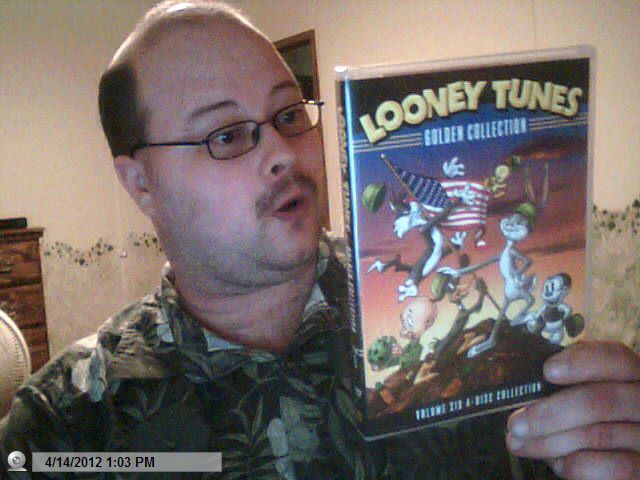
Jack's television program gave Mel visibility to an even greater audience. The documentary explores all of this...as well as the car wreck he was involved in during the early '60s. 1961 to be specific. Those offering their thoughts on Mel in this documentary are a varied group. Everyone from Gary Owens and Stan Freberg to Chuck Jones and Bill Hanna.
Disc 2 is comprised mostly of the World War Two cartoons from the early to mid '40s. However, the last three cartoons on Disc 2 feature a mixture of the freedoms America offers to legal immigrants and the rewards of capitalism and how it's the ideal economic system for free nations: "By Word of Mouse" (1954), "Heir-Conditioned" (1955), and "Yankee Dood It" (1956) all feature stories about American business and the strength of an industrious nation. Unfortunately cartoons like this sometimes receive a black eye, figuratively, by those who either do not believe capitalism is fair or by those who have a hatred/envy of people who successfully live the American dream. The counter-culture of the late '60s and it's impact on certain elements of society also played a part in why these three cartoons are seen as propaganda by those who subscribe to the late '60s counter-culture attitudes in present year 2012. The original intent of the cartoons, I highly doubt, was purely for propaganda purposes and the original intent was more along the lines of educating people on capitalism...nothing more, nothing less. The three cartoons were underwritten by The Alfred P. Sloan Foundation.
Meanwhile, the war cartoons in their unedited form have been a much sought after item of Looney Tunes fans for decades and it took until the final Golden Collection installment to have a disc devoted entirely to those particular cartoons. I saw a comment on-line about how a consumer was dismayed about the all-military art work on the DVD and how it made the person think the entire collection was only military cartoons. The consumer must've bought the DVD based upon cover art and didn't really notice the product page at any number of on-line shopping stores.
Now...about the second disc...first and foremost I find nothing wrong with these war cartoons. I am not one of those whiny, overly sensitive types who have condemned these specific cartoons as being racist or politically incorrect. I am of the belief that the citizens of Germany and Japan were not being mocked or ridiculed in those cartoons...instead it was the Government of those countries and their military being ridiculed.
How anyone living in the United States today can draw the conclusion that pro-America sentiment during a time of war is a bad thing is beyond me. So, no, I've never bought into all the hype that the war cartoons were racist or anything. If the cartoons were offensive they were more than likely offensive to the dictators and those who shared dictatorial beliefs. I've read about the war...so have millions of others. To see characters like Bugs Bunny, Daffy Duck, Porky Pig, and others pull out all the stops in their antics against animated versions of dictators and the cold-blooded nature in which those dictators ruled is entertaining to me and it should be entertaining to anyone who dislikes tyranny and everything that comes with it. The WWII cartoons are sought after so much that it appears the company deliberately used the military decor on purpose and perhaps they did. The individual disc's feature a character in a saluting position with an American flag backdrop. Each disc's number is penciled onto an illustrated dog tag, too, and the back of the DVD shows Daffy parachuting from the sky and Bugs in a carrot filled dirt mound.
On Disc 1 and Disc 3 you'll see cartoons and hear a lot of different voice actors. Daws Butler's voice appears in several cartoons on Disc 4. His voice can also be heard briefly on the short, "Heir-Conditioned", on Disc 2 as some of the alley cats who are after Sylvester's inheritance. Butler is also heard more prominently in "Yankee Dood It", on Disc 2, as the Shoemaker and the King Elf's apprentice who can never remember the name 'Rumpelstiltskin' and often utters the phrase 'Jehoshaphat'. King Elf is actually Elmer Fudd in traditional Elf costume sporting a big gold crown on his head. Sylvester is part of this cartoon but doesn't have many lines.
What are the extra's and bonus features you may be asking!?! On Disc 4, as mentioned earlier, there's the Mel Blanc documentary. There are four bonus cartoons on Disc 4. On Disc 2 there are three bonus cartoons of a military overtone to go along with the WWII cartoons on that disc. Also, there's the inclusion of The Captain and the Kids cartoons that Friz Freleng did for MGM during his short hiatus from Warner Brothers. On the black and white Disc 3 there's a special called The World of Leon Schlesinger while there are 4 bonus cartoons. In actuality there are 4 bonus cartoons on each disc, making that 19 cartoons altogether on each of the 4 discs.
There are 2 Looney Tunes television specials featured as extra's on Disc One.
The first special, from 1978, is listed on the DVD by it's VHS title of Bugs Bunny in King Arthur's Court. The original title was A Connecticut Rabbit in King Arthur's Court. The made-for-TV cartoon is entertaining and doesn't feature any clips of vintage cartoons which was often the case whenever the Looney Tunes appeared in TV specials. However, there are scenes in this special which re-use dialogue from other Bugs Bunny cartoons and the die-hard fans will spot it right away. Also something that will be detected right away is that Mel Blanc provides the voice of Elmer Fudd, as he had done off and on since original voice actor, Arthur Q. Bryan, passed away in 1959. Mel's natural voice was quite distinctive and it shines through in his performance as Elmer.
The second special, from 1980, is also listed by it's VHS title, Daffy Duck's Easter Egg-Citement. The original title was Daffy Duck's Easter Special. In this special there are three newly created stories woven together: "The Yolk's On You", "The Chocolate Chase", and "Daffy Flies North". The characters featured are Daffy, Speedy Gonzales, Sylvester, Miss Prissy, Foghorn Leghorn. In subsequent decades the three cartoon shorts have been shown separately on various Looney Tunes programs.
All in all it's an outstanding collection...which is what the Golden Collection releases have always been.
Subscribe to:
Posts (Atom)