I just came across this article from the famed animation site, Cartoon Brew. It's an article about an upcoming celebration to Tex Avery later this month in Taylor, Texas. You can read about it HERE. The event is called Tex Avery Day and it'll be held on February 22, 2014. The article has a publish date of January 31, 2014 and so it's just a couple days old. The article also gives specifics about the venue, etc. etc.
Tex Avery's name is associated with some of the biggest characters in animation history: Daffy Duck, Porky Pig, BUGS BUNNY, and later on, Droopy. His career has been much ritten about through the years and you owe it to yourselves to look up his cartoons and be entertained in his unique style. His legend is rooted in the Warner Brothers theatrical cartoons but many have argued that his lasting legacy are the zany, wild, and exaggerated cartoons he directed for MGM. The cartoons he did for MGM include dozens of Droopy adventures...also there happened to be a series of cartoons starring a character named Screwy Squirrel and then there are the George and Lenny spoofs (titled George and Junior) that appeared in several of his MGM cartoons. In addition to those recurring characters Tex also brought us one shot cartoons that parodied or spoofed pop culture and fads and featured no recurring character at all. One of those kinds of cartoons is below...
Crazy Mixed-Up Pup comes from Tex's days at the Walter Lantz studio. It features vocal work from the legendary Daws Butler. The story is a funny scenario of a man and a dog changing personalities and the chaos that comes along as a result. The dog looks a little like the future Doggy Daddy of Hanna-Barbera fame.
One Ham's Family is a Christmas cartoon starring a pig family and it parodies a couple of things. The focal point, Junior, is a spoof of the Red Skelton radio character of the same name (note the crop of red hair on the pig's head). Meanwhile, the father's voice could very well be Andy Devine or an impression. Third, a wolf (dressed as Santa Claus) comes complete with a vocal that spoofs The Great Gildersleeve's famed giggle/laughter. The title of the cartoon is a pun of a real series, One Man's Family.
Don't forget...if you're in the area on February 22 go and experience the Tex Avery festivities taking place in Taylor, Texas. The link is in the first paragraph of the blog entry.
Fred "Tex" Avery: February 26, 1908 - August 26, 1980.
Showing posts with label bugs bunny. Show all posts
Showing posts with label bugs bunny. Show all posts
Monday, February 3, 2014

Friday, May 24, 2013
Bugs Bunny: Superstar

This is a must-have documentary in my opinion. If this will be your first time seeing this documentary, but you've seen the various Behind the Tunes features on the Golden Collection series, then this 1975 Superstar documentary will perhaps perplex or confuse most of you. Why? It's because of a lot of the information from Clampett in the Superstar documentary has either been dismissed or shown to be partly true.
Now, of course, armed with a lot more knowledge of the cartoons and the behind the scenes information that we have access to today, it may make watching the Superstar documentary cringe-worthy to some but if you simply want to see a few of the legendary cartoon directors speak of their cartoons as well as see 9 full length cartoons...in addition to hearing the audio from the film maker, Larry Jackson...plus hear Orson Welles narrate...this DVD will not disappoint!
Although it's been almost 4 decades since this special first aired, it nonetheless aired numerous times on cable TV throughout the 1980's and most of 1990's, usually in overnight and early morning time slots or during times of the day with younger audiences. Given that kind of exposure, a lot of the information in the film continued to be accepted as fact. I, too, blindly accepted a lot of the things I was hearing in this special as fact but it wasn't until the Golden Collection series came along and the increase in animation web-sites (with a lot more credible information) that I was able to see that there was a lot of credit hogging taking place amongst many (especially the creation of Bugs Bunny).
You can look up various websites that offer one side of the story verses another when it comes to character creation and see all the multiple accounts and second hand information, etc. etc. Clampett certainly played a vital role in the studio's success, no doubt about it, and his cartoons are hilariously funny in my opinion. This doesn't mean that I don't love the subtlety of the Chuck Jones cartoons or the razor sharp timing and musical prowess of the Friz Freleng cartoons. I don't have any one director, in particular, that stands above the rest and receives exclusive admiration and adoration...there are cartoons from all of the major directors at the cartoon studio that I like for various reasons. Some people actually believe that if you like Clampett's work then you can't possibly like anything from Chuck Jones, for example. There are those who think that if you gravitate toward Friz Freleng then there's no possible way that you could enjoy something from Robert McKimson, Norm McCabe, or Art Davis.
All of that aside, Bugs Bunny Superstar provides a look into the golden age of animation and it continues to remain a must-have in that it includes actual footage of all involved.
There is another documentary that I'd love to see get a DVD release by itself. As of now it's only available on Vol. 1 of the Golden Collection and it's John Canemaker's 'Boys From Termite Terrace'. That documentary along with this Bugs Bunny Superstar DVD are must-have's simply for the video footage of several of the directors speaking in detail about their cartoons.
It's a shame Robert McKimson wasn't as active in either of those documentaries. He died, suddenly, in 1977 at age 66. I love his cartoon parodies of TV shows and the Foghorn Leghorn cartoons he did. I also like how he didn't follow the formula for a lot of the established characters and for humor's sake would place Bugs Bunny, for example, as an overly aggressive character out to prove his worth in "Rebel Rabbit"; then there was "Easter Yeggs" where Bugs, at first, is tormented by a sorrowful rabbit as well as Elmer Fudd and a nameless juvenile delinquent forever wanting an Easter egg; there's "The Windblown Hare" that spoofs The Three Little Pigs story by having the pigs as conniving schemers who pull a fast one on Bugs and then there's the Wolf who mostly remains clueless to anything that doesn't follow along with the fairy tale he's reading; there's "Hillbilly Hare", "French Rarebit", "Rabbits Kin" introduced the animation world to Pete Puma; there's "The Grey Hounded Hare", as well as many others. I hadn't even mentioned the various popular cartoons he did with the Tasmanian Devil. His cartoons included their share of catch-phrases and scenes that are just as memorable as the other directors.
McKimson was just as great as his peers but his tendency to shy from attention, adoration and publicity in a manner in which his contemporaries didn't caused his work to be greatly under appreciated. You can read about him and his two brothers, Charles and Tom, in a book that Robert McKimson, Jr. wrote titled "I Say...I Say...Son!".
Tuesday, April 30, 2013
Bugs Bunny's original Birthday...
During a news break this morning while listening to the radio it was announced that today marked the 75th birthday of Bugs Bunny. Doing the math, 2013 minus 75 is 1938. It was on April 30, 1938 that an as yet to be named rabbit character appeared in an animated theatrical cartoon titled Porky's Hare Hunt. This rabbit character would evolve over the course of 2 years and visually start to resemble the character we all know as Bugs Bunny. The rabbit got it's name through a chain of events where an employee at Warner Brothers had written the phrase Bugs's Bunny on a model sheet of the yet to be named character. Ben Hardaway's nickname at the studio, according to those who worked with him, was Bugs. Today many historians refer to him as Ben "Bugs" Hardaway.
Anyway, the alliterative name stuck and from then on Bugs Bunny became the character's name.
However, longtime fans, historians, and those who worked on the cartoons cite 1940 as the official birth year of Bugs Bunny for it was in a July 27, 1940 cartoon directed by Tex Avery titled A Wild Hare which introduced the basic visual appearance that Bugs Bunny has kept over the last 73 years. Porky's Hare Hunt was directed by Ben Hardaway and Cal Dalton. A Wild Hare was directed by Tex Avery. Research shows that there were four theatrical cartoons released between April 1938 and March 1940 starring the future Bugs Bunny. Those cartoons are as follows:
1. Porky's Hare Hunt; 1938 (Ben Hardaway and Cal Dalton)
2. Prest-O Change-O; 1939 (Chuck Jones)
3. Hare-um Scare-um; 1939 (Ben Hardaway and Cal Dalton)
4. Elmer's Candid Camera; March 2, 1940 (Chuck Jones)
A Wild Hare, with the new design of the rabbit, soon followed in July 1940. This is probably the only animated character that has two birthday's. April 30, 1938 and July 27, 1940. Given that the 1940 cartoon by Tex Avery is almost always universally accepted as the first official Bugs Bunny cartoon, 1940 is considered his official 'birth year'. This is why, in 1990, there was a lot of media hype surrounding the character's Golden Anniversary...hitting 50. Ten years later ABC-TV cancelled the long running Saturday morning Bugs Bunny Show franchise (which had evolved into The Bugs Bunny and Tweety Show). This particular series, which ran on various networks and time-slots since 1960, had turned 40 in the year 2000. Since that point in time the Looney Tunes characters have mostly aired on cable television, off and on, in addition to a long list of DVD compilation projects. Down through the years I've been able to purchase several items pertaining to Bugs Bunny and his numerous co-stars plus a couple of items about the man who gave voice to Bugs Bunny from 1938 through 1989, Mel Blanc.
At this time I'd like to put on display some of my Bugs Bunny/Looney Tunes/Mel Blanc items from my personal collection...
 This is a relatively brand new book. It hit the market late in 2012 and I finally got around to purchasing it a few weeks ago. I have purchased a couple of other books from the pen of Ben Ohmart within the last several years and so when I first learned that a book about Mel Blanc was on the horizon I couldn't wait until it's release. Throughout the book there is commentary from Mel's son, Noel, taken from an unpublished biography that Noel wrote about his father. Ohmart's book, titled Mel Blanc- The Man of a Thousand Voices, it features many, many, many facts about a man who became one of the most busiest actors in radio, cartoons, and records...and later added television appearances to his long list of credits. Speaking of credits...this book gives a detailed account on everything that Mel Blanc took part in from the early days of his career through his final projects in 1989. It's truly a fabulous, unique, and addictive kind of book for those who are not only fans of Mel Blanc but of classic animated cartoons in general, whether theatrically released or made-for-TV. The book is also filled with quotes and remembrances by a long list of celebrities in an out of animation that Mel worked with or were inspired by. Mel's friendship with Jack Benny is explored in more detail in this book, too. The book is lengthy but this is not to be a surprise for an actor of Mel's considerable longevity...before hitting national radio in the late '30s, right around the time he was just starting his decades long run with Warner Brothers cartoons, Mel was a feature on local radio for a period of years in Oregon prior to making the move down to the Los Angeles area. In addition to the written word there are plenty of pictures throughout. Some of the images, I assume, are exclusive to the book as I hadn't seen quite a few of them until now. This fabulous book can be purchased HERE.
 Although this particular book has nothing to do with Bugs Bunny, it's all about Tweety and Sylvester, the canary and cat duo that featured prominently in many of the Warner Brothers releases throughout the mid '40s through the '50s. The book was issued in 1991, written by Jerry Beck. By the early '60s Sylvester's more frequent nemesis had changed from Tweety to the fastest mouse in Mexico, Speedy Gonzales. The book takes a look at every theatrically released cartoon to feature each character, either as a duo or separately. The two characters would, many decades after their creation, star in a television series titled The Sylvester and Tweety Mysteries. The series debuted in 1995, the 50th anniversary of the first theatrical cartoon starring Sylvester titled "Life with Feathers". Like Bugs Bunny, Sylvester was a yet to be named character. In fact, he was referred to as Thomas in early cartoons with Tweety.
 In 1988 Mel Blanc issued his autobiography titled That's Not All, Folks!. The book is a fascinating look into the life and times of one of animation's greatest voices. As the years went on and more and more fans had gotten older and more and more aspiring voice actors/actresses came along who had grown up watching the various Looney Tunes programs, the book seemed to take on much more scrutiny than it did when it was originally released. There are a few recollections in the book that contradict information later brought to light and then there's the longstanding argument over the creation of the Foghorn Leghorn voice. At the root of the argument, basically, is the origin of the voice and how possible it is that both Mel Blanc and Kenny Delmar were inspired by similar sounding fictional characters and each used that distinctive voice without copying from the other...Foghorn Leghorn debuted right at the height of the Senator Claghorn craze in 1946. Claghorn was a radio character played by Kenny Delmar on Fred Allen's radio program starting in the latter half of 1945. Keith Scott writes about this very subject HERE.
 June Foray issued her autobiography, Did You Grow Up With Me, Too?, a couple of years ago. It was co-authored by Mark Evanier and Earl Kress. I'm proud to say that I wrote the first Amazon review of this particular book. You can read that review HERE. June had quite an impact in the Looney Tunes series as she gave voice to a few characters that have since become animation icons. The original voice actress of Granny and Witch Hazel was Bea Benaderet. Bea would later give voice to Betty Rubble in The Flintstones. Like June, Bea had a lengthy career in radio and on records in addition to the cartoon work. Bea, however, would become even more recognizable as a face actress in the 1950's and 1960's appearing in an assortment of early television comedies. Bea's longest running television role was as matriarch Kate Bradley on the rural sitcom, Petticoat Junction. June stepped into the roles of Granny and Witch Hazel during the 1950's and she's been the voices of those characters ever since. Unlike Mel Blanc, though, June wasn't tied to just one animation company exclusively for so many years. In addition to her Warner Brothers work she concurrently gave voice to another animated icon, Rocky the Flying Squirrel, on the Bullwinkle series of cartoons by the Jay Ward company. She became even more busy in the 1980's. She gave voice to Jokey Smurf and Mother Nature in the Smurfs series throughout the decade. For the Disney company June was the voices of several characters in the mega hits The Adventures of the Gummi Bears and Duck Tales from the mid '80s onward. You can read more about her by getting the autobiography!
 This obscure 2005 CD features quite a number of songs recorded by Mel Blanc. What a lot of people usually forget about or don't know is that Mel had a lengthy recording career outside of animated cartoons. Although a lot of his recordings centered around the animated characters that he gave voice to in a series of children's albums there were quite a few recordings where he uses his natural voice, too, but those weren't as commercially successful as the recordings he did with the humorous voices and sound effects. There are 25 songs featured. Some of the highlights, for me, are "Yosemite Sam", "I Tan't Wait Till Quithmuth Day", "The E.I.O. Song", "Morris", "Yah Das Ist Ein Christmas Tree", "Money", "Barney Google", "That Hat I Got For Christmas Is Too Beeg", "I Tell My Troubles to Joe", and "The Missus Wouldn't Approve". For the latter two songs he uses a voice similar to the one he gave to the Happy Postman character on The Burns and Allen Show. He gives a display of quite a few voices as each voice takes turn performing "Barney Google". The CD kicks off with his version of "The Woody Woodpecker Song". The recording had originally been recorded and released by the immensely popular bandleader, Kay Kyser, in 1948. His recording featured the vocalizations of Harry Babbitt and Gloria Wood. The song is a perfect example of an obscurity amongst a general audience in that Mel Blanc provided the original voice of Woody Woodpecker and created the famous laugh heard throughout a bulk of the series. The Woody character was created by Ben Hardaway in 1940...yes, the same one who played a pivotal role in the original version of Bugs Bunny in 1938. In fact, Woody's vocalization as provided by Mel Blanc was almost exactly the way the original version of Bugs Bunny sounded...right down to the distinct laugh. Mel provided Woody's voice in animated form in just the first four releases. This is because in 1941 Mel signed an exclusive contract with the Warner Brothers cartoon division (Leon Schlesinger Productions) and from that point forward Mel's voice could only be heard on cartoons released by Warner Brothers. This exclusive contract was kept intact for nearly 20 years.
However, the exclusive contract applied to animated cartoons only...it didn't prevent him from using his voice on radio and on records. In radio, Mel was heard on dozens of radio programs playing a wide variety of recurring characters. Given that his radio characters were as animated as the characters in the cartoons it wasn't uncommon for the writers of the cartoons to blend both worlds together and have in-jokes flowing all over the cartoons about various radio comedies that Mel was featured on. References to Jack Benny were used the most given that Jack's radio program was the #1 comedy show for so many years and that Mel provided many character voices on that series. One cartoon in particular, 1959's The Mouse That Jack Built, must have seemed surreal to audiences at the time. It was directed by Robert McKimson and featured the actual cast of The Jack Benny Program providing their character voices, drawn as mice. Mel provided the voice of the Maxwell jalopy as well as the unseen Ed, the Vault Keeper. On radio Joseph Kearns provided the voice of Ed. Considering that Ed only had a brief exchange with the cartoon Jack Benny it was probably decided that it wouldn't make much sense to bring in Joseph Kearns for just one single line reading. Later that year he would take on the role of Mr. Wilson on Dennis the Menace.
 I've posted several of these images before in numerous other blog entries. The Looney Tunes Golden Collection continues to be, for me, the bible of Warner Brothers theatrical cartoons from beginning to end. The various DVD discs focus on a particular overall theme, pretty much, and so what you get are deliberately selective cartoon entries on each disc that have to do with the overall theme. For example, one of the disc's may be devoted to just the cartoons starring Bugs Bunny (obviously!) and another disc may deal with cartoons that feature only Daffy Duck or Porky Pig. In some of the last collections there was a lot more coverage of the black and white era and the earliest Looney Tunes characters...I'm referring to the characters that arrived prior to the debut of Porky, Daffy, Bugs, Tweety, and Sylvester. If you don't know who those characters were then they'll be a revelation if you purchase the later installments of the Golden Collection series. Also, I've almost wore out one of the disc's...the one that features the World War Two cartoons found in the collection below. The war cartoons are endlessly entertaining but I went to play it one day and it stopped playing during one of the cartoons. I don't know if I really did wear the disc out or if it's one of those unexplained glitches having more to do with the DVD player rather than the disc itself.

Anyway, the alliterative name stuck and from then on Bugs Bunny became the character's name.
However, longtime fans, historians, and those who worked on the cartoons cite 1940 as the official birth year of Bugs Bunny for it was in a July 27, 1940 cartoon directed by Tex Avery titled A Wild Hare which introduced the basic visual appearance that Bugs Bunny has kept over the last 73 years. Porky's Hare Hunt was directed by Ben Hardaway and Cal Dalton. A Wild Hare was directed by Tex Avery. Research shows that there were four theatrical cartoons released between April 1938 and March 1940 starring the future Bugs Bunny. Those cartoons are as follows:
1. Porky's Hare Hunt; 1938 (Ben Hardaway and Cal Dalton)
2. Prest-O Change-O; 1939 (Chuck Jones)
3. Hare-um Scare-um; 1939 (Ben Hardaway and Cal Dalton)
4. Elmer's Candid Camera; March 2, 1940 (Chuck Jones)
A Wild Hare, with the new design of the rabbit, soon followed in July 1940. This is probably the only animated character that has two birthday's. April 30, 1938 and July 27, 1940. Given that the 1940 cartoon by Tex Avery is almost always universally accepted as the first official Bugs Bunny cartoon, 1940 is considered his official 'birth year'. This is why, in 1990, there was a lot of media hype surrounding the character's Golden Anniversary...hitting 50. Ten years later ABC-TV cancelled the long running Saturday morning Bugs Bunny Show franchise (which had evolved into The Bugs Bunny and Tweety Show). This particular series, which ran on various networks and time-slots since 1960, had turned 40 in the year 2000. Since that point in time the Looney Tunes characters have mostly aired on cable television, off and on, in addition to a long list of DVD compilation projects. Down through the years I've been able to purchase several items pertaining to Bugs Bunny and his numerous co-stars plus a couple of items about the man who gave voice to Bugs Bunny from 1938 through 1989, Mel Blanc.
At this time I'd like to put on display some of my Bugs Bunny/Looney Tunes/Mel Blanc items from my personal collection...


However, the exclusive contract applied to animated cartoons only...it didn't prevent him from using his voice on radio and on records. In radio, Mel was heard on dozens of radio programs playing a wide variety of recurring characters. Given that his radio characters were as animated as the characters in the cartoons it wasn't uncommon for the writers of the cartoons to blend both worlds together and have in-jokes flowing all over the cartoons about various radio comedies that Mel was featured on. References to Jack Benny were used the most given that Jack's radio program was the #1 comedy show for so many years and that Mel provided many character voices on that series. One cartoon in particular, 1959's The Mouse That Jack Built, must have seemed surreal to audiences at the time. It was directed by Robert McKimson and featured the actual cast of The Jack Benny Program providing their character voices, drawn as mice. Mel provided the voice of the Maxwell jalopy as well as the unseen Ed, the Vault Keeper. On radio Joseph Kearns provided the voice of Ed. Considering that Ed only had a brief exchange with the cartoon Jack Benny it was probably decided that it wouldn't make much sense to bring in Joseph Kearns for just one single line reading. Later that year he would take on the role of Mr. Wilson on Dennis the Menace.


Saturday, April 14, 2012
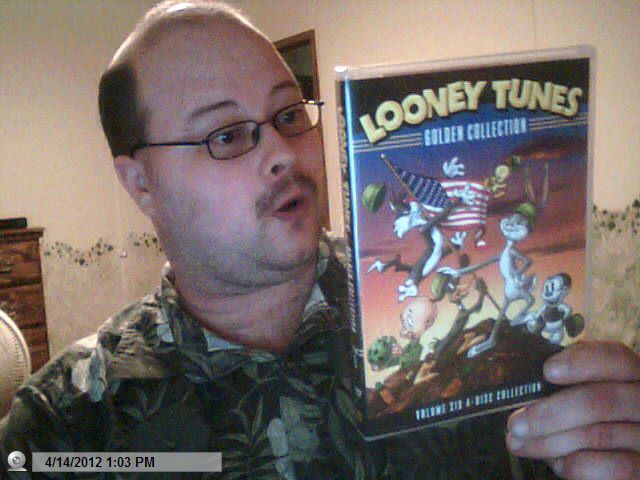
Looney Tunes: Golden Collection, Volume Six
Jack's television program gave Mel visibility to an even greater audience. The documentary explores all of this...as well as the car wreck he was involved in during the early '60s. 1961 to be specific. Those offering their thoughts on Mel in this documentary are a varied group. Everyone from Gary Owens and Stan Freberg to Chuck Jones and Bill Hanna.
Disc 2 is comprised mostly of the World War Two cartoons from the early to mid '40s. However, the last three cartoons on Disc 2 feature a mixture of the freedoms America offers to legal immigrants and the rewards of capitalism and how it's the ideal economic system for free nations: "By Word of Mouse" (1954), "Heir-Conditioned" (1955), and "Yankee Dood It" (1956) all feature stories about American business and the strength of an industrious nation. Unfortunately cartoons like this sometimes receive a black eye, figuratively, by those who either do not believe capitalism is fair or by those who have a hatred/envy of people who successfully live the American dream. The counter-culture of the late '60s and it's impact on certain elements of society also played a part in why these three cartoons are seen as propaganda by those who subscribe to the late '60s counter-culture attitudes in present year 2012. The original intent of the cartoons, I highly doubt, was purely for propaganda purposes and the original intent was more along the lines of educating people on capitalism...nothing more, nothing less. The three cartoons were underwritten by The Alfred P. Sloan Foundation.
Meanwhile, the war cartoons in their unedited form have been a much sought after item of Looney Tunes fans for decades and it took until the final Golden Collection installment to have a disc devoted entirely to those particular cartoons. I saw a comment on-line about how a consumer was dismayed about the all-military art work on the DVD and how it made the person think the entire collection was only military cartoons. The consumer must've bought the DVD based upon cover art and didn't really notice the product page at any number of on-line shopping stores.
Now...about the second disc...first and foremost I find nothing wrong with these war cartoons. I am not one of those whiny, overly sensitive types who have condemned these specific cartoons as being racist or politically incorrect. I am of the belief that the citizens of Germany and Japan were not being mocked or ridiculed in those cartoons...instead it was the Government of those countries and their military being ridiculed.
How anyone living in the United States today can draw the conclusion that pro-America sentiment during a time of war is a bad thing is beyond me. So, no, I've never bought into all the hype that the war cartoons were racist or anything. If the cartoons were offensive they were more than likely offensive to the dictators and those who shared dictatorial beliefs. I've read about the war...so have millions of others. To see characters like Bugs Bunny, Daffy Duck, Porky Pig, and others pull out all the stops in their antics against animated versions of dictators and the cold-blooded nature in which those dictators ruled is entertaining to me and it should be entertaining to anyone who dislikes tyranny and everything that comes with it. The WWII cartoons are sought after so much that it appears the company deliberately used the military decor on purpose and perhaps they did. The individual disc's feature a character in a saluting position with an American flag backdrop. Each disc's number is penciled onto an illustrated dog tag, too, and the back of the DVD shows Daffy parachuting from the sky and Bugs in a carrot filled dirt mound.
On Disc 1 and Disc 3 you'll see cartoons and hear a lot of different voice actors. Daws Butler's voice appears in several cartoons on Disc 4. His voice can also be heard briefly on the short, "Heir-Conditioned", on Disc 2 as some of the alley cats who are after Sylvester's inheritance. Butler is also heard more prominently in "Yankee Dood It", on Disc 2, as the Shoemaker and the King Elf's apprentice who can never remember the name 'Rumpelstiltskin' and often utters the phrase 'Jehoshaphat'. King Elf is actually Elmer Fudd in traditional Elf costume sporting a big gold crown on his head. Sylvester is part of this cartoon but doesn't have many lines.
What are the extra's and bonus features you may be asking!?! On Disc 4, as mentioned earlier, there's the Mel Blanc documentary. There are four bonus cartoons on Disc 4. On Disc 2 there are three bonus cartoons of a military overtone to go along with the WWII cartoons on that disc. Also, there's the inclusion of The Captain and the Kids cartoons that Friz Freleng did for MGM during his short hiatus from Warner Brothers. On the black and white Disc 3 there's a special called The World of Leon Schlesinger while there are 4 bonus cartoons. In actuality there are 4 bonus cartoons on each disc, making that 19 cartoons altogether on each of the 4 discs.
There are 2 Looney Tunes television specials featured as extra's on Disc One.
The first special, from 1978, is listed on the DVD by it's VHS title of Bugs Bunny in King Arthur's Court. The original title was A Connecticut Rabbit in King Arthur's Court. The made-for-TV cartoon is entertaining and doesn't feature any clips of vintage cartoons which was often the case whenever the Looney Tunes appeared in TV specials. However, there are scenes in this special which re-use dialogue from other Bugs Bunny cartoons and the die-hard fans will spot it right away. Also something that will be detected right away is that Mel Blanc provides the voice of Elmer Fudd, as he had done off and on since original voice actor, Arthur Q. Bryan, passed away in 1959. Mel's natural voice was quite distinctive and it shines through in his performance as Elmer.
The second special, from 1980, is also listed by it's VHS title, Daffy Duck's Easter Egg-Citement. The original title was Daffy Duck's Easter Special. In this special there are three newly created stories woven together: "The Yolk's On You", "The Chocolate Chase", and "Daffy Flies North". The characters featured are Daffy, Speedy Gonzales, Sylvester, Miss Prissy, Foghorn Leghorn. In subsequent decades the three cartoon shorts have been shown separately on various Looney Tunes programs.
All in all it's an outstanding collection...which is what the Golden Collection releases have always been.
Thursday, July 21, 2011
Looney Tunes: Golden Collection, Volume Five...
 I'm typically several years late when it comes to purchasing the Golden Collection series and this one's no exception. I purchased this a few days ago and it arrived yesterday. Thanks to the availability of Looney Tunes: Spotlight Collection, Vol. 5 I was able, several years ago, to see 30 of the cartoons that are featured in this edition of the Golden Collection. As usual the Golden Collection is more for the cartoon enthusiasts...animation historians...and die-hard fans of the Looney Tunes. The main reason for the Spotlight Collections were to aim at the general audience and aim at those who wouldn't pay more than $20.00 for a DVD collection (although the Golden Collections are well worth the higher price). A lot of the reviews of this DVD I've not read (there's too many) but those that I've skimmed through touch base on just about everything and so I'm not going to do any break downs of too many individual cartoons.
 Given that the Golden Collection, this one being no exception, are filled with extra features and mini-documentaries on animators, directors, and the like I watched most of the extra features and bonus material first and that's what this review will mostly be about.
The documentary I watched right away was "Drawn To Life: The Art of Robert McKimson" which is found on disc 2. I watched this first because I wanted to, first of all, see what the animators, historians and fans of the cartoons had to say. I also watched it first because McKimson is like the unheralded giant of classic Warner Brothers cartoons...and many cartoons by McKimson played a lot on ABC-TV's Bugs Bunny and Tweety Show of the '80s and '90s and I was raised on his cartoons every bit as much as I was raised on the cartoons by Friz Freleng, Chuck Jones, Bob Clampett, and Tex Avery.
The documentary is a celebration of McKimson's career. He's noted as being one if not the only person employed at Warner Brothers cartoons from it's beginning in the early '30s to it's eventual closing in the late '60s. McKimson and his brothers, Charles and Tom, were natural artists and obviously this enabled them to become animators...and later, as we know, Robert became a director at the studio. Within the documentary, strangely enough, there isn't any archival commentary from McKimson's peers at the studio and there's no verbal recordings of McKimson. There are pictures of him shown (of course!) and there's invaluable commentary from his son, Robert McKimson, Jr., and several others but there's no actual footage of the senior McKimson on camera discussing his career or the characters he known for (Foghorn Leghorn, Barnyard Dog, Prissy, Tasmanian Devil, Hippety Hopper, and Sylvester Junior).
While the documentary on McKimson is a celebration of his work and his talents it wouldn't have been realistic without discussing the sad but true fact that he's largely forgotten and unheralded when compared to Friz Freleng, Chuck Jones, Bob Clampett, and Tex Avery. Several historians and cartoon enthusiasts offer their opinion on why that's the case...a lot of it has to do with the fact that McKimson passed away in 1977 before all the nostalgia and enthusiasm for cartoons really started to take off but also, according to some of the commentators, it also had to do with his low-key demeanor. It's a study in extreme ironies: McKimson was a skilled artist, animator, and director who did quite a lot of memorable cartoons but because of his low-key nature and the acclaim put on Friz, Chuck Jones, and the others through the decades it's created a scenario where a director's work is highly memorable albeit the name of the director isn't as well known by comparison. For example...say a couple of people are discussing various Bugs Bunny cartoons. One guy says "oh that was hilarious! let's see now...who directed it? it was either Chuck or Friz....hmmm, oh? it was Robert McKimson? it was a hilarious cartoon!". Other examples can also be used to describe the irony of the "oh, it was Robert McKimson? Hilarious!" realization. After awhile our mythical conversationalists recognize that McKimson directed his fair share of classic cartoons even though his name isn't as lauded as Chuck and Friz.
Another extra is "Once Upon a Looney Tune"...which airs prior to the McKimson documentary on disc 2. In this feature we see the exploration of the zany, irreverent spin on fairy tales which is what's featured on Disc 2 of the collection. There are various spoofs of Little Red Riding Hood and The Three Bears in addition to other fables and fairy tales. It's interesting to note that in the "Once Upon a Looney Tune" feature they air a clip of Coal Black, a parody of Snow White. Those who are die-hard fans of the Looney Tunes know all about Coal Black but it caught me off-guard when I saw the clip pop up on the screen.
 Bob Clampett gets his own disc...it's Disc 3. Along side Tex Avery and Robert McKimson, Clampett's cartoons are laugh out loud funny in my opinion. It's often been said that Friz Freleng's cartoons had superior timing and razor sharp music coordination which brought out the humor in almost every cartoon. It's been said that Chuck Jones had superior timing, too, on top of using eye blinks, facial expressions, and word play to bring out the humor in his cartoons...but pretty much everyone who's given commentary about a Looney Tunes cartoon seems to point out Bob Clampett's work as being the looniest of all. Ironically, Clampett received a mini-documentary of his life and career back in the Golden Collection, Volume Two but it took until Volume Five for him to get a disc devoted to his directorial contributions at the studio.
 There have been other Clampett cartoons sprinkled throughout Volumes 1 through 4 so it isn't like his work was completely ignored. However, compared to the amount of cartoons directed by Friz and Chuck featured on Volumes 1 through 4, Clampett's contributions pale by comparison. Some say it's because Friz and Chuck were at the studio much longer and made more cartoons therefore more of their contributions are showcased...which makes sense...but then there are those who say that limiting the Clampett cartoons was did intentionally because the irreverence, satire, and all out zaniness clashed with the works of Freleng and Jones.
There are two bonus features on Disc 3...one is all about the "Wacky Warner One Shots". This feature examines quite a lot of the cartoons from Warner Brothers which didn't star any of the popular characters (like Bugs, Porky, Daffy, Sylvester, etc. etc.). The second bonus feature, "Real American Zero: The Adventures of Private SNAFU", looks at Private Snafu...the inept soldier who doesn't do anything right. The training films were designed to teach newly enlisted soldiers how NOT to behave. By watching Snafu do the wrong things and get into a lot of trouble it was teaching soldiers to learn from Snafu's mistakes. The Snafu cartoons were never shown to the general public for obvious reasons. It's fun, though, to see the regular gallery of historians and animators who've contributed to the Golden Collection series speak more R-rated, too. The mini-documentary isn't an all out barrage of cuss words but given that it's all about the Private Snafu cartoons the language is a little bit looser. There are two bonus cartoons of SNAFU adventures and there are three cartoons starring SNAFU's Navy counterpart, Mr. Hook. SNAFU cartoons were made for the U.S. Army while the HOOK cartoons were made for the U.S. Navy.
Disc 1 features cartoons starring either Bugs Bunny or Daffy Duck. Of course there are several cartoons that feature Bugs and Daffy together outwitting a shared enemy. In "Ali Baba Bunny" the shared enemy is Hasan, the simple minded treasure guard who can't remember the magic phrase 'open Sesame'. The main extra feature on Disc 1 is a Chuck Jones documentary from 2000 called "Extremes and In-Betweens: A Life in Animation". This is the second documentary on Chuck...the first, "Chuck Amuck", was featured on Volume One.
Part 2 of the "Extremes and In-Betweens" documentary is on Disc 2...along with another Chuck Jones spotlight called "A Chuck Jones Tutorial: Tricks of the Cartoon Trade". This was originally a bonus feature on the DVD release of "Extremes and In-Betweens".
This Volume Five nearly completes my collection of the series...I now need to get the final volume, Six, to make it complete.
 Disc 4 showcases early cartoons. A bonus extra, "Unsung Maestro's: A Directors Tribute" takes a look at various directors at Warner Brothers who contributed quite a few cartoons for the studio but were never given a lot of spotlight. A lot of the time it was because some of the directors were there prior to the arrival of future super star characters like Porky Pig, Daffy Duck, and Bugs Bunny. The directors of the Looney Tunes in the earliest of years get some spotlight in this feature. One of the more notable cartoons on Disc 4 is "Scrap Happy Daffy" from 1943. It was directed by Frank Tashlin. The first cartoon directed by Tex Avery, "Gold Diggers of '49", is featured on Disc 4. It stars Beans the Cat but many historians say Porky Pig is the real star. The cartoon is also notable for injecting a lot of what would become trademarks of the Warner Brothers cartoons: visual humor, pop-culture references, and general craziness. The cartoon premiered in 1935...several years before Mel Blanc would become the voice of Porky Pig and what we have is original voice, Joe Dougherty, providing the vocals. The cartoon was animated by Bob Clampett and Chuck Jones several years before the two of them would become cartoon directors. Research shows that "Gold Diggers of '49" is the second cartoon to feature Porky Pig.
All in all this is another perfect Golden Collection...some have ripped this collection apart but I have no idea why there's anger and bitterness at all. There was bitterness felt by some about Volume 4 due to several of the disc's concentrating on lesser known characters and highlighting cartoons that lacked a lot of the trademark humor of later cartoons from the studio. One of the disc's on Volume 4 was devoted to Speedy Gonzales which infuriated some but delighted others.
This Volume 5, in my opinion, doesn't feature any cartoon that deviates too much from what Looney Tunes enthusiasts crave. You can't go wrong with a disc devoted to Bob Clampett, neither! On top of this there's the wonderful look at Robert McKimson's work that I wrote of at the top of this review...and then there's the Chuck Jones documentary...and there's three Looney Tunes specials added as extra features on Disc 4: "Bugs and Daffy's Carnival of the Animals", "Bugs Bunny's Looney Christmas Tales", and "Bugs Bunny's Bustin' Out All Over".
In the latter, from 1980, several new cartoons are added to the lengthy list of theatrical Warner Brothers releases: "Portrait of the Artist as a Young Bunny", "Soup or Sonic", and "Spaced Out Bunny". The "Soup or Sonic" short is a Coyote and Road Runner adventure.
In "Bugs Bunny's Looney Christmas Tales", from 1979, you get three newly animated adventures: "Freeze Frame" is a Coyote and Road Runner adventure while "Bugs Bunny's Christmas Carol" casts Yosemite Sam as Scrooge, Tweety as Tiny Tim, Porky as Bob Cratchit and Bugs portrays a bystander bent on showing Scrooge how to treat people with respect. The third segment of the 1979 special was titled, "The Fright Before Christmas", and it featured Bugs and the Tasmanian Devil.
The "Bugs and Daffy's Carnival of the Animals" is a 1976 prime-time special featuring all new animated segments of Bugs and Daffy competing against the other which further fuels the Bugs vs. Daffy comical feud first explored in the theatrical cartoons. The 1976 special has a bit too much live action/symphony performance for me but the animated sequences are great.
Sunday, July 10, 2011
Remembering Mel Blanc...
July 10, 1989 is the day that the world lost Mel Blanc. I'm one of the millions of people who grew up hearing his voice on many cartoons. I never met him in person and have no connection to him or his family but like millions of others we've been impacted by his voice and have laughed at his visual performances. The death of the animation world's most celebrated voice actor not only made national but international news. One of the programs that I remember seeing at some point in the mid '80s when I was around 7 or 8 years old was a Lifetime show called Mother's Day hosted by Joan Lunden. The reason I remember this particular show is because Mel Blanc, of all people, made a guest appearance. In the show he was decked out in a sweatshirt with a picture of Bugs Bunny on the front.
In addition to voicing cartoon characters he also had an equal amount of time playing bit parts and recurring characters on many radio comedies of the '30s and '40s and then when television came along as the country's main choice of entertainment he often shown up in guest starring roles on TV comedies and talk-shows. The radio program with which Mel Blanc is so closely associated is the Jack Benny Program. Mel not only had recurring characters on the radio show but he also brought the characters to television in the '50s and '60s on Jack's television program (1950-1965). One of the characters, Sy, became part of a legendary comedy routine that highlighted the comedic timing of both Mel Blanc and Jack Benny. My grandfather introduced me to Jack Benny's television program...it happened around the mid '80s time period...the reruns were airing on the local PBS stations on Sunday morning. Ever since the mid '80s I've been aware of Jack Benny and Mel Blanc and have long been a fan of Warner Brothers cartoons of which Mel was the primary vocal star.
As others have said and I also agree, Mel Blanc was an actor first and foremost...one that used his expressive voice and entire body in most every performance...but it's the acting that brought everything together.
The vocalizations are what he's known for but it's his acting abilities that enabled those vocalizations to become believable. When you watch a cartoon and hear any number of his characterizations...the funny thing is...the character sounds real. It's one of those things that'll forever puzzle a lot of people. When you hear him as one of the radio characters he played...he sounds exactly like you'd expect his character to sound. Professor LeBlanc, the long-suffering violin teacher of Jack Benny, sounds pretty much the way you'd expect a long-suffering teacher to sound: easily irritable, agitated, sarcastic, and prone to fits of crying and misery. In Professor LeBlanc, Mel could go from misery and angst (during a violin lesson) to absolute joy and happiness (once the violin lesson was over!). Mel provided the voices of not only Professor LeBlanc but he was also heard as Sy the Mexican, Polly the Parrot, Carmichael the Polar Bear, Jack's Maxwell car, and the Train Depot announcer. These were just a few of the well-known characterizations...he provided voices for many nameless characters throughout his involvement in Jack's program from would-be burglars, to repairmen, plumbers, store clerks, and other occupational characters.
Speaking of store clerks...one of Blanc's most hysterical performances every Christmas season for many years was on Jack's program. In many holiday episodes Mel played the part of a nice, courteous store clerk who was driven insane throughout the course of the episode by Jack's annoying habit of changing his mind over what to buy someone for Christmas. Typically a routine would involve Mel having to wrap a gift...then unwrap the gift...wrap the new gift...put it back in the delivery room...then, upon another change of mind from Jack, Mel would have to retrieve the wrapped gift...unwrap it...wrap up the new gift...send it to the delivery room. This gift exchange routine would go on, at various moments, throughout each holiday episode. About mid-way through Mel would lose his temper just a little. By the episode's final exchange Mel would completely lose his mind and turn into a sobbing mess.
Mel turns into a sobbing mess in the clip below...
Mel asks for a Tip in this hilarious clip from one of Jack Benny's television programs. In the clip you'll see Jack, Mel, and Don Wilson (Jack's long-time announcer). I couldn't embed the above video because of the embedding option for it is disabled.
In the video clip below you'll see Jack and Don Wilson discussing the introduction of the show while Mel Blanc comes in about 2 and a half minutes later as a Taxi cab driver. Jokes follow about Mel's character being the owner of a cab service...Blanc then wonders what Jack's profession happens to be. Self-deprecating jokes from Jack as well as jokes from others teasing Jack's "celebrity status" were always prominent on Jack's program. This inquiry from Mel's character prompts Jack to deliver a line that comes off as an ad-lib (based on how Don Wilson and Mel both reacted to it!). You can find quite a few other clips featuring Mel and Jack on You Tube.
Lastly...and I'm not meaning to put a damper on things but a lot of the modern-day depictions of the Looney Tunes characters obviously lack Blanc's vocal touch.
It's one thing to keep the characters in the public eye (which I'm glad that they're doing) but at the same time the characters need to have voice actors who come near-perfect to Blanc's voice. At the present time Bob Bergen and Joe Alaskey are just two that spring to mind that sound similar to how Mel voiced the characters...while Frank Welker does a swell Barney Rubble.
Some of the artists who perform the role of Bugs Bunny put too much emphasis on trying to sound Brooklyn-Bronx and they end up over-doing it or they come off sounding nothing like Bugs Bunny and more like a stereotypical New Yorker.
As you can tell from my comments, I'm guilty of the following as are thousands of other people: Although it's probably unfair to have this kind of opinion but a lot of people judge new Looney Tunes cartoons NOT on the actual storyline but on how close the vocals are to Mel Blanc. Nothing makes a new Looney Tunes cartoon grow on me quicker than if the vocalizations are in the tradition of Mel Blanc. Animators and the musicians can re-create the look and sound of the classic cartoons but, for me, I tend to pay attention to the vocalizations, too. If the vocalizations aren't satisfactory it tends to put a dark cloud over the whole thing.
Mystery resolved: Hopefully this puts an end to the long-held belief that Mel was allergic to carrots. The truth is Mel didn't particularly like carrots unless they were boiled and had a lot of butter or syrup on them. The often told story is Mel had to quickly spit out the carrot that he'd bite into or become sick to his stomach due to some allergic reaction. The reason he'd spit out the carrot is simply to clear his mouth...the last thing you want is to be reading a script and a piece of carrot come up from behind a tooth or wherever and cause a reading to become wasted. People still like to say Mel was allergic to carrots. It's a funny and ironic scenario if it were true but in reality it's just an urban legend and completely, 100 percent false. Mel Blanc was NOT allergic to carrots!
Mel Blanc's son, Noel, often appears on radio programs to discuss animation, old-time radio, and his dad's legacy. He contributed to the various DVD collections that were issued in the middle of last decade (2000-2009) titled The Golden Collection. Each DVD release would feature 4 disc's of Looney Tunes cartoons. Loaded with extra features saw the inclusion of an on-going series titled Behind The Tunes. These installments ran an estimated 5 minutes and they featured clips of a specific cartoon or a profile of a specific character and there would be commentary on-screen by those who participated in the making of the cartoon...or there would be commentary by a relative. Noel Blanc appeared in quite a few of these brief documentaries. In one installment he speaks about Mel's performance and Oscar win for the cartoon "Birds Anonymous" which featured Sylvester trying to give up birds. Technically the producer of a short-subject received the actual award but those who worked on the cartoon rightfully claimed victory, too. Former producer of the Warner Brothers cartoons, Eddie Selzer, willed an Oscar to Mel according to Noel's recollections.
Mel is spoken of with reverence within the various documentary programs in the DVD collections and eventually the collection featured an in-depth look at Mel Blanc's life featuring clips of several of the directors, some of Mel's co-stars, and Noel too. The director's on-screen comments were all taped years before the DVD collections became a reality. Chuck Jones and Friz Freleng are the two who appear on camera with recurring frequency. Robert McKimson is highlighted in a 15 minute documentary; Frank Tashlin gets a documentary; and Bob Clampett has his own documentary, too. Tex Avery is frequently mentioned as is Art Davis.
Speaking of the Oscar...the following cartoons, all featuring Mel as the main voice artist, won an Oscar. I'm listing the actual director of the short-subject because I feel the director had much more creative influence over the cartoon than the producer:
1. Tweetie Pie: 1947 (Friz Freleng)
2. For Scent-imental Reasons: 1949 (Chuck Jones)
3. Speedy Gonzales: 1955 (Friz Freleng)
4. Birds Anonymous: 1957 (Friz Freleng)
5. Knighty-Knight Bugs: 1958 (Friz Freleng)
Mel Blanc's contributions to animation can still be heard. Somewhere in the world the classic Looney Tunes are still airing...if not the Looney Tunes then you're bound to hear his voice on The Flintstones and The Jetsons. Each series airs on the Boomerang channel in America. Mel voiced Barney Rubble and various incidental characters on The Flintstones and Mr. Spacely and other incidental characters on The Jetsons. Boomerang also airs "Wacky Races" and "The Perils of Penelope Pitstop". In the latter, Mel is heard as the Bully Brothers, Yak-Yak, and Chug-a-Boom (recreating the Maxwell vocalizations).
Mel Blanc: May 30, 1908 - July 10, 1989.
In addition to voicing cartoon characters he also had an equal amount of time playing bit parts and recurring characters on many radio comedies of the '30s and '40s and then when television came along as the country's main choice of entertainment he often shown up in guest starring roles on TV comedies and talk-shows. The radio program with which Mel Blanc is so closely associated is the Jack Benny Program. Mel not only had recurring characters on the radio show but he also brought the characters to television in the '50s and '60s on Jack's television program (1950-1965). One of the characters, Sy, became part of a legendary comedy routine that highlighted the comedic timing of both Mel Blanc and Jack Benny. My grandfather introduced me to Jack Benny's television program...it happened around the mid '80s time period...the reruns were airing on the local PBS stations on Sunday morning. Ever since the mid '80s I've been aware of Jack Benny and Mel Blanc and have long been a fan of Warner Brothers cartoons of which Mel was the primary vocal star.
As others have said and I also agree, Mel Blanc was an actor first and foremost...one that used his expressive voice and entire body in most every performance...but it's the acting that brought everything together.
The vocalizations are what he's known for but it's his acting abilities that enabled those vocalizations to become believable. When you watch a cartoon and hear any number of his characterizations...the funny thing is...the character sounds real. It's one of those things that'll forever puzzle a lot of people. When you hear him as one of the radio characters he played...he sounds exactly like you'd expect his character to sound. Professor LeBlanc, the long-suffering violin teacher of Jack Benny, sounds pretty much the way you'd expect a long-suffering teacher to sound: easily irritable, agitated, sarcastic, and prone to fits of crying and misery. In Professor LeBlanc, Mel could go from misery and angst (during a violin lesson) to absolute joy and happiness (once the violin lesson was over!). Mel provided the voices of not only Professor LeBlanc but he was also heard as Sy the Mexican, Polly the Parrot, Carmichael the Polar Bear, Jack's Maxwell car, and the Train Depot announcer. These were just a few of the well-known characterizations...he provided voices for many nameless characters throughout his involvement in Jack's program from would-be burglars, to repairmen, plumbers, store clerks, and other occupational characters.
Speaking of store clerks...one of Blanc's most hysterical performances every Christmas season for many years was on Jack's program. In many holiday episodes Mel played the part of a nice, courteous store clerk who was driven insane throughout the course of the episode by Jack's annoying habit of changing his mind over what to buy someone for Christmas. Typically a routine would involve Mel having to wrap a gift...then unwrap the gift...wrap the new gift...put it back in the delivery room...then, upon another change of mind from Jack, Mel would have to retrieve the wrapped gift...unwrap it...wrap up the new gift...send it to the delivery room. This gift exchange routine would go on, at various moments, throughout each holiday episode. About mid-way through Mel would lose his temper just a little. By the episode's final exchange Mel would completely lose his mind and turn into a sobbing mess.
Mel turns into a sobbing mess in the clip below...
Mel asks for a Tip in this hilarious clip from one of Jack Benny's television programs. In the clip you'll see Jack, Mel, and Don Wilson (Jack's long-time announcer). I couldn't embed the above video because of the embedding option for it is disabled.
In the video clip below you'll see Jack and Don Wilson discussing the introduction of the show while Mel Blanc comes in about 2 and a half minutes later as a Taxi cab driver. Jokes follow about Mel's character being the owner of a cab service...Blanc then wonders what Jack's profession happens to be. Self-deprecating jokes from Jack as well as jokes from others teasing Jack's "celebrity status" were always prominent on Jack's program. This inquiry from Mel's character prompts Jack to deliver a line that comes off as an ad-lib (based on how Don Wilson and Mel both reacted to it!). You can find quite a few other clips featuring Mel and Jack on You Tube.
Lastly...and I'm not meaning to put a damper on things but a lot of the modern-day depictions of the Looney Tunes characters obviously lack Blanc's vocal touch.
It's one thing to keep the characters in the public eye (which I'm glad that they're doing) but at the same time the characters need to have voice actors who come near-perfect to Blanc's voice. At the present time Bob Bergen and Joe Alaskey are just two that spring to mind that sound similar to how Mel voiced the characters...while Frank Welker does a swell Barney Rubble.
Some of the artists who perform the role of Bugs Bunny put too much emphasis on trying to sound Brooklyn-Bronx and they end up over-doing it or they come off sounding nothing like Bugs Bunny and more like a stereotypical New Yorker.
As you can tell from my comments, I'm guilty of the following as are thousands of other people: Although it's probably unfair to have this kind of opinion but a lot of people judge new Looney Tunes cartoons NOT on the actual storyline but on how close the vocals are to Mel Blanc. Nothing makes a new Looney Tunes cartoon grow on me quicker than if the vocalizations are in the tradition of Mel Blanc. Animators and the musicians can re-create the look and sound of the classic cartoons but, for me, I tend to pay attention to the vocalizations, too. If the vocalizations aren't satisfactory it tends to put a dark cloud over the whole thing.
Mystery resolved: Hopefully this puts an end to the long-held belief that Mel was allergic to carrots. The truth is Mel didn't particularly like carrots unless they were boiled and had a lot of butter or syrup on them. The often told story is Mel had to quickly spit out the carrot that he'd bite into or become sick to his stomach due to some allergic reaction. The reason he'd spit out the carrot is simply to clear his mouth...the last thing you want is to be reading a script and a piece of carrot come up from behind a tooth or wherever and cause a reading to become wasted. People still like to say Mel was allergic to carrots. It's a funny and ironic scenario if it were true but in reality it's just an urban legend and completely, 100 percent false. Mel Blanc was NOT allergic to carrots!
Mel Blanc's son, Noel, often appears on radio programs to discuss animation, old-time radio, and his dad's legacy. He contributed to the various DVD collections that were issued in the middle of last decade (2000-2009) titled The Golden Collection. Each DVD release would feature 4 disc's of Looney Tunes cartoons. Loaded with extra features saw the inclusion of an on-going series titled Behind The Tunes. These installments ran an estimated 5 minutes and they featured clips of a specific cartoon or a profile of a specific character and there would be commentary on-screen by those who participated in the making of the cartoon...or there would be commentary by a relative. Noel Blanc appeared in quite a few of these brief documentaries. In one installment he speaks about Mel's performance and Oscar win for the cartoon "Birds Anonymous" which featured Sylvester trying to give up birds. Technically the producer of a short-subject received the actual award but those who worked on the cartoon rightfully claimed victory, too. Former producer of the Warner Brothers cartoons, Eddie Selzer, willed an Oscar to Mel according to Noel's recollections.
Mel is spoken of with reverence within the various documentary programs in the DVD collections and eventually the collection featured an in-depth look at Mel Blanc's life featuring clips of several of the directors, some of Mel's co-stars, and Noel too. The director's on-screen comments were all taped years before the DVD collections became a reality. Chuck Jones and Friz Freleng are the two who appear on camera with recurring frequency. Robert McKimson is highlighted in a 15 minute documentary; Frank Tashlin gets a documentary; and Bob Clampett has his own documentary, too. Tex Avery is frequently mentioned as is Art Davis.
Speaking of the Oscar...the following cartoons, all featuring Mel as the main voice artist, won an Oscar. I'm listing the actual director of the short-subject because I feel the director had much more creative influence over the cartoon than the producer:
1. Tweetie Pie: 1947 (Friz Freleng)
2. For Scent-imental Reasons: 1949 (Chuck Jones)
3. Speedy Gonzales: 1955 (Friz Freleng)
4. Birds Anonymous: 1957 (Friz Freleng)
5. Knighty-Knight Bugs: 1958 (Friz Freleng)
Mel Blanc's contributions to animation can still be heard. Somewhere in the world the classic Looney Tunes are still airing...if not the Looney Tunes then you're bound to hear his voice on The Flintstones and The Jetsons. Each series airs on the Boomerang channel in America. Mel voiced Barney Rubble and various incidental characters on The Flintstones and Mr. Spacely and other incidental characters on The Jetsons. Boomerang also airs "Wacky Races" and "The Perils of Penelope Pitstop". In the latter, Mel is heard as the Bully Brothers, Yak-Yak, and Chug-a-Boom (recreating the Maxwell vocalizations).
Mel Blanc: May 30, 1908 - July 10, 1989.
Monday, January 11, 2010
Looney Tunes: Golden Collection, Volume Four
The Golden Collection in my opinion is a fascinating series of DVD's spotlighting the Looney Tunes/Merrie Melodies series of cartoons. I personally own almost all of the volumes that were released. I still need to grab the later volumes and I shall do that one of these days. One of the things that I liked about the series was the extra's. I think I've played and re-played and re-re-played several of those "Behind The Tunes" segments. The history that's presented and the comments from those who were there or those who are part of the cartoon world today are captivating.
Volume Four contains 4 discs.
The critically maligned Bugs Bunny Superstar documentary, from 1975, is broken into two parts on Disc 1 and Disc 2. I happen to like the documentary, if for the only reason, is that I love seeing the clips of the directors/animators from a point in time where their cartoons, although airing on TV for kids, hadn't really experienced the fame and glory that was to come as younger people became more and more fascinated with the whole body of Warner Brothers cartoons and the directors became, in the minds of fans, almost God-like. Orson Welles narrates the documentary. It contains footage of Bob Clampett speaking, often at length, about the characters. Historians and his contemporaries often pointed out that Clampett assumed credit for creating characters that he factually had no creative input on, other than animating or directing the characters. He did create characters. Tweety, for example, was a significant contribution, but the character was redesigned and toned down by Friz Freleng several years later and Tweety became synonymous with Freleng ever since. Freleng teamed Tweety with Sylvester, a character created by Freleng, and a star duo was born.
Each cartoon director that went through the studio and had any considerable time-span has their 'followers' even today. There's the fans of the wild, zany cartoons epitomized in the works of Tex Avery, Bob Clampett, Norm McCabe, and Robert McKimson. Frank Tashlin's cartoons have a live-action flavor. I was not familiar with his cartoons due to how they rarely, if ever, played on TV and so I learned quite a lot about him in this Volume...he has a disc all to himself. Later, after I purchased the previous release, Volume 3, I found out even more thanks to the documentary called Tish Tash: The Animated World of Frank Tashlin.
It should be pointed out that I didn't purchase these Golden Collections in numerical order.
Friz Freleng and Chuck Jones are the two directors from the studio that garner the most acclaim and attention and they, too, have their followers. It should also be noted that Freleng's cartoons won the most Academy Awards for Warner Brothers, a total of 4: Tweetie Pie, Speedy Gonzales, Knighty Knight Bugs, and Birds Anonymous.
Friz Freleng gets spotlighted on a documentary called Friz on Film and he, too, has a fan base that prefer cartoons that have razor-sharp timing and music ties. It's a wonderfully done salute to arguably the best director from the Golden Age of Warner Brothers Animation in terms of stats, accolades, and total body of work. Freleng directed just about all the Warner cartoon characters at some point or another with a large percentage of his work concerning Bugs Bunny, Daffy Duck, Tweety and Sylvester, Yosemite Sam, and Speedy Gonzales. Speedy was created by Robert McKimson (who directed the character's debut and some later cartoons of the late '50s and early '60s) but Freleng directed the ones considered by historians to be the most popular. In this documentary, as well as in other extra features that elaborate on Freleng, the creation of Yosemite Sam is almost always discussed. His peers and colleagues routinely state that the character is a complete duplication of the real-life Friz Freleng. His daughter remarks that Friz had red hair in his younger days and that he had a temper and several animators affectionately recall Friz being impatient, fuming, pacing a lot, and anxious during the animation process. Friz himself, in archive footage, laughs about his tyrannical reputation during the production of the cartoons but remarks that he obtained that reputation due to his perfectionism and insisting that the cartoons come across exactly as he envisioned. The character of Sam, by the way, was created as a replacement for Elmer Fudd.
Chuck Jones, in addition to his many contributions to Warner Brothers cartoons, did a lot of mostly seasonal animation projects and specials away from Warner Brothers from the early '60s through the early '70s that often play on cable television annually to this day and that's probably a big reason why his name is much more recognizable by those outside the audiences of Warner cartoons. He did critically acclaimed work for MGM. The crowning achievement away from Warner Brothers, in hindsight, would be his adaptation of How The Grinch Stole Christmas, a story from Dr. Seuss, that plays every year. Jones returned to Warner Brothers in the late '70s and remained a pivotal figure in keeping the the public remembering the Warner Brothers characters as well as providing newer animation projects utilizing the classic characters.
Characters created and, or, associated with Chuck Jones at Warner Brothers are Bugs Bunny, Daffy Duck, The Road Runner and Coyote, Pepe LePew, Porky Pig, Marvin Martian, Charlie Dog, Witch Hazel, and Sylvester. Jones' depiction of Bugs Bunny is in sharp contrast to the depictions from the other directors. Friz Freleng stayed with the wiseguy, Brooklyn-Bronx mannerisms brought out by Tex Avery's A Wild Hare. Jones depicted Bugs as a calm, minding his own business kind of character who only became a wiseguy or became aggressive once provoked.
Jones introduced the world to the Duck Season/Rabbit Season routine and changed the personality of Daffy from being a free-for-all, zany, looney character into a gigantic egomaniac forever jealous of the popularity enjoyed by Bugs Bunny. The fans who love this depiction have Chuck Jones to thank.
The funny thing is that this characterization of Daffy remained constant...being picked up by the other directors...and today Daffy is known as a greedy, vain, egotistical braggart. In his memorable role as Duck Dodgers, Daffy plays the part of the know-it-all hero scolding and blaming his associates for his own incompetence. This is not the Daffy that intrigued movie audiences of the '30s and '40s...but it's a comical stroke of genius all the same.
Jones directed three cartoons that are in the National Film Registry: Duck Amuck, One Froggy Evening, and What's Opera, Doc?. Ironically, those three cartoons didn't win any awards during their original releases, but decades of showings on television and the viewer response to those three in particular elevated them above the other cartoons. Three of his theatrical cartoons did win Academy Awards: For Scent-imental Reasons, So Much For So Little, and The Dot and the Line. Jones won an Honorary Academy Award in 1996 for career/lifetime achievement.
One of the things about these Golden Collections is that the work of the directors are on full display and you're able to enjoy the various styles and characterizations associated with specific animators and directors. Until these collections started being released it was next to impossible to see cartoons from Frank Tashlin, for example, or see Norm McCabe's work for the studio. I think the collections certainly have the capability to spotlight the lesser known work that wasn't seen on TV on a constant basis and maybe spawn followings for those directors. Time will tell, though!
The four disc's consist of theme-oriented cartoons:
1. Bugs Bunny Favorites
2. A Dash of Tashlin
3. Speedy Gonzales in a Flash
4. Kitty Korner
Volume Four contains 4 discs.
The critically maligned Bugs Bunny Superstar documentary, from 1975, is broken into two parts on Disc 1 and Disc 2. I happen to like the documentary, if for the only reason, is that I love seeing the clips of the directors/animators from a point in time where their cartoons, although airing on TV for kids, hadn't really experienced the fame and glory that was to come as younger people became more and more fascinated with the whole body of Warner Brothers cartoons and the directors became, in the minds of fans, almost God-like. Orson Welles narrates the documentary. It contains footage of Bob Clampett speaking, often at length, about the characters. Historians and his contemporaries often pointed out that Clampett assumed credit for creating characters that he factually had no creative input on, other than animating or directing the characters. He did create characters. Tweety, for example, was a significant contribution, but the character was redesigned and toned down by Friz Freleng several years later and Tweety became synonymous with Freleng ever since. Freleng teamed Tweety with Sylvester, a character created by Freleng, and a star duo was born.
Each cartoon director that went through the studio and had any considerable time-span has their 'followers' even today. There's the fans of the wild, zany cartoons epitomized in the works of Tex Avery, Bob Clampett, Norm McCabe, and Robert McKimson. Frank Tashlin's cartoons have a live-action flavor. I was not familiar with his cartoons due to how they rarely, if ever, played on TV and so I learned quite a lot about him in this Volume...he has a disc all to himself. Later, after I purchased the previous release, Volume 3, I found out even more thanks to the documentary called Tish Tash: The Animated World of Frank Tashlin.
It should be pointed out that I didn't purchase these Golden Collections in numerical order.
Friz Freleng and Chuck Jones are the two directors from the studio that garner the most acclaim and attention and they, too, have their followers. It should also be noted that Freleng's cartoons won the most Academy Awards for Warner Brothers, a total of 4: Tweetie Pie, Speedy Gonzales, Knighty Knight Bugs, and Birds Anonymous.
Friz Freleng gets spotlighted on a documentary called Friz on Film and he, too, has a fan base that prefer cartoons that have razor-sharp timing and music ties. It's a wonderfully done salute to arguably the best director from the Golden Age of Warner Brothers Animation in terms of stats, accolades, and total body of work. Freleng directed just about all the Warner cartoon characters at some point or another with a large percentage of his work concerning Bugs Bunny, Daffy Duck, Tweety and Sylvester, Yosemite Sam, and Speedy Gonzales. Speedy was created by Robert McKimson (who directed the character's debut and some later cartoons of the late '50s and early '60s) but Freleng directed the ones considered by historians to be the most popular. In this documentary, as well as in other extra features that elaborate on Freleng, the creation of Yosemite Sam is almost always discussed. His peers and colleagues routinely state that the character is a complete duplication of the real-life Friz Freleng. His daughter remarks that Friz had red hair in his younger days and that he had a temper and several animators affectionately recall Friz being impatient, fuming, pacing a lot, and anxious during the animation process. Friz himself, in archive footage, laughs about his tyrannical reputation during the production of the cartoons but remarks that he obtained that reputation due to his perfectionism and insisting that the cartoons come across exactly as he envisioned. The character of Sam, by the way, was created as a replacement for Elmer Fudd.
Chuck Jones, in addition to his many contributions to Warner Brothers cartoons, did a lot of mostly seasonal animation projects and specials away from Warner Brothers from the early '60s through the early '70s that often play on cable television annually to this day and that's probably a big reason why his name is much more recognizable by those outside the audiences of Warner cartoons. He did critically acclaimed work for MGM. The crowning achievement away from Warner Brothers, in hindsight, would be his adaptation of How The Grinch Stole Christmas, a story from Dr. Seuss, that plays every year. Jones returned to Warner Brothers in the late '70s and remained a pivotal figure in keeping the the public remembering the Warner Brothers characters as well as providing newer animation projects utilizing the classic characters.
Characters created and, or, associated with Chuck Jones at Warner Brothers are Bugs Bunny, Daffy Duck, The Road Runner and Coyote, Pepe LePew, Porky Pig, Marvin Martian, Charlie Dog, Witch Hazel, and Sylvester. Jones' depiction of Bugs Bunny is in sharp contrast to the depictions from the other directors. Friz Freleng stayed with the wiseguy, Brooklyn-Bronx mannerisms brought out by Tex Avery's A Wild Hare. Jones depicted Bugs as a calm, minding his own business kind of character who only became a wiseguy or became aggressive once provoked.
Jones introduced the world to the Duck Season/Rabbit Season routine and changed the personality of Daffy from being a free-for-all, zany, looney character into a gigantic egomaniac forever jealous of the popularity enjoyed by Bugs Bunny. The fans who love this depiction have Chuck Jones to thank.
The funny thing is that this characterization of Daffy remained constant...being picked up by the other directors...and today Daffy is known as a greedy, vain, egotistical braggart. In his memorable role as Duck Dodgers, Daffy plays the part of the know-it-all hero scolding and blaming his associates for his own incompetence. This is not the Daffy that intrigued movie audiences of the '30s and '40s...but it's a comical stroke of genius all the same.
Jones directed three cartoons that are in the National Film Registry: Duck Amuck, One Froggy Evening, and What's Opera, Doc?. Ironically, those three cartoons didn't win any awards during their original releases, but decades of showings on television and the viewer response to those three in particular elevated them above the other cartoons. Three of his theatrical cartoons did win Academy Awards: For Scent-imental Reasons, So Much For So Little, and The Dot and the Line. Jones won an Honorary Academy Award in 1996 for career/lifetime achievement.
One of the things about these Golden Collections is that the work of the directors are on full display and you're able to enjoy the various styles and characterizations associated with specific animators and directors. Until these collections started being released it was next to impossible to see cartoons from Frank Tashlin, for example, or see Norm McCabe's work for the studio. I think the collections certainly have the capability to spotlight the lesser known work that wasn't seen on TV on a constant basis and maybe spawn followings for those directors. Time will tell, though!
The four disc's consist of theme-oriented cartoons:
1. Bugs Bunny Favorites
2. A Dash of Tashlin
3. Speedy Gonzales in a Flash
4. Kitty Korner
Tuesday, December 8, 2009
The Best of Mel Blanc: Man of 1,000 Voices...
 this 25 song CD from Collector's Choice Music came along in 2005. This is the only Mel Blanc compilation that I own and so I couldn't tell you if it's better than others but with 25 recordings you can't go wrong. One of the over-looked aspects of Mel's career was his music. The material, of course, was aimed primarily at children but at the same time much like the Looney Tunes cartoons playing in theaters there was plenty for adults to laugh at and enjoy. For example, I don't feel that a child could truly understand why "The Missus Wouldn't Approve" is hilarious beyond the sad, trembling voice he uses on the recording. He uses this voice on another recording, "I Tell My Troubles To Joe", a narrative that adults will understand more quicker than kids. This voice was similar to the one he used for The Happy Postman on the Burns and Allen radio show. There are even love songs on here...there is "My Kind of Love" and "I'm In the Mood for Love"...but everything else is on the comical and off-beat side.
 One thing a listener will notice right away is the music is typical swing and big-band...sometimes there's a jazz overtone as well. These were the sounds that were considered "popular" prior to the creation of rock music. A few of the songs on this CD reached the Hot 100 in the late 1940's and early 1950's. His albums were primarily aimed at children and at one time he had several albums on the charts. Ironically, though, the more adult-oriented material I wrote of in the previous paragraph were released as singles to keep them separate from the albums that were aimed at kids.
 I have the CD cover out of it's case, obviously. The cover is a centerfold where it has quite a few paragraphs from a man named Todd Everett from July 2005. The songs are written in list form and include the songwriter credits. Mel is listed as a co-writer on the song "There's a Hole in the Iron Curtain". Stan Freberg is credited as a co-writer on the song "Money". The songs associated with Mel that are considered the most popular are on the CD: "Woody Woodpecker", "Toot Toot Tootsie", "I Tan't Wait Till Quithmuth Day", "Barney Google", "The Hat I Got For Christmas Is Too Beeg", "Yosemite Sam", and "I Taut I Taw a Puddy Tat". Some more hilarious recordings on the CD are "Yah Das Ist Ein Christmas Tree", "The E.I.O Song", "The Missus Wouldn't Approve", "Morris", "Money", and "I Tell My Troubles To Joe".
I would also like to use this blog entry to set the record straight about Mel and carrots. There has long been this myth that Mel was allergic to carrots. There is video footage of Mel on the special, Camera Three: The Boys From Termite Terrace, pointing out the fact that he isn't allergic to carrots. He simply doesn't like them...but the only thing that sounded like a carrot was a carrot...and so when recording the lines for Bugs Bunny he'd chew on the carrot and the recording would stop while he spit out the chewed carrot pieces in a bucket and they'd start recording again. This special was filmed at some point in the 1970's and was hosted by John Canemaker. In Mel's 1988 autobiography, That's Not All, Folks, he makes this similar statement again about not being allergic to carrots. Still to this day, 20 years after his death, people on social network sites like Facebook, Twitter, My Space, etc etc all continue to pass on this Mel was allergic to carrots myth as fact and they won't listen if you attempt to correct their mistake. I guess in their minds it's funny to continue saying Mel was allergic to carrots instead of accepting the truth that he wasn't. I know this paragraph won't erase the decades of belief that Mel was allergic to carrots but for those who do happen to stop by and read this blog entry you'll know the truth.
Hubie and Bertie...twice the mice is nice
 One of the lesser known character teams in the Looney Tunes family are a couple of mice named Hubie and Bertie. Each mouse changed color and voice in different episodes but what most recall is that Hubie is always depicted as the smart mouse and Bertie is the dumb mouse. The mice are perhaps more popular visually than they are by name because in a few of Chuck Jones' cartoons there were mice characters and their design and look were based on Hubie and Bertie. Now, throughout the final three cartoons of the series, they tormented a neurotic cat named Claude but in their first cartoon they tormented a similar cat in speech pattern and personality but visually different from Claude. The character's all had distinct voices. Mel Blanc and Stan Freberg provided the voices for all of the episodes...but some sources say that an actor named Dick Nelson voiced the role of Bertie in one cartoon short, "Roughly Squeaking", from 1946, and that Freberg voiced Hubie...the mouse often voiced by Mel Blanc. Hubie and Bertie can be seen on the various DVD collections of the Looney Tunes. Their likeness has appeared on other cartoons as well...including cameo appearances on 1990's editions of Warner Brothers cartoons. As I mentioned earlier, the names of Hubie and Bertie may not ring a bell but once you actually see the mice you'll no doubt go "oh, now I remember those mice...". The duo headlined six cartoons:
1. The Aristo-Cat; 1943
2. Roughly Squeaking; 1946
3. House Hunting Mice; 1947
4. Mouse Wreckers; 1949
5. The Hypo-Chondri-Cat; 1950
6. Cheese Chasers; 1951
 Mel Blanc's autobiography came along 21 years ago in 1988. It was issued a year before his death and I'd known of the book for years but never had the chance to read it until I came across a copy for sale on eBay about 5 years ago. I've since read the book and continue to read and skim the pages to continually remind myself of things I've read. There are several pictures that appear throughout and there's plenty of backstage gossip and other anecdotes that Mel recalls. There's also a chapter devoted to his career on Jack Benny's radio show called "Me 'n Jack". There's some candid moments in the book where Mel gives his opinions of cartoons now {1988} verses then and what he thinks about those who are dishonest in the radio and cartoon business and want to steal material. And so, people who do come across this book on-line somewhere and purchase it, you'll be in for a nice trip back in time as well as an open and honest look at the present through the eyes and mind of Mel Blanc.
Tuesday, December 1, 2009
Looney Tunes: Back on Cartoon Network
 The picture I choose to put into this blog entry is appropriate. It's a picture of me reading Mel Blanc's autobiography, That's Not All, Folks!, published in 1988. Blanc was the primary voice artist on the hundreds of Warner Brothers theatrical cartoons released during the late '30s and throughout the '40s, '50s, and into the '60s. November 30th marked the debut of the official daily showing of Looney Tunes on Cartoon Network. The program airs at 11am Monday-Friday. The re-addition of the Warner Brothers theatrical cartoons marks the first time in almost four years that the theatricals have been shown on a mainstream American television channel. The classic cartoons I believe last aired on Boomerang in America back in 2006...but I could be wrong about that. The last television package to feature the classic theatricals was a program on Boomerang called The Bugs and Daffy Show around that time period.
 The theatricals haven't aired on network television in America since 2000 when ABC sold their broadcast rights. ABC had been one of the homes of those theatrical cartoons dating back to 1986. CBS and ABC both aired a string of Warner Brothers cartoon programs throughout the '60s, '70s, and '80s...with ABC gaining exclusive network rights in the mid '80s through 2000. The cable channels owned by Ted Turner, TBS and TNT, joined in the mix in the late '80s and early '90s, airing the classic theatricals.
So, in essence, the theatrical Warner Brothers cartoons were a part of nearly everyone's life at some point for over 60 years...from those who saw the cartoons originally at movie theaters to those who were raised on the reruns that aired on Saturday morning TV for decades...to those who discovered the cartoons on TBS or TNT...the exposure of the classic theatricals over the last several years have been limited mostly to the popular Golden Collection and Spotlight Collection series of DVD's.
Looney Tunes...11am...Monday-Friday; Cartoon Network...

Wednesday, August 26, 2009
Daffy Duck's Quackbusters
 This 1988 film, built around classic cartoons from the Warner Brothers library and new footage, is a broad spoof of the GHOSTBUSTERS franchise. The obvious title of "Daffy Duck's Quackbusters" will tell you what this clip-fest film will be about. The film features two contemporary cartoon shorts, 1987's "The Duxorcist" and 1988's "Night of the Living Duck". These two cartoons, combined with specific clips edited from classic cartoons, were blended together to showcase a full-length animated feature poking fun at the GHOSTBUSTERS popularity and the language used in the movie. Daffy inherits a fortune because he was able to make a dying millionaire laugh. In a scenario from an earlier cartoon, "Daffy Dilly", Daffy plays a salesman who gets word that a dying millionaire will leave a fortune to whoever can make him laugh. The millionaire was offering a fortune to anyone who was able to give him one good laugh before he died. After arriving at the mansion and out-witting the butler, Daffy did a broad range of stunts that received no laughs but when he accidentally trips and a series of cakes fall on him, the dying millionaire {a dog named Cubish} starts to chuckle and soon breaks out into a fit of laughter.
 Next we see Cubish in a pie throwing frenzy...hurling one pie after the other in Daffy's face. All through this he's laughing uncontrollably and that's when the original cartoon, "Daffy Dilly", ended. In the continuation, we see that Cubish dies laughing...and his estate goes to Daffy. The only catch is he has to use the money for good purposes or it'll cost him. Also, if Daffy even has the idea to use the money for greedy purposes, it'll cost him. Throughout the film each time Daffy gripes and complains about Cubish we hear thunder and see a stack of money in the vault vanish into thin air. Cubish often appears in ghost form throughout the cartoon. As a side business, Daffy goes into ghost hunting as a public service.
Daffy, Porky, and Bugs are billed as "Paranormalists at Large". Throughout the film a spoof commercial pops up promoting their ghost hunting business. Part of the commercial includes a now-popular phrase among Looney Tunes fans where Daffy explains the objectives of their business and tells potential clients something like: "spooks spooked, goblins gobbled, ufo's k.o'd, aliens alienated, and monsters remonstrated.". One of the memorable aspects of the film was how effortlessly the classic clips blended together. This wasn't the first time clip-filled animated films had been released by Warner Brothers but it was the first, to my knowledge, where two relatively new theatrical cartoons had been responsible for the commission of a full-length movie release.
And so...in between the classic clips we see new animation of Bugs, Daffy, and Porky bridging the clips along. We'll see the hilarious "but I did see an elephant in my bird bath" clip and pieces of Porky and Sylvester's adventures when Sylvester was cast as a cowardly feline and Porky was his annoyed owner. The 1987 clip of "The Duxorcist" is hilarious...particularly for those familiar with what it's spoofing, The Exorcist. In it, Daffy investigates a strange case of a female duck who's possessed and it's in this cartoon where the female utters all sorts of rubbish, but plainly enunciating in a sweet voice "Mary had a little lamb..." and then shouting in her possessed voice: "BUT I ATE IT!!!!".
 Sharp eared listeners will note the differences in Daffy's voice when it segues from contemporary to classic footage. I believe they didn't speed up Daffy's voice enough in the new animation and so it sounds like Sylvester, more than it should. The difference between those two character's voices had always been that Sylvester had Mel Blanc's own voice with a lisp added to it while Daffy was actually the same voice only sped up a few octaves in the playback process to get a little higher tone.
The cartoon as a whole is 5 star material. It's funny, cute in places, satirical in places, and who can resist the Mel Torme contribution of "Monsters Lead Such Interesting Lives" that Daffy sings in a monsters club after spraying his throat with Torme liquid. This scene happens near the start of the movie, within "Night of the Living Duck". The bonus features include the cult favorite "Duck Dodgers and the Return of the 24th and 1/2 Century" along with "Superior Duck" and "Little Go Beep".
This is the first time this 1988 Daffy Duck movie has been released on DVD.
Tuesday, July 21, 2009
Looney Tunes: Spotlight Collection, Vol. Five
 This collection of hilarity features 30 cartoons. From the start, The Spotlight Collection was always meant to be a cheaper collection of cartoons derived from the more exhaustive Golden Collection sets. By cheap, I mean dollars and cents...not quality of the packaging.
 The Spotlight Collection would feature 30 cartoons, 15 on 2 DVD's, culled from the latest installment of The Golden Collection, which in turn would feature 4 DVD's altogether. So, The Spotlight Collection was simply a much shorter collection of cartoons at a more smaller price.
In Volume Five of The Spotlight Collection we have 30 cartoons that also appear on The Golden Collection, Volume Five. DVD #2 is dedicated to the fairy tale parodies...and there were plenty. The funny thing is...there are various cartoons on DVD #2 that tell the same story but each and every cartoon is hilarious due to the writing and characters involved. In "The Bears Tale" from 1940 we see the telling of The Three Bears but with a twist. Tex Avery is the director...in the cartoon we see the blending of two fairy tales. The Three Bears and Little Red Riding Hood...the connection being the wolf who decides to exit Grandma's house and flee to The Three Bears place to attack Goldilocks instead. It's very funny...particularly the characterizations...Papa Bear's laugh is infectious. Robert Bruce narrates.
There are three parodies of Little Red Riding Hood back to back to back...but they're are so cleverly written that you don't mind the same story. In "Red Riding Hoodwinked" we see the goings-on between Tweety, Sylvester, a Wolf, Red Riding Hood, and Granny. In this parody, Sylvester and the Wolf are in the pursuit of Tweety and Red respectively. Granny falls into the scene as she's the "Grandmother" in the fairy tale. Her line, "Pow...right in the kisser!", is lifted from The Honeymooners. "Red Riding Hoodwinked" was released in 1955. In "Little Red Walking Hood", directed by Tex Avery, we're treated to a Katherine Hepburn version of the fairy tale character who uses typical reaction to almost everything that we know is suppose to happen in the story...the Grandmother is portrayed as a kind of loose cannon, hip to the scene. "Little Red Rodent Hood" is the third cartoon to spoof the Red Riding Hood fairy tale.
"Goldimouse and the Three Cats", from Friz Freleng, is easily one of the stand-outs on DVD #2 among many others. This parody of the Three Bears features three cats and a female mouse with flowing blond hair. The cats, headed up by Sylvester and his son, Sylvester Jr, plus a mama cat...make up the cat family who eat porridge, just like in the Three Bears. Before you all can ask: "what are cat's doing eating porridge?" Sylvester Jr wonders the same thing. Throughout the cartoon Sylvester tries his best to capture Goldimouse. She's voiced by June Foray, who also narrates the cartoon. "Bewitched Bunny" kicks off DVD #2. It's a Chuck Jones cartoon about Bugs Bunny encountering Witch Hazel who's plotting to cook Hansel and Gretel. A running joke is the pronunciation of the boy's name. "Hansel?", "Honsul?", "Han-so". After freeing the kids, Witch Hazel has ideas of having Bugs for dinner.
"Foney Fables", from Friz Freleng, is a grouping of fairy tale spoofs in one cartoon. Narrator Robert Bruce explains things as we see illustrations of Tom Thumb, the nursery rhyme about the piggie's that go off to the market, the boy who cried wolf, and others.
In DVD #1 we have traditional Warner Brothers cartoons. The kick-off cartoon is "14 Carrot Rabbit". In it, Yosemite Sam is a gold miner who doesn't have much luck. All of the sudden Bugs comes along with a huge gold boulder...having it weighed. All that he wants as a payment is a supply of carrots. Sam gets the idea to stalk and befriend Bugs...it seems Bugs has this "feeling" that comes over him whenever gold is in the area. The ending of the cartoon is hilarious as well. Friz Freleng directed this...as he directed most, if not all, the cartoons with Yosemite Sam.
"The Stupor Salesman" tells the story of Daffy Duck as a door-to-door salesman. The joke is that Daffy's at the hide-out of a crook who doesn't want any interruptions. Daffy, being a salesman, won't back off no matter how much torment and torture the crook puts him through. Finally, in the climax of the cartoon, Daffy discovers something that the guy needs since throughout the cartoon he kept telling Daffy to scram or get lost. In "Buccaneer Bunny" we see another classic Bugs Bunny-Yosemite Sam team-up. In this one, Sam is a pirate and Bugs happens to be on a beach where Sam wants to bury his treasure. Since Bugs claims the area to be his home and Sam stubborn and won't bury the chest elsewhere, a battle of wits ensues on and off the pirate ship. This cartoon includes the famous cannon scene where Sam repeatedly gets shot in the face by a cannon.
"Bugs' Bonnets" is a surreal cartoon...a truck hauling hats hits a bump in the road and the back door becomes unlatched and the woods are littered with hats. Bugs and Elmer Fudd proceed to take on various personalities as hat's pop on and off of their heads. "Ali Baba Bunny", directed by Chuck Jones, has Bugs and Daffy on the run from an Arabian guard named Hassan...Daffy had discovered a hidden treasure after he and Bugs dug their way under a cave and come up on the inside. Meanwhile, Hassan has forgot the password. He finally discovers the password and goes running in after the trespassers. Throughout the cartoon we see a character study of opposites. Daffy wants to claim all the gold for himself while Bugs has no desire for it. Daffy's antics get him into trouble...always causing him to turn to Bugs for a way out of the mess. Bugs dresses up like a genie in one memorable scene. Later, Daffy discovers a lamp and rubs it. A genie pops out and a miserly Daffy will have no more threats to his wealth and he literally stomps the genie back into the lamp. This causes severe consequences, though.
Friz Freleng directs "A Star Is Bored" which pits Bugs against Daffy in a movie setting. Daffy wants to be a big star like Bugs and when he thinks he's finally gotten his big break he soon regrets it. Yosemite Sam and Elmer Fudd make cameo appearances. Daffy plays Bugs' stand-in...inserted into any scene that is potentially dangerous for Bugs to carry out. A running gag is Daffy's demand of "MAKE-UP!!" after every explosion and every scene. "Hollywood Daffy" has Daffy trying to get into the Warner Brothers lot. In the cartoon it's referred to as 'Warmer Brothers'. In most cartoons that spoof their own studio, it's referred to as Warmer Brothers. In "Hollywood Daffy" we see an over-zealous guard with a Joe Besser-like voice preventing Daffy from entering. By cartoon's end, Daffy insists that he isn't leaving until he see's some stars and the guard relents and affords him the ability to see star's.
"Stupor Duck", a cartoon from Robert McKimson, has Daffy spoofing Superman, of course. In the cartoon he's on the look-out for a villain, Aardvark Ratnik, but the villain is from a crime drama...Stupor Duck, in his secret identity of Cluck Trent, misunderstands while eavesdropping and he spends the episode on the hunt for this villain. Mel Blanc voices Daffy and Daws Butler voices the Editor and the narrator at the start of the cartoon. Porky Pig makes an appearance in "Paying the Piper". He plays a pied piper in charge of ridding a town of rats. He seems to have succeeded at the start of the cartoon until things go awry. The supreme ruler of the cats has other idea's and the fight ensues as the cat dresses up as a big rat...this causes the local mayor to angrily take away the sack of money he had given Porky for ridding the town of ALL rats. The cat's of course want the rats to stay because they chase after them for food. A battle of wits ensues...Porky ends up winning by cartoon's end. Mel does his famous "stuck-up" characterization for the Mayor while the supreme cat carries a thick New York accent. Robert McKimson directed the cartoon.
Subscribe to:
Posts (Atom)