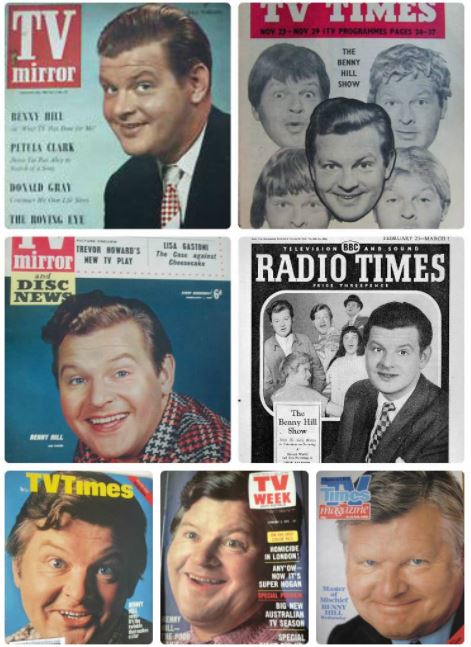
Showing posts with label Henry McGee. Show all posts

Monday, April 18, 2022

Benny Hill: Going Back to April 20th 1992...

I was going to begin this blog entry with a familiar greeting by Fred Scuttle, one of Benny Hill's famous characters, but I don't know if the phrase is copyrighted or not. We're a few days away from April 20, 1992...a sad day for millions of Benny Hill fans around the world. It was on that day Benny Hill passed away. Those who knew him personally may have expected it...but in the years since a lot of us fans have become aware of Benny's final weeks. There's been a lot of essays and commentary about his death in the last 30 years...and I'd say there's been a heavy dose of commentary circulating about him within the last 10 years. The video hosting site, YouTube, came along in 2005 and within 5 years video content from around the world had been accessed tens of millions of times, combined. Benny Hill videos...specifically his comedy sketches, comedy monologues, and Hill's Angels features...gained an entirely new audience. There had been a market established for Benny's comedy on VHS tape and on DVD...but with YouTube it enabled the content from those VHS and DVD releases as well as full episodes of his hour long television specials to be readily available. All a person needed to do is simply type in Benny's name in a YouTube search box and the results are nearly endless. Benny was chased off of television in 1989...after 20 years at Thames TV. Prior to his association with Thames he worked at the BBC. His television specials at the BBC were titled The Benny Hill Show. Highlights from his BBC programs have been issued on VHS and DVD...they're in black and white and can be accessed online. In the BBC episodes some of his supporting players were usually Jeremy Hawk, Patricia Hayes, and Rita Lloyd. 

It's been reported that his first performance to a mass audience was on a radio series, Variety Bandbox, in 1947. Benny made his television debut in 1950. He appeared regularly on the BBC airwaves throughout the 1950s and 1960s. In 1956 he starred in the comedy movie, "Who Done It?". He had a radio series, Benny Hill Time, for 2 years (1964-1966) and 26 episodes in total. He headlined a couple of television specials for ITV and ATV during his long association with the BBC but the most significant change happened in 1969 when he joined Thames Television. It's with this company that Benny became an international comedy star. His hour long television specials would be sprinkled throughout a calendar year...in most years he would deliver 3 or 4 one hour specials. His television specials became events and much anticipated. His supporting cast in the first decade of the Thames specials were Henry McGee, Bob Todd, Jackie Wright, and some faces familiar from his BBC years like Patricia Hayes and Rita Lloyd. In 1979 the syndicator, Don Taffner, brought Benny Hill to American television screens...and from America to television screens all over the world. Taffner conceived the idea of selling half hour installments of Benny's comedy to local television stations across America. An editing team carefully pieced together numerous half hour episodes using the footage from Benny's hour long television specials for Thames TV.

These half hour episodes aired practically all over the world in late-night time slots or in pre-dawn, early morning time slots. Benny also added a collection of female dancers to his show around this same time and he called them Hill's Angels. The dancers also doubled as comedic foils for Benny. As the 1980's progressed and the edited half hour Benny Hill programs were spiking local television ratings, becoming increasingly popular in various non-English speaking territories (thanks to a lot of pantomime sketches), the comics in his own homeland were on the verbal attack...and by 1989 with mounting pressures from British comics, critics, and feminist groups (collectively a very loud minority of people), Thames TV canceled the Benny Hill television specials. The last television special aired on May 1, 1989. The half hour episodes were still airing around the world...including America. 


Due in large part to the success that the half hour shows were still having in America the syndicator, Don Taffner, asked Benny if he would do another television special and that he'd handle the distribution. They hit on a concept called Benny Hill's World Tour. The television specials would spotlight a different major city/town in nearly every country on the planet. The first, in this proposed World Tour series of specials, spotlighted New York City. The USA Network bought the broadcast rights and Benny Hill's World Tour: New York! hit the airwaves on May 30, 1991. It was his first comedy special since 1989. Unfortunately, Benny's health began to decline as the year went on...in February 1992 he suffered a mild heart attack. He declined further medical treatment (a bypass) and experienced kidney failure and he passed away on April 20, 1992. His body was discovered by his long-time television producer, Dennis Kirkland, several days later. Several people had called Benny's house and there were no answers for several days. The lack of reply caused great concern, obviously, and with the help of the police Dennis Kirkland was able to get inside Benny's locked house where they found him sitting in front of the television in his favorite chair, non-responsive. 

The memorials and outpouring of grief was almost immediate once the news broke. It was revealed that among the mail in Benny's living room was a contract awaiting his signature...a contract for a series of new television specials for Central Independent Television. Apparently, and I'm just guessing, but this was the company Benny would've worked for on the World Tour series of television specials...with syndication rights perhaps held by Don Taffner. Nobody outside of a few has ever seen the actual unsigned contract so any number of us over the decades have made wild speculations as to what it may have contained. Benny Hill reruns have been scarce on television since the early 1990s. In the last 20 plus years BBC America and Antenna TV have aired variations of Benny's show. BBC America aired edited hour long episodes whereas Antenna TV in 2011, and added again to the line-up this year, air edited copies of the half hour edited programs. Antenna TV has been airing the half hour episodes in program blocks from 12am to 2am early Sunday morning. So, as I mentioned earlier, Benny Hill is always going to be there...ready to be discovered by successive generations of people. 

Wednesday, January 20, 2021

Benny Hill: 'National Smile Week' sketch...

As we're a day away from celebrating the birthdate of the legendary Benny Hill I was searching the video clips and came across a sketch uploaded a couple of days ago. It's a sketch from the January 13, 1988 special...it's the closing sketch called National Smile Week. It's one of his sped-up sketches...no voices...the only thing a viewer hears is the accompanying music and the sound effects. In the sketch you'll practically all of Benny's familiar co-stars as well as some of the Hill's Angels. There is also a kid in this sketch...in case you're not familiar, during this point of his television career, he incorporated children of the stage crew and his co-stars and they were billed on-screen as Hill's Little Angels. The concept of the sketch is to take a look at people, at random, going about their day with smiles on their faces regardless of the misfortune and chaos going on around them. This being a 1988 sketch means Jackie Wright, the little bald guy, isn't among the ensemble. He retired due to illness in 1983. Johnny Hutch, a somewhat similar looking actor, filled in for Jackie and you'll see Johnny in this sketch...he, too, doesn't lose his smile in spite of the bad luck that comes his way. As you can see in the screen cap, Benny is all smiles during this particular scene. Earlier in the sketch he encounters an elderly woman, Hill's Angel Sue Upton in disguise, and he gets car exhaust and fumes blown in his face...but he remains smiling. An image from that scene is in the thumbnail below...


Tomorrow marks the birthdate of the legendary British comedian, Benny Hill. I don't want to get into a lot of other details too soon...I've posted blog entries about him in the past and no doubt the blog entry I write tomorrow will probably cover a lot of information that can be found in the previous blog entries but with a 2021 time stamp. I'd read one of those blog entries that I'd written...I included several photo collages of Benny and I included my own facial expressions, too...sort of a comparison between the two of us as far as comical expressions for the camera are concerned. I don't think I'll be including any of that this time around but I may. I was snapping photo's of myself with my web-camera the other day and I was making some of the most silly, ridiculous faces I could think of...perhaps they'll be in a future blog entry on Benny Hill's birthday tomorrow!?! I don't have those kind of prop teeth to make it appear I'm forever grinning as Benny's wearing in the sketch. I made a collage a couple of minutes ago while simultaneously writing this blog entry. I multi-task. The collage is a side-by-side photo of Jackie Wright and Johnny Hutch.  


Sunday, January 17, 2021

Benny Hill: The Master of the Sight Gag...

Benny Hill; 1990
Hello all! I wrote a Benny Hill-themed blog entry back in early  January and I'm back with a follow-up. Benny's birthdate is coming up soon...the actual date is January 21. We're a few years shy of  celebrating the 100th birthdate of the late Benny Hill in 2024 and if  I'm still active on-line in 2024, and why wouldn't I be, I'll be  celebrating the occasion on this blog! I title this blog entry not  necessarily to do any kind of in-depth dissection of Benny's famous  visual comedy but more or less to highlight that how photo's can be  powerful and sometimes misleading. In this screen cap we see Benny performing one of his classic routines where he does the  dropping of the handkerchief bit. Typically Benny would be  walking along minding his own business and he'd see, one by one, "good looking men" drop their handkerchief and some woman would stop, pick it up, and go off walking with the man. Benny, after taking note, would then drop his handkerchief in the hopes a woman passing by would hook up with him but you see how the woman reacted...she picked the handkerchief up, blew her nose on it, and handed it back to him. 😄 

Benny Hill was a master of the sight-gag. He could manipulate the camera, for example, and have his image appear side-by-side-by-side. Camera tricks were also employed when the process of undercranking was used...time lapsed images often appeared on camera...a flower perfectly erect would wilt downward in seconds...he would also use the camera to speed up, edit, or dramatically slow down the pace of a sketch. The most internationally known use of the camera happened to be what's called The Benny Hill Chase. This is something that happened at the end of most episodes of the half-hour syndicated versions of Benny's show. A sketch would begin calmly but through a series of comical blunders and errors Benny would find himself being chased by practically everyone to the tune of Boots Randolph's "Yakety Sax". This sketch was typically sped-up and in pantomime to mirror the silent comedy that Benny was partially influenced by. Benny performed so many non-verbal sketches...typically sped-up with bouncy music...where the humor came with the visual gags. 

He would have words painted onto buildings that carried on a conversation with each other. A written statement found on the side of a brick wall, in graffiti style, might read: "I've not even begun to fight!!" and then the camera would show a sign just below that reads: "You could've fooled me!" with an image of a beaten up person laying on the ground. One of his recurring jokes happened to be the poster board where there was usually a series of 5 or 6 sentences written on a large poster board next to a door...Benny would then open the door and covering everything on the poster except the first letter in each sentence. It would usually spell out a double-entendre word. One of the ways that photos can be misleading is that they're a snapshot...and based upon the person using the photo it can either be a tool of publicity or a tool of deception.

Benny's comedy is all over the internet. If you look for it you're going to find a lot of his comedy sketches from all time periods of his career. The bulk of the sketches that appear on the internet were uploaded by fans and those who are simply curious or intrigued by Benny Hill. The material has all been issued on DVD and so there's rarely anything that shows up on-line that hasn't already appeared on a DVD somewhere. I like the fact that his comedy continues to be discovered. A photo like the one off to the left is of Benny and what were billed as the Hill's Angels. This dance group shown up in Benny's television specials in 1979. In the half-hour syndicated episodes that aired all over the world there are some installments where it's heavy with Hill's Angels dance numbers. Benny's half-hour syndicated programs, which aired all over the world starting in 1979, were edited versions of his hour long television specials from England. The Benny Hill Show that we seen on American television throughout the '80s and into the early '90s during the late-night/over-night hours were half-hour glimpses into Benny's comedy. If you have his full, hour length programs on DVD or if you've seen them on-line you'll see a lot more variety than what's on the half-hour versions. However, those half-hour versions of his show are what brought Benny Hill international fame. The photos of Benny and the Hill's Angels are used as a tool of deception. They're designed to make you think that's all Benny's show was all about...and it wasn't. If you know your Benny Hill history and are familiar with the various documentaries and taped remarks from Benny himself then you'll know how much he loved the British Music Hall tradition of entertainment. In a lot of his shows he put on large, highly choreographed song and dance presentations not unlike the kind one would find taking place in the music hall venues at the turn of the century. A big production and lots of dancing women and the comedy of it all were heavy influences on his distinctive style. Benny's use of dancing women, songs, patter, and sight gags, goes back to his years at the BBC and even prior to that on his earliest of television specials in the '50s. The Hill's Angels, however, weren't officially christened until 1979. Benny joined Thames Television in 1969. 


I know why those Hill's Angels photos are used...it draws a person's eyes...and in television as well as the internet you want the viewer's/reader's eyes. Those photos are like hundreds that are all over the internet. Do I think some people watched his shows just for the Hill's Angels? Probably! Do I think that there's some people who think that's what his show was all about? I'm sure there are those who think that way and having so many publicity photos on the internet of Benny surrounded by a collection of women goes a long way at further perpetuating that image. Am I going to set people straight once and for all and admonish those who misunderstand Benny's comedy? 

Let's look at this rationally. Do those four guys really look that terribly threatening or controversial? Come on...take a look. We have Henry McGee standing next to Benny Hill. In front we have Jackie Wright and Roger Finch. Bob Todd was also a familiar presence but isn't in the photo. The show's producer, the late Dennis Kirkland, had that sentiment that I'm echoing. I, too, don't feel that those four entertainers should send anyone into fits of anger, rage, and hostility. They're perfectly harmless. Jackie Wright, as you can see, became famous for the sped-up sketches where he'd get the top of his head patted on and in many cases, slapped, to the sound of rapidly strung together tapping sound effects. He was part of Benny's Thames TV specials until 1983. Health problems caused his 'retirement' from Benny's show and he passed away in 1989, ironically, the same year Thames TV canceled Benny's show following a 20 year run with the company. Anyway, after Jackie stepped away from the show in 1983, they tried a look-a-like for several television specials. Henry McGee was the straight man and the show's announcer. Henry had a flair for comedy, though, and would get a chance to play bizarre characters, too. Henry's talent was being able to have a perfect reaction to whatever Benny happened to be doing. There are numerous routines where Henry is acting as the interviewer to one of Benny's characterizations and in a decent number of those sketches Henry could get laughs by just holding a facial expression or get a laugh with a twitch or raise of an eye. Benny's television specials were much more than eye candy.   

I'll be writing another blog entry spotlighting Benny Hill in the days ahead...most likely on his birthdate. I'll close this blog entry with a clip of Benny and one of those sight gags I was explaining earlier in the blog. This one is the poster board gag where a series of lines are shown on a board and the visual punchline at the conclusion...

Saturday, January 9, 2021

Benny Hill is still one of Comedy's Masters...

I've written several blog entries about one of my all-time favorite British comedians, Benny Hill. I continue, every so often, to watch video clips on YouTube from his various television specials. I feel that my discovery of Benny Hill in the late 1980s mirrors a lot of other people my age...if they're like myself I discovered him in the summer months when I'd watch television in the late night hours. School was out in the summer months and so I didn't have to go to bed in order to wake up in the morning for school...and so I discovered one of Benny's television shows at some point after midnight. Later this month is Benny's date of birth. He was born January 21, 1924. His comedy programs go back to the 1950s on the BBC...at one point he was appearing on BBC radio. His longest tenure arrived in 1969 when he joined Thames Television. He remained with Thames Television for 20 years! His comedy was rooted in the British Music Hall tradition. His comedy relied heavily on wordplay, patter songs, and costume/visual humor. He was not a "sexist" nor is his comedy "offensive". He is a genuine comedy master. When you find yourself laughing at the funny or silly things he does in his television specials then he's done his job! As mentioned I often watch clips from his television specials on YouTube and I have some VHS tapes of his BBC sketches. Arts and Entertainment issued a 6-volume DVD collection titled Benny Hill: Complete and Unadulterated. I have Volumes 1, 2, 5, and 6. Those DVD's contain complete episodes of his Thames Television specials which aired from 1969 until 1989.

Benny's programs that aired in England were a series of hour long television specials. He would typically do a handful of television specials per year. In 1979 a syndicator, Don Tafner, brought Benny's comedy to America's television sets. Don's idea was to create a syndicated series featuring half hour episodes of sketches edited from Benny's hour long television specials. The syndicated, half hour series aired on American television during late night and eventually, over-night timeslots, once cable television expanded to all-night service. Once upon a time television channels used to sign-off near Midnight or just after the 'late night movie' ended. These syndicated half hour programs officially aired from 1979 until 1989 on many local television stations across America...however, some local TV stations continued airing the half hour sketch-filled show on into the early 1990s. Some of the members of Benny's supporting players included Jeremy Hawk, Patricia Hayes, Bella Emberg, Rita Webb, Henry McGee, Bob Todd, Jackie Wright, Louise English, Sue Upton, Jenny Lee Wright, Diana Darvey, and others. Some of the women were character actresses but others were part of a larger ensemble collectively referred to as Hill's Angels. This ensemble appeared in their own segment...typically a dance routine. Now, of all the Hill's Angels, the two that appeared more frequently in comedy sketches, too, were Sue Upton and Louise English. The two of them remain the most popular of the Hill's Angels to this day. Henry McGee was Benny's straight man and the announcer of the Thames Television show...often heard introducing Benny as "here he is...that lad himself...Benny Hill!!" or "Yes!! It's the Benny Hill Show!!". Jackie Wright was the short, bald headed guy that always got his head slapped in rapid fashion from Benny. In some of the later episodes following Jackie's 1983 retirement they had a fill-in take over that characterization due to the rapid head slapping sight gag being so hysterical.   

I know I can't speak for all fans of Benny Hill but I'm getting tired of seeing video clips pop-up from time to time bashing his comedy or seeing video where the uploader of the video is trying to insist that Benny was somehow "lonely" or lived a "sad, lonely life". That description of Benny is inaccurate. He enjoyed his life and he had a close circle of friends. Yes, it's true he lived alone and by most people's accounts anyone "who lives alone" must therefore be "lonely"...but I reject that assertion. Benny Hill was a master at what he did...and the fact that in the year 2021 there's so many video clips of him on the internet and the fact that I'm writing my third or fourth blog entry about him just goes to show anyone that Benny Hill is still one of comedy's masters!
      
Benny Hill: 1924-1992

Monday, June 18, 2018

Benny Hill...a Future Biopic in the Works...

I periodically browse the internet as mostly everybody else does and I came across a story about a biopic in the works centering around the one and only Benny Hill. I came across this story while doing an on-line news search for Benny and it's from a site called deadline.com and I offered a comment over there. Their comments section, much like mine, is monitored and so it hasn't been uploaded to their site yet. Just in case my comment, for whatever reason, doesn't get published on their site I planned ahead and copied my message and I'm pasting it here. Since I'm a fan and appreciator of Benny Hill's brand of humor and entertainment and since I've written several blog posts about him over the years I decided it made a whole lot of sense to share it on my personal blog page, too. First off here's the link to the story about the possible Benny Hill Biopic so you'll be able to better understand my comment:

Although one comment suggests there's not an audience considering the subject of the biopic died more than 25 years ago and another comment simply trashes him based on their interpretation of his comedy I, for one, have loved Benny Hill's style of entertainment ever since I came across it by accident flipping through the television channels one summer night as a teenager. I live in America and like a lot of people here I discovered Benny's comedy on late night television on those half hour syndicated programs that used to air on numerous local channels at all hours of the night.

I get a bit nervous, though, anytime I read about upcoming book releases or in this case, a biopic, centering around Benny given his enigmatic life and how only a precious few actually got to know Benny off-stage.

Unlike a quote from one of the writers of this project I never "fell out of love" with Benny's comedy...I grew to love it more and more. I've since added a lot of DVD products of his comedy...everything from his sketches from his BBC era in the mid 1960s to his more famous Thames Television sketches. But again...I hope this does Benny justice and presents him in a way that will teach people a lot of things they maybe didn't realize...the last thing I want to see, as a Benny Hill fan, is a hatchet job that celebrates or justifies the negative criticisms leveled at him during his later years from those with axes to grind
.

So, then, that's the comment I wrote concerning the possible biopic of Benny Hill. You will be able to read much more detail about this when you click the link I provided. There are other on-line sites reporting on this, too, but deadline.com was the first one I came across. They published their report on May 31st so I'm just a tad bit late at finding it.

Monday, December 15, 2014

Benny Hill...a 90 year anniversary...

I couldn't let 2014 go by without making mention of the 90th anniversary year of Benny Hill's birth. Born in January 1924 and passing away in April 1992, Benny Hill became one of the biggest comedy icon's of all-time (in my opinion). Originally rooted in verbal comedy and parody, seek out the black and white episodes Benny did for the BBC in the early part of his television career. Those episodes appear in a series called Benny Hill: The Lost Years. I have the VHS release...I don't have the DVD counterpart.

Benny's humor after leaving the BBC eventually became much more slapstick and pantomime, a move that guaranteed his programs to be universal given the elimination of a language barrier. Those programs became a hallmark of the Thames Television-era. Those programs (several specials broadcast throughout the year) were packed with bizarre poems, elaborate song and dance segments, all styles of comedy (both spoken and visual), and a fondness for theatrical staging created a Vaudeville-era showcase and a throwback to traditional comedy during a time when younger English comedians were embracing a so-called modern style of humor. Benny's age at the time of his first Thames production in 1969 was 45 and as the following decade opens we reach the mid 1970s and Benny's television specials are remaining enormously popular. After 10 years at Thames (1979) and numerous one-hour comedy specials, a decision is made to syndicate Benny's programs for American audiences.

In America the Benny Hill programs aired as half hour clip-filled presentations of sketches that originated during the first 10 years of the Thames TV association. The series ran in late night time-slots (or early morning time-slots, just before sunrise) on hundreds of local television stations in America. The hodgepodge look of the clip-filled series and the fact that Benny's age changes dramatically from sketch to sketch added to the uniqueness and appeal. Those at Thames TV and even Benny himself are quoted as being in disbelief that the programs attracted such a strong audience and fan base in America...but once the series became a smash hit in syndication in America it was like the floodgates opened up and from 1979 onward Benny Hill seemed to rule international humor...even though he'd been a big hit on British television since the 1960s. Yes, if you're keeping track, the year that Benny's sketches came to America in 1979 he was 55 years old. As I mentioned earlier, due to the American aired episodes being a compilation package, his age fluctuated 5-10 years within a single half-hour episode.
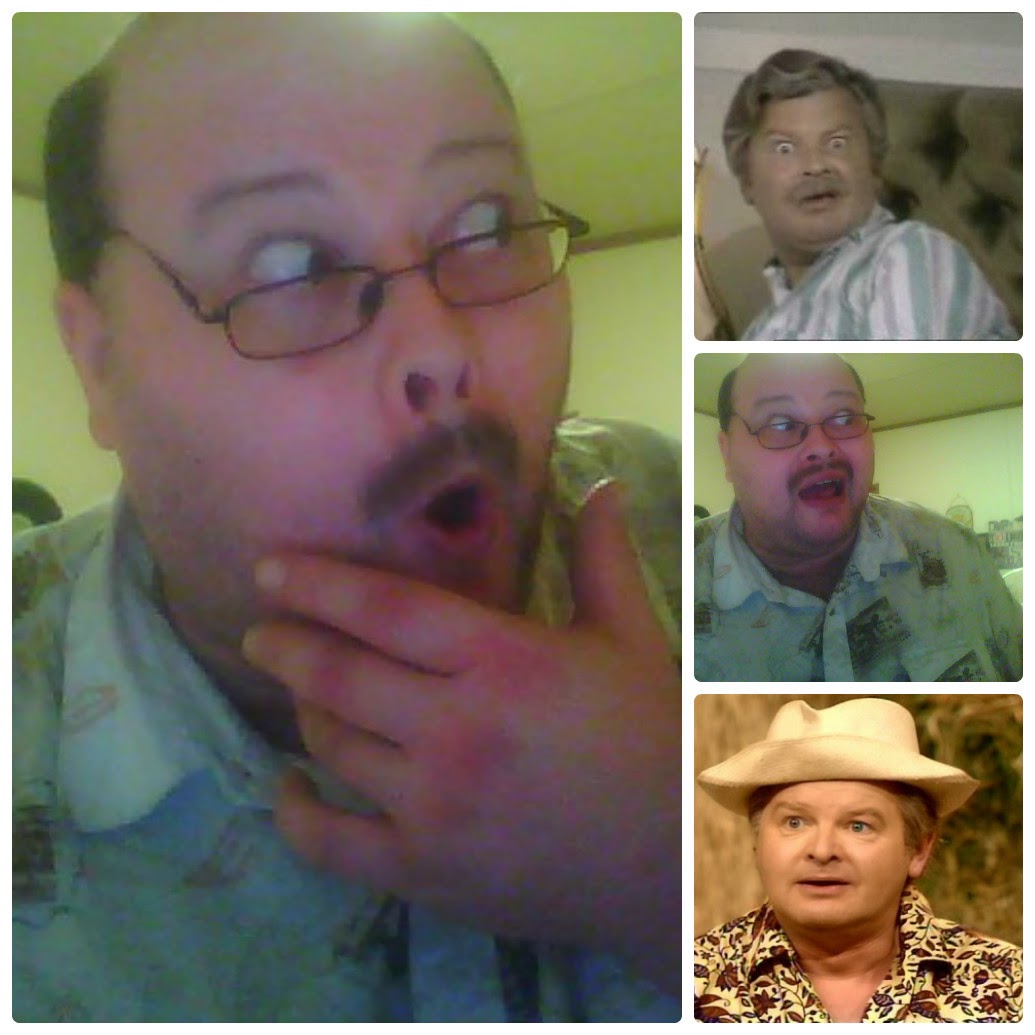
All the while Benny's sketches were entertaining millions of Americans and millions in Europe and millions of television viewers all over the world, he continued doing his usual sporadic television specials for Thames TV each year. Every year the half hour syndicated programs in America often gained new material annually as current sketches from then-recent Benny Hill specials continued to be woven into episodes that featured older sketches. By the mid 1980's the syndicated episodes looked even more distinct and by then Benny had turned 60 (in 1984). It is during the 1980's that the famous, or infamous, Hill's Angels made their debut. The Hill's Angels are the name of the group of women that appeared in many song-and-dance routines (often with Benny playing the part of the bum, the loser, or the easily excited spectator...typically all three rolled into one!). The name, Hill's Angels, has sort of retroactively come to identify all the beautiful women/models that appeared on his programs over the decades even though the name itself never came into being until the 1980's.

The Angels also played heavily in the sped-up silent sketches...a filmed segment that appeared on all the Thames TV episodes...and often it consisted of Benny and his familiar co-stars (Henry McGee, Jackie Wright, Bob Todd). A typical presentation starts out calmly and eventually works itself into a frenzied display of sight gags. It's in these sped-up presentations that one of the most memorable sight gags became immensely popular and referred to by many viewers as "the slapping of the head of the little bald guy".

The sped-up presentations make generous use of camera tricks (called under-cranking) and those appear at various moments in any number of episodes. In the closing segments of his programs, often a sped-up gag reel, the action is played under the saxophone solo of Boots Randolph's "Yakety Sax" as Benny eventually is chased by everybody he meets as the credits roll.

As the 1980's progressed, more and more younger comics were starting to come out of the woodwork and many of them had a much different style of comedy. In the mid-late '80s several British comedians seemingly took it upon themselves to launch into anti-Benny Hill tirades. Feminists received a much louder voice and the language-stifling unofficial censorship policy, popularly known as political correctness, played a part in Benny's eventual cancellation at Thames TV in 1989.

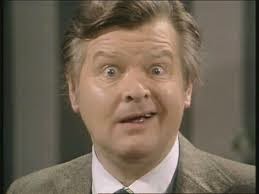
By that time Benny had started to incorporate a lot of cute humor into the sketches...lots of children become part of the sped-up sketches...and in typical fashion Benny allowed the other people in the comedy sketches to come out as the winner. As mentioned earlier, Benny usually always played the bum, the loser, the fall guy, the bad luck charm. In any comical sketch in which Benny seemed to be coming out on top of a situation, something always happened to change his fate. If he happened to be a pirate and stumbled upon a chest...he'd visually relish the idea of being rich...only to open the chest and find a sign that read "It's Lonely In Here!" and he'd make one of his famous comical expressions at the camera, start crying, and the scene would cut to something else. Another sight gag one might see is of Benny spraying deodorant under his arms and then suddenly noticing huge paint spots in his arm pits...often leading to this classic facial expression...

Silent movies were a huge inspiration to him and that's evident right from the start of his television career. He was the recipient of a prestigious Charlie Chaplin award in 1991. In the BBC era Benny often presented films from a fictional character named J. Arthur Clinker, billed as "the fastest film maker". Benny's straight-man in the BBC telecasts was Jeremy Hawk (a role later taken up by Henry McGee during the Thames TV era).

I research a lot and a couple of years ago I came across several articles originally printed in British newspapers that featured younger comedians making disparaging remarks about Benny's style of comedy and it's "old-fashioned" look. The thing that baffled me is the idea of a comic viciously attacking another comic. Isn't it kind of an unwritten rule that comics are all in it together...creating laughter? Unless there are 2 comedians engaging in a mock-feud (like Fred Allen and Jack Benny), it seems kind of crude for one comedian to bash another on the merits of what's funny. Humor is subjective...thankfully.

After the cancellation of the Thames TV contract in 1989, Benny's syndicated television programs in America eventually came to an end even though a couple of local stations in my area continued to air repeats of the clip-fests into the early 1990s. A local ABC station in Columbus aired the program in the overnight hours (late Saturday, early Sunday) opposite the last half hour of Saturday Night Live on NBC. Another station aired the program at an even later time-slot on Sunday mornings. Benny's fame in America led to a 1991 television special taped in New York. It's official name is Benny Hill's World Tour: New York. It was filmed/taped on-location in the spring of 1990 but it aired early in 1991 on the USA cable channel. It became the first and only hour long Benny Hill television special to originate outside of England.

It was going to be part of a "World Tour" series but only the New York special became a reality...his health played a deciding factor in the non-materialization of the other proposed specials (I touch on that later in the blog).

The television special proves that he was in top comic form...and there are several video clips of sketches from the 1991 television special on YouTube. One of the funniest is the Rap Song...


In the meantime, one of the hallmarks of burlesque and early stage comedy in general is the female impersonation by men. Modern audiences think "female impersonations" and perhaps instantly think of people described as Drag Queens. Centuries ago men dressed up as women for laughs and females often played the part of young boys (even today, a lot of young boys on cartoons are often voiced by females). It's almost impossible for people today to rationalize this kind of humor. Those that have no knowledge of burlesque humor (particularly Victorian burlesque of the 19th century) and therefore have a lack of understanding of it's comical value are typically confused or at a loss for words. Some people ignorantly proclaim that comics that dressed up as women must be closet homosexuals or something. I hardly suspect Milton Berle, for example, to have been a closet homosexual. He dressed up in female attire plenty of times for comic effect. The cartoon character, Bugs Bunny, famously put on dresses, lipstick, and heavy mascara in many attempts to ridicule Elmer Fudd's befuddled dopiness and apparent shyness around females.

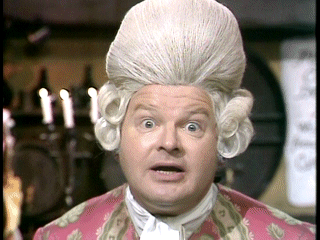
Look up Victorian burlesque or read up on English music hall comedy and you'll immediately notice Benny Hill's biggest inspiration. He not only played the roles of Princesses and Queens but also of Kings, Dukes, Princes, and court jesters.
In February 1992 Benny Hill had a mild heart attack. Reports state he refused to change his eating habits or his lifestyle...and eventually this led to his death at the age of 68 in April 1992. It's been reported that on the very day he died a contract arrived in the mail for even more television specials. One can assume that these specials would've aired throughout 1992 and into 1993 and possibly beyond that point in time but as it turned out only the New York program surfaced in early 1991. After his death millions of people obviously mourned it...fans, friends, and extended family members alike. It's not a secret that Benny passed away in the midst of social controversies surrounding his brand of humor and many believe the cancellation of his Thames TV contract played a factor in his death considering that the television specials were "his life" and once he had "nothing to live for" he started to lose the desire to carry on. The New York television special doesn't play into that narrative, though. I've seen bits of the 1991 special and I didn't see a man torn apart or in misery...to my eyes it was the usual Benny Hill up on the screen...making faces, rolling his eyes, dancing and prancing around, and delivering one joke after another. In the 20+ years after his death the home video and later, the DVD market, became commercial avenues for Benny's legacy. The VHS home videos featured comedy sketches, at random, from the Thames TV specials that Benny did during the latter half of the '70s and into the '80s. The DVD series, titled Complete and Unadulterated, contained actual full length programs from Benny's earliest years on Thames TV. The actual programs themselves featured a mix of previously filmed sketches, live sketch performances, singing, and dancing...including Benny coming onto the stage at the beginning and talking to the audience. As mentioned, the half hour edited programs that aired in America starting in 1979 contained none of the monologues, singers, or other trappings of a variety program. The syndicated programs that aired in America contained one sketch after the other after the other...maybe featuring a comical patter song from Benny, too, to break up the sketch formula...but that's it. The full length episodes are a revelation to those only familiar with the edited half hour clip-fests that aired on American television stations for more than 10 years.

Enjoy the pictorial salute...I start things off displaying one of those A&E DVD releases of the Benny Hill program...in the image at the bottom right I display the VHS tapes of his BBC programs. Those episodes are all in black and white. Located on one of those tapes is a hilarious parody of "Bonanza" titled Bo-Peep. Benny, thanks to camera tricks, plays the parts of Ben Cartwright, Little Joe, and Hoss. Patricia Hayes, one of Benny's earliest supporting players, plays the part of Bo-Peep. She accuses the sons of stealing her sheep. In yet another sketch during the BBC era Benny does an exaggerated spoof of Mick Jagger and the rest of the Rolling Stones. 
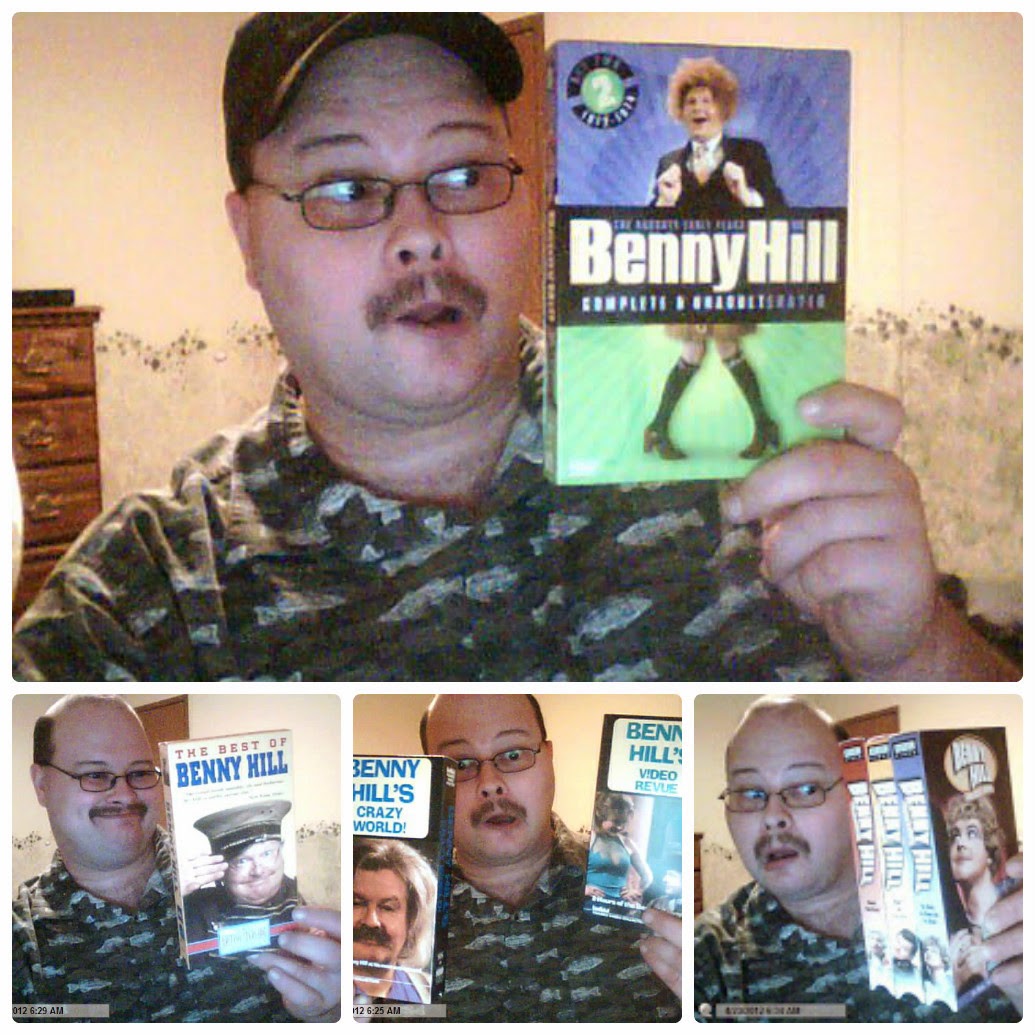
In another sketch found on one of the VHS tapes Benny parodies television commercials (one of his favorite routines) and in a sped-up film by fictional J. Arthur Clinker we're all treated to a surreal and bizarre film spoofing melodrama's and action-adventure films. The film is made so fast that there's misplaced edits, strange camera angles, problems with the film's speed (jumping from slow motion to uptempo, back and fourth). During a crucial moment in the story, Benny's character attempts to pour out his feelings but his dialogue skips due to the unnecessary editing. As stated, J. Arthur Clinker truly is the fastest film maker in the world. In the first picture in the bottom row, that VHS tape consists of another J. Arthur Clinker 'masterpiece'. This time around it's from one of the Thames TV episodes and it features Benny as a love-struck passenger on a ship. Nicholas Parsons appears as Benny's rival. In this sketch there's a hysterical scene where the line "why didn't you tell me you were a second class passenger?" is shot and re-shot multiple times...each successive take is performed in a much slower tempo than before. If you look close enough, during one of the last slow takes of the phrase, you'll see Benny struggling not to break out laughing.
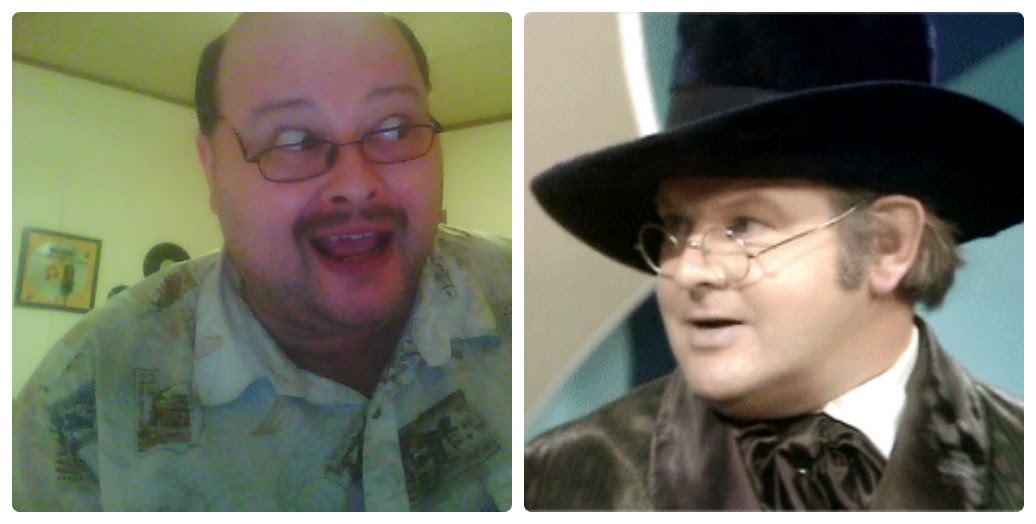
In some of the collages, as you can see, I posted images of myself next to Benny. On my Facebook page I have an image of myself saluting, as Benny Hill, and I recently took the image and placed it side by side with an image of Benny saluting in the same manner. Some of the collage site's special features enabled me to be somewhat creative but I didn't explore each and every special effect available. Up next is a series of collage's that I put together recently. There's one that I deliberately put together to spotlight the burlesque side of his comedy and the female impressions. I didn't come across any suitable pictures of any of his supporting players in drag although I've got video of sketches that have Jackie Wright all dressed up in high heels and a long wig and one unforgettable sketch featuring Henry McGee in a blue dress, pearl ear rings and matching necklace, and donning a tight curly wig.

This is by no means a complete representation of Benny Hill's female impersonations. At various moments in his programs, both on the BBC and for Thames TV, he often impersonated movie actresses and political figures. Some of the usual targets happened to be Elizabeth Taylor, Margaret Thatcher, and Mae West. In the four pictures to the left, Benny is dressed up as non-celebrities. Often the females happened to be nags or holier-than-thou...or scheming gold-diggers. In his series of commercial parodies he often played the part of the housewife demonstrating numerous items found in the kitchen, laundry, or the bathroom. One of the BBC sketches featured Benny as both Richard Burton and Elizabeth Taylor and later as Mae West and W.C. Fields. Much later, during the Thames TV era, Benny brought back his impression of Mae West and W.C. Fields many more times in comical encounters. As far as the female vocals it typically depended on the kind of female. Most of the nagging wives had a high pitched, irritated voice. The snooty females all had a similar vocalization that played into that type...complete with haughty laughter and an arrogant demeanor about themselves and others. The larger picture seems to come from a soap opera spoof...and in those sketches Benny played the females as overly dramatic and prone to breaking into tears very easily. In that larger image the character looks as if she's thinking of some sort of scheme to either break up a relationship or enter into one. The image at the top left appears as if Benny applied the snooty/aristocratic vocalization to that character.
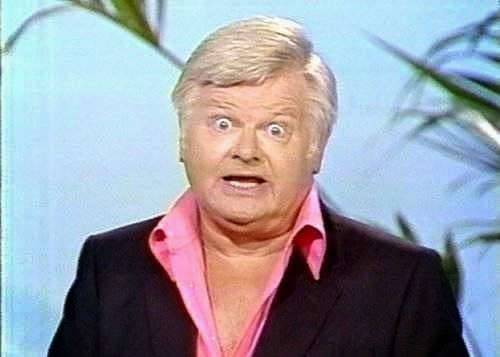
I don't have any information as to the year this picture happened to originate but based on the light colored shirt and his hair I'd say this is from an interview session he did at some point in 1990 or 1991. There's a VHS tape titled Benny Hill: The World's Favorite Clown, which surfaced in 1991. I have the VHS tape and I also have it on DVD. It's a special bonus feature on one of the A&E releases. There's another documentary on Benny that also makes an appearance as a bonus feature on another A&E disc. That particular documentary originally aired as part of A&E's Biography series, hosted by Peter Graves. The official title of that episode is called Benny Hill: Laughter and Controversy. In each documentary surviving supporting players and behind the scenes people give their thoughts on Benny and near the end of each documentary the supporting players offer their feelings on the shabby treatment his career received at the end of his life by television critics (ironically those that lived in England) and the accusations his humor obtained by a host of younger comics in England at the time. Benny, himself, takes part in the 1991 documentary and offers his thoughts of Thames TV ending his contract. He doesn't say anything too harsh but others do. In addition to those documentaries (both of them I strongly recommend) and in addition to the DVDs, there's also several books on the market about Benny. I personally do not have any of those books...I've not come across any review that has convinced me that any of the available books are accurate and lovingly written. I refuse to purchase anything that puts Benny in a negative light.

Let's all mug for the camera, shall we?? I don't necessarily like the idea of being approached by somebody (Benny) whose carrying a syringe. He didn't numb my mouth...the syringe is just for looks I found out. It appears as if the same thing happened to that poor woman (Benny)...she couldn't even tolerate the canned pasta on her table. You can click the smaller collage's for a bigger view. Did Benny Hill have any recurring characters? For those that might be wondering...the answer is yes! In addition to the previously mentioned fastest film-maker, J. Arthur Clinker. Benny also had a long-running character by the name of Fred Scuttle. This character is typically the one that did the backhanded salute across the forehead but the gesture soon started to make it's way onto any sketch regardless of character but it's Scuttle that I happened to see do the gesture the most often during his introductions. Scuttle is often in the sped-up silent sketches, too. Another character is Chow Mein. This character, a parody of the Chinese, often mangled the English language and exchanged in confrontational conversations (most often with Henry McGee). Typically Chow Mein grows frustrated by McGee's inquisitive nature and his habit of repeating everything back to the viewers. This causes Chow to growl in irritated cadence: "why must you repeat e'erything..." followed by the most popular catchphrase, "you stoopid iriot" (English translation: "you stupid idiot!"). Sometimes another supporting player, Bob Todd, appears along side Benny as a character named Cookie Boy (a cook at one of Chow Mein's fictional restaurants). Another long running character, Ted Tingle, often appeared as a storyteller and a poet...delivering poems and patter song with a thick Cockney accent.

I hope more and more people discover Benny Hill as time goes by. Thanks to the internet it's easy to search for his comedy and seek out others that enjoyed his humor for the sheer happiness it brought. To over-think and over-analyze Benny's style of humor is doing a disservice to it's intention. It's not hard hitting, satiric humor in the same category of those that are in the David Frost tradition. Benny's humor allows one to embrace their inner silliness and laugh at life's experiences and see the absurdity in a lot of everyday situations. In his own kind of way he was a trailblazer...he's one of the first British comics to explore television's capabilities. Benny may have been the only British comic of his generation to embrace television and not look at it in a scornful manner (as film and stage comics tended to do).

Simply put, Benny's humor will last as long as people enjoy laughing.
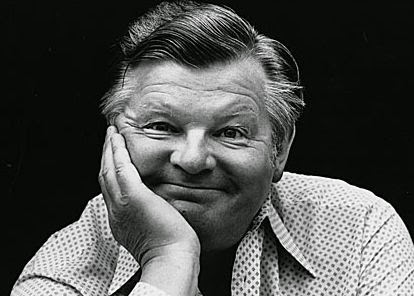
Benny Hill: 1924-1992