Showing posts with label 1992. Show all posts

Monday, April 18, 2022

Benny Hill: Going Back to April 20th 1992...

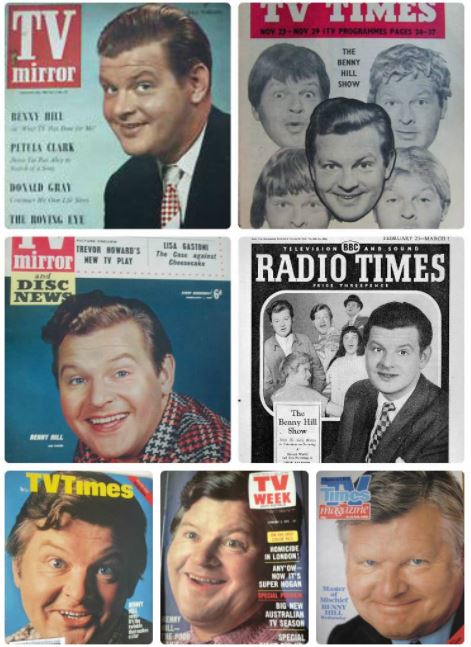
I was going to begin this blog entry with a familiar greeting by Fred Scuttle, one of Benny Hill's famous characters, but I don't know if the phrase is copyrighted or not. We're a few days away from April 20, 1992...a sad day for millions of Benny Hill fans around the world. It was on that day Benny Hill passed away. Those who knew him personally may have expected it...but in the years since a lot of us fans have become aware of Benny's final weeks. There's been a lot of essays and commentary about his death in the last 30 years...and I'd say there's been a heavy dose of commentary circulating about him within the last 10 years. The video hosting site, YouTube, came along in 2005 and within 5 years video content from around the world had been accessed tens of millions of times, combined. Benny Hill videos...specifically his comedy sketches, comedy monologues, and Hill's Angels features...gained an entirely new audience. There had been a market established for Benny's comedy on VHS tape and on DVD...but with YouTube it enabled the content from those VHS and DVD releases as well as full episodes of his hour long television specials to be readily available. All a person needed to do is simply type in Benny's name in a YouTube search box and the results are nearly endless. Benny was chased off of television in 1989...after 20 years at Thames TV. Prior to his association with Thames he worked at the BBC. His television specials at the BBC were titled The Benny Hill Show. Highlights from his BBC programs have been issued on VHS and DVD...they're in black and white and can be accessed online. In the BBC episodes some of his supporting players were usually Jeremy Hawk, Patricia Hayes, and Rita Lloyd. 

It's been reported that his first performance to a mass audience was on a radio series, Variety Bandbox, in 1947. Benny made his television debut in 1950. He appeared regularly on the BBC airwaves throughout the 1950s and 1960s. In 1956 he starred in the comedy movie, "Who Done It?". He had a radio series, Benny Hill Time, for 2 years (1964-1966) and 26 episodes in total. He headlined a couple of television specials for ITV and ATV during his long association with the BBC but the most significant change happened in 1969 when he joined Thames Television. It's with this company that Benny became an international comedy star. His hour long television specials would be sprinkled throughout a calendar year...in most years he would deliver 3 or 4 one hour specials. His television specials became events and much anticipated. His supporting cast in the first decade of the Thames specials were Henry McGee, Bob Todd, Jackie Wright, and some faces familiar from his BBC years like Patricia Hayes and Rita Lloyd. In 1979 the syndicator, Don Taffner, brought Benny Hill to American television screens...and from America to television screens all over the world. Taffner conceived the idea of selling half hour installments of Benny's comedy to local television stations across America. An editing team carefully pieced together numerous half hour episodes using the footage from Benny's hour long television specials for Thames TV.

These half hour episodes aired practically all over the world in late-night time slots or in pre-dawn, early morning time slots. Benny also added a collection of female dancers to his show around this same time and he called them Hill's Angels. The dancers also doubled as comedic foils for Benny. As the 1980's progressed and the edited half hour Benny Hill programs were spiking local television ratings, becoming increasingly popular in various non-English speaking territories (thanks to a lot of pantomime sketches), the comics in his own homeland were on the verbal attack...and by 1989 with mounting pressures from British comics, critics, and feminist groups (collectively a very loud minority of people), Thames TV canceled the Benny Hill television specials. The last television special aired on May 1, 1989. The half hour episodes were still airing around the world...including America. 


Due in large part to the success that the half hour shows were still having in America the syndicator, Don Taffner, asked Benny if he would do another television special and that he'd handle the distribution. They hit on a concept called Benny Hill's World Tour. The television specials would spotlight a different major city/town in nearly every country on the planet. The first, in this proposed World Tour series of specials, spotlighted New York City. The USA Network bought the broadcast rights and Benny Hill's World Tour: New York! hit the airwaves on May 30, 1991. It was his first comedy special since 1989. Unfortunately, Benny's health began to decline as the year went on...in February 1992 he suffered a mild heart attack. He declined further medical treatment (a bypass) and experienced kidney failure and he passed away on April 20, 1992. His body was discovered by his long-time television producer, Dennis Kirkland, several days later. Several people had called Benny's house and there were no answers for several days. The lack of reply caused great concern, obviously, and with the help of the police Dennis Kirkland was able to get inside Benny's locked house where they found him sitting in front of the television in his favorite chair, non-responsive. 

The memorials and outpouring of grief was almost immediate once the news broke. It was revealed that among the mail in Benny's living room was a contract awaiting his signature...a contract for a series of new television specials for Central Independent Television. Apparently, and I'm just guessing, but this was the company Benny would've worked for on the World Tour series of television specials...with syndication rights perhaps held by Don Taffner. Nobody outside of a few has ever seen the actual unsigned contract so any number of us over the decades have made wild speculations as to what it may have contained. Benny Hill reruns have been scarce on television since the early 1990s. In the last 20 plus years BBC America and Antenna TV have aired variations of Benny's show. BBC America aired edited hour long episodes whereas Antenna TV in 2011, and added again to the line-up this year, air edited copies of the half hour edited programs. Antenna TV has been airing the half hour episodes in program blocks from 12am to 2am early Sunday morning. So, as I mentioned earlier, Benny Hill is always going to be there...ready to be discovered by successive generations of people. 

Tuesday, February 2, 2021

Hee Haw: Newly uploaded Interviews...

**Author's Note (July 17, 2021): This blog entry originally had two video uploads...one an interview with George Yanok and another with Lulu Roman. They've since been removed from YouTube. The uploader is still on YouTube and so I don't know if the uploader took those videos down or if YouTube removed them. I'm still keeping the blog entry up because it includes my reviews of each of the interviews.**

Hello all! I've written more than 20 blog entries focusing on the television series, Hee Haw, over the years. In a lot of those previous blog entries the video clips I embedded have since been removed from the internet. There were clips on-line featuring comic sketches from the obscure 1992 season. There were clips on-line from episodes that aired in 1990. Those video clips are no longer on-line and as a result some of my previous Hee Haw blog entries show blank video screens. The show, for those new to Hee Haw, aired in first-run production from 1969 until 1992. The show aired on CBS for it's first two seasons, 1969-1971, but beginning in the fall of 1971 it started airing in syndication on local television affiliates. A majority of the local affiliates were owned by CBS but it wasn't uncommon to see Hee Haw airing at 6pm Eastern on a local ABC station and then see it airing on a local CBS affiliate at 7pm Eastern. It's official time slot during it's decades in syndication was 6pm Central on Saturday evening. It's home base was in Nashville, Tennessee and during it's first 12 seasons it was taped at the Channel 5 television studios. The production moved to a studio in Opryland in 1980 and it remained there until it's final episode in 1992. 

A YouTube channel called Tee Vee Classics has uploaded a couple of interviews with those who worked on the Hee Haw show. One interview is with cast-member, Lulu Roman. The other interview is with one of the show's main writers for a number of years, George Yanok. The interview is engaging and informative. The writer talks about the complex production of the show and how editing was the driving force behind the series...mentioning that the show won an Emmy in the category of 'Best Electronic Editing of a Primetime Series'. He mentions the show's hosts, Roy Clark and Buck Owens, and makes mention of several other cast members and why it was important to tape the show in Nashville, Tennessee rather than have the cast fly out to Los Angeles. 

In the interview with Lulu Roman. She speaks about her upbringing and how so far removed she was from the country music scene and the country music world she had no idea, at first, that she was sharing the stage with legends of country music. She tells how it was Buck Owens who 'discovered' her several years before Hee Haw was even created. Buck had a hit television show that was locally syndicated and for the first several years while co-hosting Hee Haw he remained host of his own television show. He eventually had to give up his own show because, if I'm recalling correctly, it became competition as Hee Haw began showing up on local television affiliates that were carrying Buck's television series. 

(July 17, 2021): I know it's not the same as having the two video uploads...but this is the big reason why I usually don't want to include video uploads in most of my blog entries.   

Sunday, February 10, 2019

Hee Haw at 50...1992 episode...

I discovered several minutes ago that an episode of Hee Haw from 1992, in it's entirety, is available on YouTube. The 1991-1992 season consisted of 22 episodes...as opposed to 26 episodes...and the footage was taped in the latter half of 1991 with the episodes making their way to the television screen in January 1992. This season is often referred to as the non-rural season or, in some descriptions, the season in which the series lost it's soul...but I don't get overly dramatic about the change of scenery; but it had long been something of a curiosity of mine to see a full length episode from this season and now I have. There have been clips from this season make their onto the internet over the years and in each instance I'd rush to embed the clips in a blog entry like this. The video clip I'm including in this blog entry features Garth Brooks, Louise Mandrell, and Billy Dean as guest stars. It originally aired February 22, 1992 (episode 8 of Season 24). The clip was taped straight off of television and so it isn't in top quality but it's certainly watchable and it features the cast roll call for those interested in who all made the cast line-up during this season. In addition to the changes in scenery it also changed it's title somewhat...gone was the braying donkey and in it's place was a simple title card that read The Hee Haw Show. In Garth's first song, "What She's Doing Now", he performs without his guitar...it looks unusual, to me, to see him just standing there behind a microphone without a guitar. Later on in his second performance, "Papa Loved Mama", he looks more familiar.

Louise Mandrell, for both appearances, does an elaborate performance with loads of choreography and she was the long established artist of this episode. In each performance there was a lot of dancing and highly suggestive choreography but then, perhaps by design, she completely counters these sensual performances in an appearance in which she's dressed as a slightly overweight clown and along with a posse of other clowns they kind of tap dance on a giant keyboard (picture the keyboard scene from the movie, Big, featuring Tom Hanks and Robert Loggia). In typical circus clown performance they all fall to the ground to signal the finale of the performance.

Although Garth Brooks was still a relatively newer artist when this episode was taped the actual newcomer, by comparison to both Louise and Garth, was Billy Dean, in an appearance performing his breakthrough hit, "Only Here For a Little While". That song had been released in November of 1990 but by the time this episode was airing in February 1992 Garth had become a gigantic media mogul and even though Billy had released a series of Top-10 hits in the same span of time the differences in their individual career progressions were dramatic. Billy's second performance is "You Don't Count the Cost". Notice that Garth and Billy performed single releases in both performances. In past episodes you'd have the guest stars singing their current single release (if they had one) and a previous hit or the guest would perform a recent hit and then later on perform a classic hit or sometimes the guest would perform their current hit and something from their current album. I don't know if Garth's "Papa Loved Mama" had been released as an official single when this episode was taped but in retrospect both of the songs he performed were major hits for him...the same goes for Billy Dean's choice of songs.


Gailard Sartain has a sketch in this episode called Fast Freddie's Used Cars. Ironically George Lindsey was still a cast-member of this season and he had long been the star of a sketch called Goober's Garage. In the cast roll call he appears in his Goober clothing and there's a Goober sketch in this episode with Lulu Roman. George appears a couple of other times, too...particularly near the end in a sketch called Bus Stop in which he has some banter with Garth Brooks. Earlier he appears in a sketch, Crime and Punishment, as a washed up comedian delivering awful jokes to the prisoners (Grandpa Jones and Gordie Tapp). Roy Clark does a routine which is probably meant as a substitute for the Pickin' and Grinnin' segment...but it plays like the Hee Haw Honky-Tonk sketch of the early to mid 1980s. Roy plays the guitar, offers a one-liner, plays the guitar some more and then the playing comes to an abrupt halt as the camera pans to the 'customers' at their table who deliver one-liners, and then Roy begins playing his guitar once again, etc. etc.

Stand-up comedian Gary Mule Deer was among the cast-members this season...in this episode he has a brief sketch with Gailard Sartain (playing a marriage counselor). Gary also appears as a preacher and later a cowboy. Roy Clark is involved in a clever wordplay sketch using a James Bond reference while Gordie Tapp and the Norris Twins are in a sketch where Gordie plays a jerk offering tips on how to be a successful jerk.

My opinion of this episode: I found it entertaining...filled with lots of singing and intentionally bad joke telling...with the only thing most obviously missing was the backwoods scenery and cornfields. Does it rank high when compared to episodes featuring the haystack, hay bales, moonshine jugs, pitchforks, and Kornfield? I don't think it does...but to write off this season, and I'm only basing it on this one episode I've seen so far, but to write the season off as horrific or pretend this season never existed, as some fans do, is a bit extreme and so my final thoughts of the non-rural episodes is a C+ if I were to grade it...and I'm confident in the fact that most, if not all, of the episodes from the 1991-1992 season had the same formula and sketches and so I'm confident in rating the entire non-rural season of Hee Haw with a C+ based on that episode I embedded.

Norris Twins and Gordie Tapp, 1991

Monday, February 4, 2019

Hee Haw at 50...Kornfield Friends...

Hello once more...I don't keep this blog as active as I should but it's only because I'm more focused on my main blog page...but ever so often I'll leave a blog entry here. It should come as no surprise that one of my favorite television programs happens to be Hee Haw. The recent blog entries here tell as much in addition to the series of blog entries I did several years ago or perhaps quite a few years ago detailing some sort of milestone that the series was either reaching or nearly reaching. This time around I'm blogging about the series making the 50th anniversary of it's debut. The series debuted in the summer of 1969 on CBS and remained on their schedule until early 1971. In the fall of 1971 it entered first-run, off-network syndication and remained in production until early 1992.

The official 50th anniversary date is June 15, 2019 (the series made it's debut on CBS on June 15, 1969). In the months leading up to this date and for the remainder of the year (2019-2020) there will be a traveling 50th anniversary tour starring four of it's cast-members: Buck Trent, Misty Rowe, Jana Jae, and Lulu Roman. The tour is titled Kornfield Friends and there is an official website and several confirmed appearances are posted: two in March, two in May, and two in August. I'm sure there will be more added. You can visit the site by clicking HERE. As of this writing once you click that link and you come to the confirmed appearances section there are two August dates in between the two appearances in May. I'd contact their website for exact dates, times, etc. or you can visit the websites of the venues the tour will be stopping at.

One of those venues is in the Ford Theater at the Honeywell Center in Wabash, Indiana on August 9th. I visited the website of that venue and the show is listed on their site. Tickets go on sale February 9th (this Saturday). If you're in the general area and happen to be a fan of Hee Haw or just want to see four of the cast-members trade jokes, tell stories, perform, and interact with the audience click HERE for all the information.

Over the weekend on the Mike Huckabee Show on the Trinity Broadcast Network he had the four stars of the tour on his show. Mike also recreated a Kornfield joke segment and he appeared in it...at first wearing a straw hat...but eventually it disappeared. You can see the segment featuring the Kornfield Friends cast and sketch in the video embed below...


Friday, January 15, 2016

Benny Hill...my favorite British comedian...

In December of 2014 I posted a blog entry marking the occasion of Benny's birth year 90 years earlier in 1924. I didn't post a blog in January of 2015 marking the 60th anniversary of the debut of The Benny Hill Show on the BBC because I'm notorious for not keeping track of anniversaries, birthdays, and milestones except for a chosen few. But as I began looking through some of the photo's saved on my computer of Benny from various stages of his career I happened to read that January 15th is the day that Benny debuted as the star of his own self-titled comedy special. No stranger to British audiences in 1955 he had been seen in a series of comedy programs and specials as early as 1951 but those didn't carry the title of The Benny Hill Show.

It should come as no surprise that I'm a fan of Benny Hill...he's my favorite British comedian by far. Although he isn't the only British entertainer that I'm familiar with he is by far my favorite. Television specials hosted and written by Benny under the specific title of The Benny Hill Show aired, on and off, from January 15, 1955 to May 1, 1989. The last television special in May of 1989 was his 58th and final for Thames TV. The syndicated half-hour series that originated in America in 1979 and had expanded globally continued to air regardless of the cancellation of the series by Thames TV. There happened to be more than 100 half hour programs that had already been compiled since 1979 that re-airing them over and over to fill the lack of new footage coming over became the norm for several years. In the early '90s Benny ventured over to America to check out potential spots to tape comedy material for a proposed series of specials titled Benny Hill's World Tour. The first special, focusing on New York, is the only program that became a reality due to the slow nature of the shooting schedule, delays, and the usual perfectionism Benny had been known for. The special finally hit the air on the USA Network on May 30, 1991. It didn't air in his homeland until 1994 (2 years after his death!).

I discovered the comedy of Benny Hill as a teenager in the early 1990s. Here in my part of America the local channels aired Benny's program in the late-night/over-night hours although research shows his programs in some parts of the United States aired as early as 9pm.

The syndicated half hour programs, comprised of sketches originally seen on his full-length hour long programs in the U.K., began airing in 1979. The batch of syndicated programs that aired for the first several years in local syndication in America featured material that had originally aired as early as 1969 (the first year Benny began making television specials for Thames TV).

After the phenomenal success of the edited programs in America it didn't take long for those clip-fest programs to find their way onto the television screens of people all over the planet. As it's been pointed out by official historians and biographers alike the popularity of Benny Hill in America kicked open the bolted doors of just about every country across the globe and this half hour program of sketches suddenly gave Benny global fame the likes of which a decidedly television-created star had never known.

This isn't to say Benny's mass popularity translated into critical acclaim, praise, acceptance, or any other similar synonym you can think of. Critical praise of Benny Hill is limited and in some countries it's muted. The irony of Benny's global success and the acclaim from abroad stood in sharp contrast to the cold and condescending remarks by television critics. Baffled, mystified, and dumbfounded could easily have been the adjectives to describe television critics in America once the program started to become such a hit in local syndication that episodes of the show began to air for what seemed like every other hour in the same market but on a different channel. It also wasn't uncommon for multiple local channels to air the program at the same time during late-night.

To further illustrate the phenomenal success of Benny's program in America newspaper columnists began to go on the attack in their editorials...attempting to link Benny's programs to increased crime, the rise of AIDS, increased rape, and just about anything else. During my research for this blog entry I come across a scathing article about the program carried in a Florida paper on July 5, 1982. The author attempted to find the reasoning behind Benny Hill's success. To the author's credit he supplied Arbitron ratings information supplied to him for WTVT-TV (Channel 13) during May 1982 and compared the numbers of Benny Hill's half hour of so-called "sexist smut" to it's chief competition, NBC's Tonight Show starring Johnny Carson. The article's author couldn't understand how Carson's classy presentations had consistently been, in that market at least, toppled by Benny Hill's "vulgar, tasteless, and sexist" excesses.

According to the numbers provided in the 1982 article Benny's program averaged 36,000 viewers locally to Carson's 13,000. There wasn't any demographics numbers provided for Carson but according to the report Benny's program attracted nearly double the amount of male viewers than females (21,000 male; 15,000 female). Obviously the goal on reporting the demographic numbers for Benny's program is the author's way of driving home the sexist accusations. Hmm, judging by those numbers, there must be a lot of female sexists out there if we're to buy the author's argument about Benny's comedy being sexist.

In an article dated July 4, 1983 it had been reported that WVNY-TV (Channel 22) had decided to stop airing Ted Koppel's Nightline series at 11:30pm in order to make room for Benny Hill's program. The station's programmer explained his decision by citing the ratings reports, too. The local ABC channel  decided to start an 11pm newscast. The newscast would run to 11:30pm and be a lead-in to Koppel's national program. The only problem was Benny Hill's syndicated series aired on the local channel at 11pm and the program director didn't want to push Benny's hugely successful series to 12:30am. He cited that Benny's series at 11pm had attracted more than 50,000 viewers on average and Koppel's series attracted nearly 10,000 and so the removal of Ted Koppel's program in favor of the higher rated Benny Hill series made perfect business sense to him.

Benny Hill's birthday is coming up...born on January 21, 1924. He died on April 20, 1992 at the age of 68.

Tuesday, February 26, 2013

Hee Haw: 1969-1992, Part Eighteen...

This past Saturday, February 23, 2013 marked a little known anniversary in the life of the television series, Hee Haw. It was on a Saturday back on February 23, 1991...22 years ago to the day...that the series aired it's final first-run episode with it's rural decor. This was also, perhaps, the final time a lot of viewers seen the program as affiliate stations had been dropping the show during the previous couple of seasons and would continue to drop the program throughout the season. In a previous blog entry I remarked that I'd read where the show had reached a peak of affiliate stations during the mid 1980's (in the range of 220) but by the early 1990's the number of television stations airing the show had fell to a little more than 170...a drop of at least 50 stations within a 5 to 6 year time frame. A lot of factors played into that...there were more first-run syndicated programming hitting the air than in times past and some local stations were even creating their own programming rather than pay for outside shows to fill the local access time slots. There was a time when syndicated programs were considered inferior because they weren't a product of a network but my how times have changed. Since there have been many examples of successful syndicated programs lasting much longer than network programs there shouldn't be any inferiority directed toward syndicated programs. 

In the meantime, after Hee Haw went out of production in February 1991 it didn't return with new episodes until January 1992 and it was this series of programs that ultimately led to it's cancellation. Technically, the new look had been unveiled in the late fall of 1991 during a press release but the new episodes didn't hit the air for another few months. The 1992 episodes marked the program's 24th season.

The rural look and country fashions, which had been a staple of the show since it's 1969 debut, was gone, and it had been replaced with an urban look and uptown fashions. Also, in 1991, almost all of the cast-members and back-up singers who had been part of the show for more than 10 years, in some cases 20, were let go in favor of newcomers. There were only a handful of longtime cast-members who survived the fall 1991 make-over. The urban version of Hee Haw lasted until May 1992. In the fall Hee Haw Silver debuted, a retrospective series celebrating the program's 25th season. Roy Clark hosted this series and Cathy Baker provided the sign-off remarks. This retrospective was on the air from the fall of 1992 through the fall of 1993. As mentioned in previous blog entries Hee Haw left the syndicated television market in the fall of 1993 and jumped to cable (The Nashville Network) several weeks later for a highly successful three and a half year stay. Reruns of Hee Haw usually aired at 10pm Eastern on Saturday nights following the The Statler Brothers Show. Later in it's run TNN moved the show from 10pm to 7pm Eastern, the show's time slot for decades when syndicated. Repeats of the series left the TNN airwaves in 1997 for a brief run on CMT and then it vanished from cable television not long afterward.

Time Life, the famed mail order company, began releasing DVD's of the program in 2004 to retail outlets after having first sold episodes on DVD via infomercials. The DVD's, typically featuring episodes from the mid '70s, would ultimately go on to collectively sell more than 1,000,000 copies by March 2006. That July, CMT aired the series for the first time in more than 9 years when it aired a weekend marathon of episodes during July 29th through the 30th. The series was handed a TV Land award in April of 2007. It was one of the programs honored during the telecast...sharing the spotlight with Hee Haw that night were tributes to Lucille Ball, Taxi, The Brady Bunch, and the mini-series, Roots. Given the sales successes of the Time Life DVD's and the success of the CMT weekend marathon in 2006...plus the TV Land award in the spring of 2007...it shouldn't have come as no surprise that the program remained just as popular as ever. As I pointed out in earlier blog entries I've written, the only reason that I feel that Hee Haw's "ratings went down" in the early '90s is because the program was losing affiliates...the program was not necessarily losing it's viewers voluntarily (television markets were taking the show away from it's longtime viewers).

If a syndicated program isn't being shown in as many television markets as before it's pretty much common sense that this turn of events will have an impact on the ratings.

The ratings successes on TNN and CMT during the early to late '90s and the sales successes of the Time Life DVD's in the middle part of the 2000's specifically demonstrate that the program had held on to it's fan base and possibly acquired newer fans during it's rerun cycle on TNN and the exposure that the program received in the DVD marketplace. The following year, news surfaced that Hee Haw would become part of the RFD-TV line-up. Reruns of the show hit the airwaves on Sunday night at 8pm Eastern in the fall of 2008, with an encore the following Monday at 10am Eastern, and they have aired in those two time-slots ever since.

RFD-TV debuted in 2000 as a satellite channel. Years later it spread it's availability to cable television and is part of many cable outlets across the country. In my area we finally started receiving RFD-TV on our cable line-up in 2010 during the channel's 10th anniversary...meaning that I had missed the episodes of Hee Haw that were airing during 2008-2009 (episodes originally broadcast on CBS during the summer of 1969, episodes that aired on CBS during the 1969-1970 season when it was added to the schedule as a mid-season replacement series, and finally the episodes that aired during it's one full season on CBS during the 1970-1971 season).

As was the case with TNN, CMT, and the DVD sales for Time Life, the show's become wildly popular all over again on RFD-TV. The channel airs the program in chronological order. Once a season of reruns has aired on the channel it re-airs those reruns to fill the summer gap and in the fall a new season of reruns hits the air. The channel is in it's fifth season of Hee Haw reruns and since it airs the reruns in chronological order they're into season five of the series (1973-1974). In January of 2012 a special program saluting the show aired on RFD-TV. It was titled Salute to the Kornfield. The continued popularity of the show, some 40+ years after it's debut, no doubt helped inspire the salute. Social media also played a part...clips of the show on You Tube have collectively been watched by hundreds of thousands of people. Those clips are no doubt being seen by a majority of people who weren't even born when the show was a weekly television program and some probably have only heard of the show in passing...others remark that the program was watched religiously by their parents, grandparents, or great grandparents.

Never a favorite among so-called 'hip' television critics and those who see themselves as urbane and sophisticated, Hee Haw nevertheless has kept a fiercely loyal fan base and it's continued airing on RFD-TV and it's exposure on You Tube and other social media outlets suggests that there will still be an audience for Hee Haw for generations to come and that's something everyone should be grinning about.

Monday, February 4, 2013

Hee Haw: 1969-1992, Part Sixteen...

Good Monday morning...I caught the latest episode of Hee Haw this morning on RFD-TV. It originally aired on the channel Sunday night at 8pm but I caught the re-airing this morning at 10am. The guests were Ernest Borgnine and it featured George Lindsey as a guest as well as Lulu Roman. Lindsey had been a recurring cast member since 1972, often appearing in the Goober character made famous on The Andy Griffith Show, and on this week's episode he appeared as Goober in a brief sketch with Gordie Tapp. The show aired for the very first time on September 14, 1974. It was the first episode of the 1974-1975 season. As many readers of this blog series are aware, RFD-TV airs the show in chronological order, and then it goes into a repeat cycle before the next season of shows air. As a result, RFD-TV is airing episodes that have never been broadcast since that point in time. In the 1990's The Nashville Network aired repeats of the show and there were a lot of mid '70s episodes shown but even more were from the early to mid '80s.

As far as the music goes for this episode we had Buck Owens performing the comical "It's a Monster's Holiday"; The Hager Twins sang a song titled "Cherry Pie", at least that's what I assume the title is since it was repeated frequently; Roy Clark performed "Honeymoon Feeling"; Ernest Borgnine, in a group sing-a-long, performed "I'm Looking Over a Four Leaf Clover"; Buck also performed "Pure Love". George Lindsey sang a novelty titled "I Like Ugly Girls", featuring Roni Stoneman in her Ida Lee characterization. There was a banjo performance featuring Roy Clark, Buck Trent, Grandpa Jones, Roni Stoneman, and Bobby Thompson. Earlier there was a brief performance featuring Buck Trent on the banjo and Roy Clark playing the fiddle. Lulu Roman closed the show singing a gospel song.

In the comical sketch department we had Roy Clark as western hero, Randolph Roy. In this sketch we saw George Lindsey and Gailard Sartain cast as villains of a western town. Archie Campbell played the bartender, Gordie Tapp portrayed his philosophical character, while Ernest Borgnine played the bar's piano player. Borgnine's character was shot and died in a comically elaborate fashion...causing Lindsey to look into the camera and make reference to Borgnine's award winning reputation. Also on hand were the Gossip Girls sketch plus Lulu's Truck Stop; Grandpa and Minnie's Kitchen; The Naggers; Pickin' and Grinnin'; Justice O'Peace; Archie's Barber Shop; The Moonshiner's; Pffft! You Was Gone!; Minnie's School House; Doc Campbell; Gloom, Despair, and Agony; Gordie, as a city slicker, attempting to mock and tease Goober; plus there were the usual silent sight gags and animated characters popping up on screen. Empty Arms Hotel had an appearance as did Junior's Used Cars and the sketch with Minnie and her quilt. Kenny Price was featured as a train station clerk, a role he'd play with much more frequency in later years.

One of the things that was a bit out of the ordinary is the opening sketch with Roy and Ernest Borgnine. It played prior to the show's official opening. It featured the two on the Moonshiner's set, concluding with a line from Borgnine referring to his guest appearance on the show, and then the familiar opening was underway.

Sunday, May 6, 2012

Bob Newhart in Bob...Now On DVD...

I thought I'd pass along some news. I am not subscribed to any DVD release alerts by Amazon or other on-line stores and so whenever I come with news about upcoming DVD releases or I write about recently released DVD's it's basically due to my visiting on-line stores and finding the information on my own. This is why I'm nearly a month late in reporting the availability of Bob Newhart's Bob sitcom from 1992. In my opinion this series deserved much better and the fact that it's gained something of a cult following proves my point. There aren't too many series, whether it's comedy or drama, that airs just 30 episodes in it's original network run, September 1992 through December 1993, and get a DVD release 19 years later but that's exactly what has happened. The DVD features 33 episodes...adding 3 episodes that didn't air following it's cancellation two days after Christmas. Those 3 episodes later aired during a TV Land marathon in 1997. You can purchase the DVD, which was released on April 3, 2012, in a link at the bottom of this blog entry.

The show centered around Newhart as an artist named Bob McKay who had worked on a comic book in the '50s titled Mad Dog. After the comic book scandal came and went, McKay was forced to go into a different profession: greeting cards! At the start of the series, Mad Dog is being revived as a comic book again with the clashing of the minds soon at play: Bob wants the character to remain loyal to it's origins while hot-shot newcomer to the field, Harlan, wants the character to be a blood-thirsty vigilante and feature sexual overtones throughout the story-lines. Bob's wife is Kaye McKay and their grown daughter is named Trisha. The other supporting characters in the earliest of episodes were the previously mentioned Harlan, as well as the senior artist named Iris, the errand boy Albie, and inker, Chad. In one of the episodes, a spoof of a Comic Book Convention's awards ceremony featured Bob Kane, co-creator of Batman. Real-life comic book artists Jack Kirby, Jim Lee, and Sergio Aragones also had cameo appearances. To everyone's surprise, Mad Dog won an award, and Bob McKay greeted the audience with a brief "thank you" and walked off the stage. He was trying to point out that attempting to thank everyone will eventually create animosity as it's almost inevitable that somebody gets left out. Bob lectured his co-workers at the ceremony table that a simple "thank you" is implied to everyone...but given the delivery of the acceptance speech(?) Bob came off egotistical rather than generous. It was a hilarious episode...and there was a very funny pay-off ending as well that I won't spoil for those who hadn't seen the episode...but let's just say Bob learned his lesson.     

The playing around of the time-slot by CBS is what did the show in. The show would've had a much better chance of succeeding in a more desirable time-slot. Friday nights at any point during the late '80s through the mid '90s for both CBS and NBC was brutal as far as ratings go...the viewing habits for much of America at that point in time was on ABC which featured Family Matters and Step by Step on Friday nights amongst many other programs as time went by.

It took those shows leaving the air for other networks to really make any serious high ratings attempts on Friday night.

CBS moved Bob from Friday night to Monday night by the spring of 1993...and according to on-line sites the ratings of the show improved somewhat but then in the fall of 1993 CBS moved the show back to Friday nights...then they moved it back to Monday, one last time, before ending the show in December 1993.

I don't blame the show's concept or it's writers or anyone else connected to the show for the poor performance in the ratings. All anyone has to look at is the scheduling factor. If these episodes were to have aired on a Monday, preferably at 8:30pm, or a Tuesday night...or even a Wednesday or Thursday...it would've had a chance. Friday nights were owned, ratings wise, by ABC's sitcoms while Saturday nights were owned by NBC and their Florida-based sitcoms.

Placing Bob on either of those two nights, in 1992, was a recipe for disaster in my opinion. I have the TV Guide issue where Bob appears on the cover in a Superman-like pose and the article about the show obviously mentions the time-slot. When I saw that it would air on Friday night...even back then at age 15 I rolled my eyes because I felt that it would be ignored by the masses who were either not home on Friday night or were watching ABC's massively popular T.G.I.F. programs.

I remember when CBS yanked Murder, She Wrote from it's long held Sunday night time-slot and placed it on Thursday night in the fall of 1995...up against NBC's Friends. Landsbury's program was canceled by season's end. So, yeah, time-slots make a huge difference in ratings success and failure. If I were cynical enough I'd suspect that CBS deliberately moved Murder, She Wrote from Sunday to Thursday to, I think, justify it's predetermined cancellation (using the ratings as a scapegoat) .

The same could be said for Bob...perhaps the management at CBS at the time didn't want the program to succeed because of demographics!? Bob's follow-up, George and Leo, also on CBS, was a funny sitcom, too, that had potential but was placed against Monday Night Football (when that show still aired on ABC).  Some may read this and go "what kind of network plots the demise of their own programs?". I happen to think that it goes on quite often...perhaps a show that's green lit by a network attracts the wrong audience or maybe the demographics aren't exactly what the advertiser covets...and in spite of critical praise and positive build-up the program is put through a series of time-slot changes...effectively resulting in the program never finding any sizable audience and, yes, you guessed it...the ax falls on the series.

Unfortunate time-slots for Bob as well as George and Leo hurt their potential, for sure, but luckily Bob is available on DVD for millions of people to discover and enjoy just as we enjoyed it the first time around 20 years ago! Here's the link to Bob Newhart in Bob...

Amazon's Bob page

Wednesday, May 25, 2011

Hee-Haw: 1969-1992, Part Eight...


According to the one who uploaded the above video this is from the final episode of Hee-Haw which aired on May 30, 1992. I've never seen a complete episode from the last season but in the above video we see a sketch called the Bus Stop. In the background you can hear the familiar banjo playing away and so I assume this was the urbanized version of the Kornfield. Gary Morris, Sweethearts of the Rodeo, and Hal Ketchum were the guests on what turned out to be the final first-run episode of the series. The series that appeared in the fall of 1992 was the "best-of" series called Hee-Haw Silver, which ran through the summer of 1993. In the above video you'll see Roy Clark, Grandpa Jones, Gordie Tapp, Mike Snider, Gary Morris, and several others trade jokes standing on a city street at a "Bus Stop".

In the video below we see a commercial for the Miracle Nose. It features Gary Morris and the Norris Twins. From 1969 through 1986 the program featured the Hagers, twin brothers who performed a lot during the show's earliest days. The arrival of the Norris Twins in 1992 marked the first time since the Hagers that twins were part of the series.


In the video below you'll see the relatively small cast...Roy Clark was the lone host during the show's final two seasons, 1990-1992. Roy had been joined by a different guest co-host each week between the years of 1986 through the spring of 1990. Prior to the fall of 1986 Buck Owens had co-hosted the show with Roy each week. Roy and Buck were the co-hosts from it's debut in 1969 through the spring of 1986.


The videos were uploaded by a fan of Gary Morris. I have no idea if other video from Hee-Haw's final episode exists but I'd like to see an episode from 1992 in it's entirety. As most people who read this blog are aware of I was never able to see the last season of the series because the local TV stations in my area didn't carry the show anymore. The final episodes that I saw were in 1991.

Trivia: What other television landmark came to a close in May 1992?

Answer: The Tonight Show starring Johnny Carson.

Yes...that's right! The last Tonight Show that Johnny Carson hosted aired on May 22, 1992...which was on a Friday. 8 days later, on May 30th, Hee-Haw ended production of new episodes after a 24 season run.