Showing posts with label Grand Ole Opry. Show all posts

Sunday, March 29, 2020

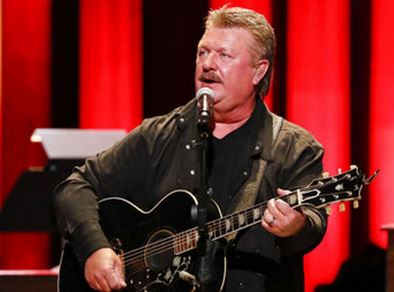
Joe Diffie: 1958-2020

The news broke earlier today that country music artist, Joe Diffie, has passed away at age 61 from the COVID-19 virus. He had released a statement just this past Friday (March 27th) that he had tested positive for the virus but this is the first case that I'm aware of where contraction of the virus resulted in death only several days later. It doesn't follow the pattern that's been happening around the country or around the world...and I'm hoping more news surfaces. It's puzzling, to me at least, how quick it happened from testing positive and then passing away days later. I'm also sure underlying issues played a factor...

I first heard of Joe by way of a quirky music video that used to play on The Nashville Network in the early 1990s. I loved the video...I've always had appreciation for songs that injected comedy or humor into their stories...and the music video for "If The Devil Danced in Empty Pockets" was certainly memorable. I wasn't aware that he'd released another hit prior to that one...but that's the song that introduced me to Joe Diffie's music. His first hit, "Home", arrived late in 1990 and it hit number one. He is one of the very few country music artists to have their major label debut single peak at the top of the chart. Joe co-wrote numerous songs and a number of them were released as singles during his career. His songwriting, in my opinion, was under-rated. I'm always finding out that he helped write songs that I'd heard for years. One of those happened to be the Holly Dunn smash hit in 1989, "There Goes My Heart Again". Joe was also a co-writer of "I'm the Only Thing I'll Hold Against You" which appeared on Conway Twitty's final studio album, Final Touches, in 1993.

In 1993 Joe Diffie became a member of the Grand Ole Opry. Some could argue that 1993 was his peak year even though none of his releases that year hit number one. It's arguable because a couple of the singles he issued that year dominated 1990's country radio and could still be heard as re-currents well into the next decade: "Honky Tonk Attitude", "John Deere Green", the mega-hit "Prop Me Up Beside the Jukebox", and in late 1993/early 1994 the ballad "In My Own Backyard". However, later on in 1994, Joe had his biggest hit single...the novelty "Pickup Man" which hit number one and remained there for four weeks. This was a follow-up to "Third Rock from the Sun" which had also hit number one. So, there you go, he had two back-to-back number one hits in 1994 and so it's arguable that 1994 was his commercial peak. In 1995 he had his last number one, "Bigger Than the Beatles".

In his career he sent 17 singles into the Top-10 of the Country charts during the years of 1990 through 2001; of those 17 singles 5 of them went to number one. In addition to those singles he also enjoyed 11 additional 'Top-40' Country hits for an overall total of 38 singles that reached that portion of the Country music chart. He sold millions of records. He had several other singles releases that peaked outside the Country Top-40 during their promotional stage and from unsolicited airplay. He was one of those artists that didn't stir the pot or rock the boat that much...controversy was really never part of his career.

His music was championed by a lot of country music fans of all age groups and even though country airplay playlists have gotten so tight over the decades, and the airplay hits dried up, Joe had a solid packed itinerary of tour dates scheduled for 2020....prior to the COVID-19 pandemic upending normalcy as we knew it causing nearly all entertainment venues to close down (the Grand Ole Opry remains open to the performers, announcers, and production assistants because of it being a weekly radio show but the public isn't allowed to attend the performances). There were so many concerts that were canceled due to the COVID-19 pandemic shutting down large gatherings of people and then the news broke on Friday that Joe tested positive for the virus...and now it's two days later and he's gone at 61.

Joe Diffie: 1958-2020

Saturday, March 28, 2020

Jan Howard: 1929-2020...

I came across an alert on one of the social media sites I visit concerning the recent passing of country music singer Jan Howard. If you're a dedicated fan of classic country music or if you call yourself a hardcore fan of all things Grand Ole Opry then you should already know of Jan Howard. Once married to songwriter Harlan Howard the two later divorced but she retained the last name in her professional career. She had a lengthy career as an artist/performer with the bulk of her commercial impact largely confined to the 1960s and early 1970s. She had several solo hit recordings but is much more known through her association with country music singer/songwriter, Bill Anderson. Her albums sold well...10 of her albums hit the Country chart with 9 of them reaching the Top-40...4 of those cracked the Top-10. Between the years of 1962 to 1970 she sent 12 singles into the Country Top-40; the biggest single release being "Evil on Your Mind", hitting the Top-10 in 1966. This was followed by another Top-10, "Bad Seed", the same year. She had her share of awards and nominations for solo recordings and for her duets with Bill Anderson.

Jan, at the start of the decade, at a Top-40 country hit with Wynn Stewart on a duet called "Wrong Company" in 1960. Her famed duets with Bill Anderson began in 1965. This is the same year that Bill began his long running syndicated television show. The Bill Anderson Show aired in syndication for 9 years...it's final season 1974. It is one of several syndicated country music television programs that used to fill the weekend airwaves and Jan was one of the show's regular performers for most of it's run. Their first duet album hit early in 1968 titled For Loving You and the lone single release was the title track which hit Number One on the Country chart in the latter half of 1967. Their next duet single arrived nearly two years later in the fall of 1969, "If It's All the Same To You", which hit the runner-up spot on the Country chart. Their album of the same name featured their first duet release from 1965, "Time Out", and another 1965 hit duet, "I Know You're Married But I Love You Still". In 1970-1971 the duo had two more Top-10 hits...beginning with "Someday We'll Be Together" and then in 1971, "Dis-Satisfied". Those last two releases come from the album, Bill and Jan (or Jan and Bill). She and Bill released one more album together...a gospel release in 1972 titled Singing His Praise.

In between her duets with Bill she continued releasing solo recordings...one of the most personal and hard to listen to given how emotional it is came along in 1968 titled "My Son". I knew of some of the personal hardships and emotional pains she went through in her life but after reading that she passed away I decided to look deeper and found so much more. I'm not going to re-post all of the things I discovered in my mini-research...I'm leaving that up to you readers to discover for yourselves. In one of her last appearances (which aired during the PBS documentary, Country Music, from Ken Burns) she was asked about the song and about the anti-war protests going on around the time that the single was issued. She's quoted in a lot of on-line sites as to what she'd do if another anti-war person rang her doorbell again asking to support their cause. The protesters were wanting to use her song to show the risks of war and based upon her commentary in that documentary she wasn't going to have any part of their anti-war sentiments. She wrote the song...one of several songs she wrote during her career. She and Bill Anderson wrote "I Never Once Stopped Loving You", a massive hit for Connie Smith. The two also wrote their "Dis-Satisfied" duet. She wrote Bill's hit, "Love is a Sometimes Thing". The Queen of Country Music, Kitty Wells, had a hit with Jan Howard's composition, "It's All Over but the Crying". Jan and Bill professionally parted ways not long after the success of "Dis-Satisfied". She also stepped away from her appearances on his television show.

Jan had become a member of the Grand Ole Opry in 1971 and could be found appearing there on many Saturday and later, Friday, nights for the next 30 plus years. She was heard most often in the half hour portions hosted by Bill Anderson. It gave the two an opportunity to perform any number of their duets together. As the years went on she became part of an inner circle of female Opry members collectively referred to as the Grand Ladies of the Grand Ole Opry. It's arguable as to who fit into that distinctive collection but it was more or less the female Opry members who appeared regularly or semi-regularly every weekend: Wilma Lee Cooper, Minnie Pearl, Jean Sheppard, Jan Howard, Jeannie Seely, Connie Smith, Skeeter Davis, and Jeannie Pruett. Some may argue some of those weren't officially referred to as a 'Grand Lady' of the Opry but as far as my memory goes I recall all of them at one time or another being billed as a 'Grand Lady' many times over the years during their Opry appearances.

Some trivia is Jan was the female voice heard on the Johnny Cash hit, "Daddy Sang Bass". A lot of us, including myself, assumed it to be June Carter...but up until several years ago I didn't know Jan Howard was the one singing the line "Mama sang tenor...". The Statler Brothers are also on that record, too. I have not seen any details about visitation, funeral, or any of that kind of thing. I'm sure the Opry website and on-line sites centered around classic country music will have in depth information as the hours and days go by. The news broke only a couple of hours ago.

Jan Howard: 1929-2020

Sunday, September 25, 2016

Jean Shepard: 1933-2016

The news broke a couple of hours ago of the death of Jean Shepard at the age of 82 due to Parkinson's Disease. If you're not familiar at all with her music/career then seek out Amazon or YouTube. In some circles of country music she became known as the Queen of Honky Tonk Music and some referred to her as The Honky Tonk Heroine (which, incidentally, became the name of a retrospective collection of her Capitol Records recordings in 1995). Discovered by Hank Thompson (himself a legendary country music artist), Shepard released her first single in 1953 titled "Crying Steel Guitar Waltz". The title alone should tell anyone reading that she preferred country music in it's most basic, purest form and that what became known as traditional country music in the '90s and beyond was labeled Honky Tonk in the '40s and '50s.

She found early success as a duet partner with Ferlin Husky in 1953 on "A Dear John Letter", a massive #1 country hit and a Top-10 pop crossover hit. They followed it up with "Forgive Me, John", and that became a Top-10 country hit and a Top-30 pop hit. Having been born in November of 1933, Shepard was still a teenager at the time of her first national success. In the '40s she had been a member of the Melody Ranch Girls, a group described as an all-girl band, formed in 1948. A 1996 box set from Bear Family, The Melody Ranch Girl, is a must-have if you happen to be a hardcore fan.

The impact year in the earlier part of Jean Shepard's career happened to be 1955. This is the year in which she became noticed for her solo recordings. She had issued 6 solo recordings during a 2 year span (1953-1955). As mentioned earlier her first solo recording was "Crying Steel Guitar Waltz" but 1953 was dominated by her 2 duet recordings with Ferlin Husky. In fact, none of the 6 solo recordings Capitol issued on Shepard made the national charts. The commercial turning point came in 1955...and the release of her version of "A Satisfied Mind". This is the perfect opportunity to explain some things about country music recordings of the era. In the '40s, '50s, and even into the early '60s it wasn't uncommon for country artists to record and release the same song in the same year. This kind of thing wouldn't be tolerated in today's music climate and is frowned upon by music critics and consumers largely because fans have come to feel that songs belong to only one singer or one group and that nobody else should attempt to record something that another singer has recorded. I don't share that opinion but millions of people do...

"A Satisfied Mind", in 1955, became a smash hit for three different country music artists in 1955. The biggest hit came from Porter Wagoner and his version hit #1; Red and Betty Foley took the song to #3; and Jean Shepard took the song to #4. The b-side, "Take Possession", charted at #13. Shepard's follow-up, "Beautiful Lies", also hit #4 and it's b-side, "I Thought of You", hit #10. In addition to her commercial impact that year she also became a performer on the Ozark Jubilee. The increased visibility enabled her to become one of the very few female country music performers on national television. She appeared on the series for several seasons.

Ironically, after having 4 consecutive Top-10 country hits in 1955, it would be 8 more single releases before she returned to the charts. She hit 2 more times (once late in 1958 and again early in 1959) but then entered another long string of non-charted releases. This non-chart activity can be traced to the choice of material. Her love of traditional country music at it's most purest didn't earn a lot of praise from the critics, DJ's, and fans of the style of country music being pushed in the late '50s and early '60s...that style being labeled The Nashville Sound. None of the single releases from mid 1959 through 1963 reached the charts. As I like to point out, though, a charted single means a song has become a commercial success but only because it's been played on radio...if a song isn't being played on radio then it obviously runs the risk of not being discovered by record buyers and therefore it isn't going to have the chance of becoming a "commercial hit". In other words don't let chart inactivity fool you into the belief that a recording "must not be good" if it doesn't make the charts".

The commercial fortunes turned around in Shepard's career in 1964 in a big time way. She released one of her signature songs in "Second Fiddle To An Old Guitar" and this recording hit the Top-10. This set in motion a string of single releases that consistently placed in the Top-50 of the country music charts (many of them peaking in the Top-20). By far the most commercially successful of her career is the 1964-1974 decade. She and Ray Pillow released a couple of hit duet recordings in 1966: "I'll Take the Dog" and "Mister Do-It Yourself".

Some of the songs she performed at the Opry on many weekends happened to come from the 1964-1974 time period: "Second Fiddle To An Old Guitar", "Slippin' Away", "Seven Lonely Days", and "The Tips of My Fingers". In addition to those songs she could also be seen/heard performing "A Satisfied Mind", "Under Your Spell Again", and I heard her perform "Twice the Lovin' In Half the Time" at least once on the Opry, if I remember correctly, but the songs I previously mentioned are the ones she performed much more regularly.

She had become a member of the Grand Ole Opry in November 1955. This is even more notable because she became the first female member of the Opry (in November 2015) to reach 60 years of membership. I'd say she appeared regularly at the Opry for at least 58 of those 60 years...slightly decreasing her appearances due to health reasons...but she did return to celebrate her 60th anniversary as an Opry member and then she officially retired.

In 2011 she was inducted into the Country Music Hall of Fame some 58 years after having had her first success. A long overdue election to say the least but, at least, she was around to enjoy the honor.

Jean Shepard: November 21, 1933 - September 25, 2016

Sunday, January 4, 2015

Little Jimmy Dickens: 1920-2015

As those of you that are fans of classic country music or those that follow the Grand Ole Opry you no doubt have heard the news of Little Jimmy Dickens passing away at the age of 94 a couple of days ago (January 2). I've known of Little Jimmy Dickens for as long as I can remember...and I remember a lot of entertaining Opry segments throughout the 1990s and beyond that Dickens hosted. I'd estimate it being the mid 1980's as the time I first heard of Little Jimmy Dickens.

My grandparent's had attended one of his concerts at a local county fair and had told me about it...then I seen him on an episode of a country music program. His death marks the ending of an era at the Grand Ole Opry, too.

He had been the last surviving link to some historical performances and events that took place in the Opry's history post-1945 (having joined in 1948). Among members of the Opry, specifically those artists in the generation immediately following Dickens, include only Jean Sheppard (she's the only member currently on the roster that arrived in the 1950s). Jeannie Seely, Bill Anderson, Jim Ed Brown, and Connie Smith make up the next generation of Opry performers (artists that had their first major impact in the 1960s).

One of the funniest phrases that he liked to use before performing a ballad was something like this: "Thank ya, thank ya very much ladies and gentleman, we're gonna do this number for ya right now...I know you all haven't heard this...it happened to be the flip-side of a flop record...". If a woman happened to be snapping pictures he'd often tell the audience that there's no need to take any pictures of him...he'd be glad to sit on their night-stands in person. The joke that seemed to always get the loudest laughs is the one he'd tell about the whisper.

Little Jimmy's Opry membership comes with an asterisk...having 2 separate runs. There's the first run, lasting 9 years, 1948-1957. Those are considered the golden era performances. In a move that may have seemed shocking at the time Little Jimmy departed the Opry, in 1957, and joined a competitor, the Philip Morris Country Music Show. This association lasted maybe a couple of years but an immediate return to the Opry wasn't forthcoming.

He eventually came back to the Opry in 1975 and remained a member up until his death. His last performance/appearance happened to be a day after his 94th birthday last month. 

He became a member of the Country Music Hall of Fame in 1983.

As an artist Little Jimmy Dickens often gets painted as a novelty performer. This was basically due to his tendency to record ditties and sing-a-longs (not all of them humorous) but because not enough of his ballads and recitations received widespread acclaim or proper exposure he became noted as a comical artist. His performing style...especially in his early years on through the latter half of the 1980s...featured a physically bouncy delivery and frenetic guitar playing. His famed grin and eye winks, short stature, Nudie suits, and cowboy hat attributed to this notion that he was a 'novelty act'; but, audio and video footage also proves that he could deliver ballads and recitations like no other.

Little Jimmy Dickens was seemingly in great health on up through the early part of this decade. You could always count on seeing/hearing him at the Opry each weekend. In 2008 the Opry celebrated the 60th Anniversary of Little Jimmy's Opry induction (purists, though, reminded everyone that for 18 of those 60 years he wasn't a member of the Opry). He had suffered a light stroke several years earlier but suffered a further stroke on December 25, 2014 and died of a heart attack on January 2, 2015 at the age of 94 (he turned 94 on December 19th last year).

Sales spikes of several CD's on Little Jimmy Dickens have predictably appeared. The 16 Biggest Hits compilation is currently the #1 CD in the Classic Country/Nashville Sound category and ranked #31 among Today's Country (!). You can purchase it either in CD format or as an Mp3. The digital copy is ranked #85 among all digital purchases in Country Music. You can buy it HERE.

I happen to recommend a different collection. The Essential Little Jimmy Dickens is a 40 song collection and it captures the essence of Little Jimmy in various stages of his recording career (up through the mid '70s at least). The collection closes with an obscure truck driver's recitation, "The Preacherman" (from 1976). You can buy that Mp3 HERE. It's heavy on the novelty songs...but there are a lot of up-tempo non-comical songs on that collection that just can't be found hardly anywhere.

Those are collections you can get on a budget...however, if you so desire, you can invest in the career overview box set called Out Behind the Barn...

Amazon states that there are only 2 left in stock and so here's the LINK to the collection. The box set contains all of his Columbia Records recordings during a 9-year span, 1957-1966, and it includes a 48 page booklet.

Neither of the products I've given a link to contain his recitation of "You've Been Quite a Doll, Raggedy Ann". If you want that track you'll have to purchase it separately (that is, if you can find it on Mp3!). I've come across it on an out of stock CD, the I'm Little, But I'm Loud: The Little Jimmy Dickens Collection. It can also be found on a CD, available through the Ernest Tubb Record Shop, called Country Gold. You can read more HERE. There is an emotional video of Little Jimmy performing the song on an episode of a classic country music television program...it can be seen on YouTube. I didn't embed the video because of the nature of videos being removed without notice. I didn't want to have a blank video box on this tribute post in case the upload becomes unavailable at a later date. If you search YouTube for "Little Jimmy Dickens + Raggedy Ann" you're most likely going to find the clip I'm referring to.

Some notable Little Jimmy recordings... "Hillbilly Fever", "Out Behind the Barn", "Life Turned Her That Way", "We Could", "A Death in the Family", "Country Music Lover", "Sleepin' at the Foot of the Bed", "Take an Old Cold Tater and Wait", "Country Boy", "I'm Little but I'm Loud", "Me and My Big Loud Mouth"...and in the obscure department he recorded "Farewell Party" years before Gene Watson.

Little Jimmy's biggest hit happened to be "May the Bird of Paradise Fly Up Your Nose", a surprise hit single in 1965 that reached #1 and crossed over to the pop Top-20 (explaining the reason a national audience, perhaps, only knew of Little Jimmy for that one song).

The fans of classic country music and those that made their journey to the Grand Ole Opry certainly knew of Little Jimmy Dickens for much more than 1 novelty recording. In later years he became popular for his comical pairings with Brad Paisley on the CMA awards and on CD.

James Cecil "Little Jimmy" Dickens

December 19, 1920 - January 2, 2015
Friday, March 15, 2013

Jack Greene: 1930-2013

Country music legend Jack Greene passed away on March 14th at the age of 83 from complications of Alzheimer's Disease.

While not much of an expert on all things Jack Greene I enjoyed hearing the songs that he made famous. I became aware of Jack Greene at some point in the early 1990's when looking through an issue of the out of print Country Music Magazine. Within this magazine they'd have advertisements for cassette's and LP's of a lot of artists from the '50s and '60s that I wasn't familiar with up until that point...and Jack Greene was one of those artists. I was a teenager in the 1990's and was nowhere near as familiar with country music's history as I am now. As the '90s went on I stumbled upon WSM radio's frequency while searching the AM dial...I'd known of the station for awhile due to the publicity it got on TNN during their airing of The Grand Ole Opry segment on Saturday evenings. For me, finding WSM radio by accident, it was like finding a goldmine...at long last I was hearing the actual Grand Ole Opry on the radio instead of seeing the half hour segment that TNN aired. I had never thought to seek out WSM's frequency simply because I live several states away from Tennessee and in my mind there was no way I could be able to hear that station.

Anyway, while listening to the Opry that night and in many, many more Saturday nights to come I learned rather quickly that the televised portion of the Opry that I'd been watching for several years was much different in tone and delivery than what the radio audiences and those who attended the show in person heard. It was an Opry radio broadcast on one of those Saturday nights in the mid 1990's that I heard Jack Greene perform "Statue of a Fool" and "There Goes My Everything". He, like a lot of other Opry members of considerable membership longevity, were rarely shown on the nationally televised portion on TNN but you could hear them consistently on the radio broadcast. Jack also hosted half hour segments of the show and would often have Jeannie Seely on his portion of the show. This would often reverse later in the night...Jeannie would host a 30 minute segment and have Jack Greene appear.

1967 was the year of Jack Greene in country music. This was the year that he won multiple awards at the first ever CMA gala: Male Vocalist of the Year, Album of the Year for There Goes My Everything, and Single of the Year for "There Goes My Everything". The song's writer, Dallas Frazier, won for Song of the Year.

A common practice for a general audience is to assume that Jack Greene was a 'one hit wonder' given the enormous popularity of "There Goes My Everything" and how it dominated country radio and the country music awards in 1967. Jack, in truth, had a total of five #1 hits with five more reaching the Top-10 for an overall total of ten Top-10 singles. Also, he sent 13 singles into the country Top-40...9 of those singles would climb into the Top-20...so, in truth, Jack had more hits than "There Goes My Everything" but in hindsight it happened to be his biggest single as it stayed at #1 for seven weeks!

He had a healthy string of Top-40 singles beginning late in 1966 and running uninterrupted through 1974. So, when you factor in all of Jack's major hit singles occurred within an 8 year time span, it puts into perspective of just how popular he truly was. I have a theory as to why he didn't have as many Top-10 singles as he could have had and it has to do with music industry politics and the various changes that were taking place in country music right at the time he hit it big in 1967...but there's no denying that for the next 6 years he was one of the biggest singers in country music and the statistics speak for themselves.

After 1974 he had just two singles manage to climb above #50 on the country singles chart...both of these singles arrived in 1980 with one of them climbing into the Top-30 and it's my assumption that the unexpected Top-30 success of the single was treated more or less as a fluke and perhaps as a response against the Urban Cowboy trend because it was during this era that 1950's and 1960's recording artists who hadn't been in the Top-10 for quite awhile were experiencing airplay revivals. Eddy Arnold reached the Top-10 in the early '80s, a full decade after having his last Top-10 singles in 1969. Hank Snow had a couple of singles reach the country Top-40 during the same 1979/1980 era. Snow's previous Top-10 had been the surprise #1 "Hello Love" in 1974. Hank Thompson was another artist in 1979/1980 that had not had a Top-40 single for several years (going back to 1974) but suddenly he found himself on the Top-40 country singles chart twice during that '79/'80 time frame.

Jack Greene remained a vital part of the Grand Ole Opry, having joined in 1967, and lasting through his retirement in 2011 some 44 years later.

Jack Greene's Top-10 singles are as follows:

1966: There Goes My Everything - hit #1 the last week of 1966 and remained at the top for six more weeks through January the following year.
1967: All The Time - hit #1
1967: What Locks the Door - Top 5
1968: You Are My Treasure - hit #1
1968: Love Takes Care of Me - Top 5
1969: Until My Dreams Come True - hit #1 for 2 weeks
1969: Statue of a Fool - hit #1
1969: Back in the Arms of Love - Top 5
1970: Wish I Didn't Have to Miss You (with Jeannie Seeley) - Top 5

**Between 1970 and 1973 Jack placed 7 singles in the country Top-20 before returning to the Top-10 a final time.**

1973: I Need Somebody Bad - Top 5 Canada

Thursday, February 14, 2013

Jerry Clower: 1926-1998...

I came across a recent upload of a commercial that Jerry Clower taped at some point in the latter half of his career.

Here's the commercial he did for Electric City. I have no idea of the year it was taped but I'd have to say late 1980s or very early 1990s at the latest but you'll notice that it was meant to air during Christmas season.


I only saw Jerry Clower in person once and that was an outdoor appearance at a local county fair in 1995. The comedy album out that year from Clower was Fishin', Frogs, Hogs, and Dogs...or as it's spelled on the CD cover, Fish'n, Frogs, Hawgs, and Dawgs. On the cover it shown an illustrated picture of Clower and the animals depicted in the CD's title. One of the other subjects depicted on the CD's cover is a fishing lure known as the Helicopter Lure. He and Roland Martin taped an infomercial for it in 1995 and it became a sensation that year in the sport of fishing. The stories told in this album were recorded during a concert he did in Renfro Valley, Kentucky according to the liner notes.

The same year Clower had a supporting role in the Ray Stevens direct-to-video movie, Get Serious!. Clower played the part of Ray's manager, The Colonel. A picture of Ray as Gitarzan and Clower in his Colonel attire is seen in the last panel of the film strip on the back of the home video. This wasn't the first time Jerry and Ray teamed up. Earlier, in 1986, Ray released a comedy single titled "Southern Air". The writers are Brent Holmes and Stuart Dill. In the recording Ray plays the part of a nervous passenger while Jerry plays the pilot and Minnie Pearl is on hand as the flight's stewardess. The recording can be found on Ray's 1986 comedy album, Surely You Joust. During his career, Jerry Clower was part of three long-running programs. In 1973 he became a member of the Grand Ole Opry. The same year he became the co-host of a radio program called Country Crossroads whose other host was songwriter and Texas disc jockey, Bill Mack. The association with these two programs would last 25 years...ending in 1998, the year that Clower passed away. August 2013 will mark 15 years since his death at the age of 71 in 1998. He was born in September 1926 and was nearly a month shy of reaching 72. (September 28, 1926 - August 24, 1998). A third long running program was the weekly television show Nashville on the Road that aired in syndication. Jerry co-hosted this show with Jim Ed Brown from 1975 through 1981. Another element of his visibility were the various local television commercials that he taped. His image (on TV) and voice (on radio) became associated with numerous products. One of those commercials, of course, is embedded near the top of this blog entry. Obviously the biggest reason for his visibility were his comedy albums...one new release per year on MCA Records from 1971 through 1995 and then he emerged with a new one in 1997 and that was followed by what became his final project, Peaches and Possums, released in the late fall of 1998, a few months after his death. There wasn't a new album issued in 1996, his Silver Anniversary with MCA Records, and perhaps that was MCA's way of thanking him for 25 years of laughter and recordings by giving him "the year off" but that's just a guess. As mentioned, a new album hit the market in 1997 titled Live At Dollywood featuring an illustration of Clower wearing a Dolly Parton wig.

I have all of his albums and a few of the compilation/best of releases, too, like Classic Clower Power. You can search the internet for a lot more information on his life and career...he had a rather lengthy association in the Agriculture and Chemical businesses prior to his entrance into the world of country comedy in 1971 (he was in his mid 40's at that point in time). A lot of his experiences as a boy growing up in the depression-era South were spoke of in his comedy stories as was his strong religious values, his experiences in the military during World War Two, his days playing football in college and his later career paths in Agriculture and as a salesman for the Mississippi Chemical Corporation. Almost all of his stories incorporated the antics of a family referred to as The Ledbetter's (two parents and nine children altogether!). The most popular members of the family were Uncle Versie, Marcel, Newgene, and Clovis even though at one time or another each of the siblings individually took center stage in at least one comedy story. There was one story titled "Burning Building" from 1978 which featured ALL of the Ledbetter's as member's of a volunteer fire department and the chaos that ensues as a result. In later years he spoke of distant relatives, newcomers, and in-laws to the Ledbetter family in addition to the core line-up of 11.

In addition to those kinds of family-driven stories he also offered contemporary experiences touring the country, meeting celebrities, life in Yazoo City, Mississippi and his return to the area he grew up, Liberty, Mississippi, in the mid '90s.

The raccoon became something of a logo due to his breakthrough release in 1971 titled "A Coon Huntin' Story". On stage he'd most often appear in either a red, orange, brown, or blue dinner jacket with a face of a raccoon embroidered on his lapel. He also wore yellow suits but didn't wear them too often...he has a comical reason as to why he stopped wearing the yellow suit. Eventually he settled on just wearing a bright red suit since that was the color that he said most of his fans liked seeing him in the best. In addition to the raccoon and the Ledbetter's, hunting dogs were another consistent subject in a lot of his stories. In 1982 he issued an album titled Dogs I Have Known. The most popular hunting dog in his stories was a dog named Hi-Ball. He also spoke of a couple of other dogs named Brummie and Little Red. In a story that appears on the 1982 album he does an entertaining impression of a mean, aggressive and downright insane dog named "Ol' Blue" and the misadventures that happen when he's taken out into the woods on a hunting trip. His passion for the military was on full display in the 1985 album, An Officer and a Ledbetter. The album opened up in an unusual way in that we hear Clower speaking to a pilot. The routine is titled "Fox 12...Over...". Afterward the main part of the album begins.

There are two stretches of highway in Mississippi named in his honor. There is Jerry Clower Blvd. in Yazoo City, Mississippi and the Jerry Clower Highway near his birthplace of Liberty, Mississippi. It was in the mid '90s that he opened up an intimate museum, in his backyard, housing the various certificates, awards and music industry plaques he had received during his lifetime. He often appeared on Family Feud whenever the program did charity driven episodes featuring country music personalities. On some of his early to mid '80s albums he tells stories about his appearances on the game show.

Jerry Clower: 1926-1998.

Sunday, April 22, 2012

The Resurrection of The Nashville Network

Good early Sunday morning!! The late country music channel, TNN, officially known as The Nashville Network, is being resurrected late this summer according to a myriad of on-line web-sites. The news broke a couple of days ago...but I first heard about it last night while browsing the internet looking up archival footage of TNN from the '80s.

The Nashville Network lived healthy for 17 years, 1983-2000, but it made some bad decisions and it's health deteriorated as a result. The first bad decision was the non-compete where the network dropped it's country music programming in favor of reruns of sitcoms and dramas while awaiting it's facelift. The facelift happened...ultimately leading to a new name, The National Network, but the facelift didn't help. The used goods were then re-branded as Spike TV with a completely different line-up of shows and a completely different demographic target. Now, 12 years after the TNN that I knew passed away, it's being resurrected

Now that you know the back-story, I am just a tiny bit hesitant to become over-the-top excited about the news because so little is really known about it's broadcast method and availability.

I've read some web-sites that make it sound as if this new TNN will be sort of an exclusive kind of channel where people have to, on their own, seek it out by way of paying extra for it or purchasing secondary equipment like antenna's or satellite dishes and installing them on your television sets. I've read other sites that say that the network will be available on TV sets that are digitally serviced...meaning for those who have a converter box hooked up to the TV...and even still there's a web-site which makes it sound as if the new TNN will be internet-only.

It's all confusing to me.

The official web-page, WatchTNN, shows a box where television providers can fill in their information...so it seems as if the new TNN will only be available if a cable, and or, satellite provider agree to add it to their system.

I was hoping that there would be a launch date and then on that day we could turn on our TV sets, pull up the on-screen program guide, and browse the line-up and see that the new TNN is on our line-up...

But...it seems it isn't going to be that simple...but I wish it were!

So, hopefully my cable provider will carry this new TNN.

You can read a news release posted on the Music Row web-site here.

I hope my cable provider will carry it or I’m able to see it at some point. I have RFD-TV and I watch it for some of the country music programming. Hee-Haw currently airs on that channel every Sunday evening at 8pm Eastern and it repeats Monday mornings at 10am Eastern. I saw where “Larry’s Country Diner” will become a program on this new TNN…it currently airs on RFD-TV as well.
I’d love to see a lot of the early programs from TNN resurface again! A lot of legends were given their proper respect on that particular network and so many of them made frequent appearances on the various programs…a lot of those legends have since passed away…but it would be great if the shows from the ’80s and ’90s resurfaced!

Ralph Emery often remarked that there’s a huge audience who wants to see those shows but the powers that be continually keep the shows out of circulation…so here’s hoping the programs from that time period return to the air! Gary Beatty was the voice of TNN in my opinion (specifically during the first 10-11 years of the channels existence). He’d do show promo’s and station I.D.’s…signing the network on and off…in addition to being the announcer on Nashville Now and later a co-host on VideoPM with Kathy Martindale.

The late Archie Campbell once hosted a show called Yesteryear in Nashville and Bobby Bare had a series on the air, too. Charlie Douglas, the famed country DJ that passed away in November 2011, hosted a nostalgic program called Play It Again, Nashville. The series had left the air before I discovered TNN but I found a clip on You Tube showing Freddie Hart singing "My Hang-Up Is You" on this program...and it features Charlie Douglas, too.


A comment that caught my eye while reading various on-line news stories stated that this new TNN sounds like a second RFD-TV. 

Actually, though, RFD-TV does air it’s share of country music programming but it’s in broadcasting blocks on specific days…it’s not a wall-to-wall country music channel like The Nashville Network was during the ’80s and ’90s. RFD-TV’s actual country music programming as of 4/22/2012 consists of Hee-Haw, Crook and Chase, Pop! Goes the Country, Nashville on the Road, Larry’s Country Diner, The Porter Wagoner Show, The Marty Stuart Show, The Wilburn Brothers Show, and Heart to Heart Classics. There are a couple of shows that have what I’d call Appalachia music overtones and then there are polka music shows and other programs catering to Texas-style music as well as gospel music. 

Throughout the day usually there's livestock shows and rural lifestyle programs. Orion Samuelson and Max Armstrong host an Agri-Business show. Shotgun Red, the puppet, hosts a variety program. The Nashville Network wasn't that eclectic...TNN was country music and country lifestyles. There wasn't an abundance of farm and livestock shows on TNN (except a rodeo or two hosted by Dan Miller) nor was their any polka music or auctions which RFD-TV airs along side it's country music offerings. TNN, on the weekends, aired outdoor sports shows and auto racing shows on Sunday. 

For those that don’t know, the former TNN (1983-2000) aired sports programs on Saturdays and Sundays…I think the weekends were billed as TNN Outdoors? Anyway, several of those programs featured country music personalities as hosts or participants. Porter Wagoner appeared on fishing programs on TNN as did Jerry Reed, Hank Williams Jr., and many others. Jerry Clower appeared on Roland Martin's fishing program and told some fishing stories. He did an infomercial for what was billed a Helicopter Lure and when cast it was to fly more farther than a typical lure could. Some fishermen didn't have much luck with it but some did...I guess it all depends on the time of day and if "the fish are a bitin'" as the catch-phrase goes. Research shows the product made more than $40,000,000 in sales during just one year of advertising (1995-1996). An image of this lure appears on Clower's 1995 comedy album, Fishin', Frogs, Hogs, and Dawgs. Clower won an advertising award for his appearance in the infomercial and he spoke of it on Primetime Country, a nightly program that had replaced Music City Tonight on TNN. Music City Tonight had, in turn, replaced Nashville Now in 1993.

Before American Idol and other insufferable talent shows there was the talent show You Can Be a Star hosted by country music legend Jim Ed Brown. This program, not completely insufferable due to Jim Ed's likable personality, was sort of a more down to Earth predecessor to the glitzy/glib-hip Nashville Star series, which showcased unknowns in the hopes that one day they would become future recording stars. A winner on You Can Be a Star received a recording contract from Polygram Records, a division of Mercury. The show had a panel of judges and a regular audience feature called The Stairway of Stars. There weren't any major recording artists that emerged from the series, that I recall, but if the reruns ever surface you'll see a lot of acts with big dreams...and in hindsight there may be some that appear where you may wonder why they didn't catch on along with some that leave you wondering why they even attempted a recording career. This series ran until 1989 and was later brought back with a shortened title, Be a Star, and hosted by former Sawyer Brown member, Bobby Randall. Jim Ed also hosted a travel show called Going Our Way where he and his wife drove around in an RV going from place to place taking in the sights. It was sort of like his former program, Nashville On the Road, but without the abundance of music performances. 
Another legend, Bill Anderson, hosted the game show Fandango. One of the show's memorable gimmicks was the 'talking jukebox' named Edgar. At the time Anderson was a spokesman for a chain of restaurants named after one of his hit songs, "Po' Folks", and you'd see advertisements for this restaurant pop-up from time to time...sometimes just a still picture was used showing Anderson and the restaurant's logo. There continued to be Po' Folks restaurants in business for many years after Anderson's involvement as a spokesman ended. Ironically, based on what I found out, the restaurant had used the name of Bill's song without permission which is what led to the commercial appearances in the first place. 
There were two personalities named Dan Miller that worked for TNN. There was the dark haired Dan Miller who was known by local Nashville TV viewers and radio listeners...he would eventually become a host of a series called Miller and Company on TNN. That Dan Miller has since passed away. Then there was the blond Dan Miller...he hosted the game show, Top Card, replacing original host Jim Caldwell. This Dan Miller also hosted a later game show titled 10 Seconds. The blond Dan Miller also co-hosted a rodeo program on the weekend.

The only programming of the old TNN that I wasn’t a viewer of were those dance shows. I don’t like to dance…I don’t mind hearing country songs about dancing…but dancing is something I don’t do…so I never watched the dancing shows.
In closing I just want to reiterate that I hope this new TNN becomes available to a lot of the nation and isn't just available in the southern states.