Monday, August 8, 2022

Vin Scully: 1927-2022

It's been several days since the news broke on the death of legendary broadcaster Vin Scully at age 94. He was born Vincent Edward Scully on November 19, 1927 in the Bronx, New York. Now, unless you do not like the game of baseball or simply don't pay much attention to broadcasters, Vin Scully's voice was an iconic symbol of broadcasting...and he set a record for play-by-play baseball broadcasting with his 67 seasons with the Dodgers baseball team. The team was in Brooklyn, New York at the time of Vin's hiring in 1950. He moved West with the team when they settled in Los Angeles. He was a play-by-play broadcaster for the Dodgers from 1950 until his retirement in 2016, his 67th season. 

This is one of the later photos of Vin Scully taken at the ballpark. He worked with several broadcasters over his many decades. One of the longest lasting pairings happened to be with Jerry Doggett for 32 seasons (1956-1987) but there was also Ross Porter (1977-2004), Don Drysdale (1987-1993), and Rick Monday (1993 until Vin's retirement). The pairings weren't formatted as a bantering duo like the type of commentary you hear on sports broadcasts today...Vin called the baseball innings solo, split with whoever happened to be his on-air partner, and the on-air partner called his innings solo, too...there wasn't any conversation going on between Vin and whichever broadcaster was sharing the play-by-play duties. In other words Vin, Jerry Doggett, Ross Porter, or Rick Monday worked solo as broadcasters and didn't utilize a color commentator/analyst. I happen to live in the Midwest and so I wasn't born into a West Coast sports culture...and I didn't know of Vin Scully until I got older (around my middle teenage years). I grew up on the baseball broadcasting team of Marty Brennaman and Joe Nuxhall with the Cincinnati Reds. I'd heard Marty talk about Vin Scully's talents a lot during Reds games and Marty often cited Vin Scully and Red Barber as major influences. Marty was play-by-play broadcaster for Cincinnati Reds games for 46 seasons (1974-2019).  

Vin's broadcasting career wasn't limited to Dodgers baseball, though. Even though he was part of the organization for 67 seasons he expanded his reach and stepped into national broadcasting in by the mid 1970s. Vin worked for CBS Sports from 1975 until 1982. In his assignments from CBS he was most often placed inside the broadcasting booth for NFL games...rather than Major League Baseball games. It's with CBS that Vin branched out into NFL play-by-play and he also had assignments covering PGA Tour Golf, the Masters Golf Tournament, and Tennis games. His Golf assignments had him broadcasting the Skins Game for NBC (1983-1989) and then for ABC (1991-1996) as well as the Senior Skins Game on ABC (1992-2000). Vin's on-air partner for PGA Tour golf at NBC (1983-1990) was Lee Trevino. Vin also did Golf broadcasts for TBS. 

Like Curt Gowdy and Dick Enberg, Vin was now becoming nationally known as a multi-sportscaster...going beyond the local radio and television markets that covered Dodgers baseball. However, Vin's NFL play-by-play career was short lived by comparison to his baseball broadcasting. Vin called his final NFL game in January 1982...it was the NFC Championship Game. In his NFL broadcasting career at CBS he was paired with a wide array of broadcast partners during his 7 years with the network. Some of them happened to be: Hank Stram, Alex Hawkins, Jim Brown, Paul Hornung, and a relative newcomer to the NFL booth, John Madden. 

While Vin did a lot of NFL games for CBS Television he wasn't completely kept out of baseball broadcasting. He did All-Star Game broadcasts for CBS Radio every year from 1977 until 1982. His on-air partner, according to research, was Brent Musburger. Vin also called the World Series games for CBS Radio, along side Sparky Anderson, from 1979 until 1982. 

Vin moved to NBC Sports beginning in 1983 and was hired to do the play-by-play of the network's Game of the Week. This nationally televised baseball game aired every Saturday on NBC stations. He was with NBC Sports until 1989. In that 6 year time period (1983-1989) he not only called the Game of the Week broadcasts but he also was the lead play-by-play broadcaster for NBC's World Series coverage (1984, 1986, and 1988); The NLCS (1983, 1985, 1987, and 1989); and the All-Star Game (1983, 1985, 1987, and 1989). His on-air partner for the national NBC baseball games was Joe Garagiola.  

A remarkable broadcasting feat arrived in June 1989 where Vin pulled off an unheard of accomplishment...calling a combined 23 innings of baseball in two different cities...in one day's time. He called a 10 inning game in St. Louis for the NBC Game of the Week...and later that day flew into Houston and ended up relieving the Dodgers broadcasters who themselves were beginning an extra inning game just as he chose to visit the Astrodome instead of going to his hotel room. That Dodgers game against the Astros went 22 innings...and Vin broadcast the final 13 innings...which gave him the unusual accomplishment of calling 23 innings of a baseball game in two different cities on the same day. Joe Buck, decades later, did something similar when he broadcast an NFL game for FOX in the afternoon and then went across town to do the national baseball Game of the Week for FOX that evening...however, Vin's accomplishment has much more awesome flavor to it because he flew from St. Louis after calling a 10 inning baseball game and arrived in Houston and called the final 13 innings of a 22 inning game.

Vin left the NBC baseball booth at the conclusion of the 1989 season and departed NBC Sports altogether in 1990. From 1990 until 1997, in addition to his Dodgers broadcasts, he'd returned to CBS Sports and called the World Series games for CBS radio until 1997. His broadcast partners were Johnny Bench (1990 through 1993) and Jeff Torborg (1995 through 1997). There wasn't a World Series in 1994 due to a player's strike. 

In 1982 Vin Scully was elected to the National Baseball Hall of Fame in Cooperstown, New York. He was inducted into the National Radio Hall of Fame in 1995. He won numerous broadcaster awards from local organizations all over California...including 33 awards as California Sportscaster of the Year.   

Vin Scully retired at the conclusion of the 2016 baseball season. His 67th season as the play-by-play broadcaster for the Dodgers. He kept an intentional low profile in retirement. He and fellow play-by-play broadcaster, Dick Enberg, both retired in 2016. The two iconic broadcasters had reached similar heights in their profession...each became noted as multi-sportscasters on a national level and each had long-held ties to Major League Baseball, particularly on the West Coast. Dick Enberg spent a decade as the voice of Major League Baseball's California Angels, the NFL's Los Angeles Rams, the UCLA Bruins...and then he become a national broadcaster known more for the NFL and College Basketball and College Football. After Dick Enberg retired from national broadcasting he remained the voice of the San Diego Padres baseball team (2010-2016). He and Vin Scully appeared together in October 2016. Dick Enberg had announced his retirement from broadcasting in 2016 followed soon after by Vin Scully's announcement of his own retirement. Dick Enberg would pass away on December 21, 2017...and Vin Scully passed away on August 2, 2022. 

In 2016, when Dick Enberg announced his upcoming retirement, Vin Scully taped this message...this shows you the kind of character and modest man Vin Scully happened to be...


Here is the footage of Vin Scully and Dick Enberg from October 2016 in the final weeks of their broadcasting careers. The two had made their retirement announcements public by this time.


Here is Rick Monday's announcement, during a Dodgers game, breaking the news of Vin Scully passing away...and I felt this would be a fitting video embed to close this overview of Vin Scully's broadcasting career...

Saturday, May 7, 2022

Mickey Gilley: 1936 - 2022

1936 - 2022
The news was released within the last hour that the country music community has lost another legendary figure. Mickey Gilley passed away today at the age of 86. March 9, 1936 - May 7, 2022. I like his singing and if I knew he was going to be on a TV show I'd always watch his performance. I saw him in concert only one time. He appeared at the Clark County Fair in 1990. My grandparent's and I went to the Fair and we sat next to a long-time fan of Mickey's who told us a lot of information about his career as well as her favorite songs. We were familiar with Mickey's songs but the more dedicated of fan told us a lot more about him. My grandparent's were aware that Mickey was a cousin of Jerry Lee Lewis and Jimmy Swaggart. I had no idea about it, at the time, until the fan told us. I recall that Mickey sang practically all of the songs of his that I was familiar with. "Paradise Tonight", the duet he did with Charly McClain, was performed with one of Mickey's harmony singers. I don't want to definitively say that he closed the show with "Don't The Girls All Get Prettier at Closing Time" but I think he did. He did a lot of boogie-woogie piano solo's in between the songs. The photo that I chose to include in this blog post shows Mickey Gilley in what a general audience might remember. Mickey had a successful string of country music hits throughout the 1970s, including several number one hits, but the Urban Cowboy movie shot his career into the pop music mainstream. The movie was mostly set inside Mickey's huge bar, Gilley's, in Pasadena, Texas. Mickey appeared in the movie and contributed songs to the movie's soundtrack. Johnny Lee, a frequent performer at Gilley's, was catapulted to stardom in 1980 as a result of his participation in the Urban Cowboy soundtrack with "Lookin' For Love" and "Cherokee Fiddle". The soundtrack included a 1978 hit from Mickey titled "Here Comes the Hurt Again" and a new recording, "Stand By Me". 

Mickey's rendition of that particular song (a previous pop/rhythm and blues hit for Ben E. King) become his biggest cross-over hit. In addition to hitting the top of the country chart in 1980 it reached the Top-30 on the pop driven Hot 100 and the Top-10 on the Adult-Contemporary chart. In fact, four of Mickey's single releases appeared on Billboard's Hot 100 pop chart. After "Stand By Me", his second highest charting Hot 100 pop single is his rendition of "You Don't Know Me", which hit number one on the country chart in 1981 and reached the Top-20 on the Adult-Contemporary chart as well. Mickey had 6 consecutive number one country hits on the Billboard country chart during the 1980-1981 time frame. His first single release of the decade, in 1980, was "True Love Ways" and he followed that chart-topper with 5 more. The single that broke the string, "Tears of the Lonely" peaked in the Top-5 here in America but it did reach number one on Canada's country music chart. Mickey would have three additional number one country hits on Billboard taking us through the second half of 1982 and into 1983: "Put Your Dreams Away", "Talk To Me", and "Fool For Your Love". The latter being his final solo single to reach number one on Billboard's U.S. country music chart, with his duet with Charly McClain in the late summer of 1983, "Paradise Tonight", becoming his final chart-topper on Billboard's U.S. country music chart. "You've Really Got a Hold on Me" and "Too Good To Stop Now" hit number one for Mickey in Canada in 1984. Mickey's final Top-10 hits arrived in 1985 and 1986...with the nostalgic "Doo Wah Days" becoming the final Top-10 of his career. He had a Top-20 country hit in 1987 with "Full Grown Fool" and a Top-30 country hit in 1988 with "She Reminded Me of You". 

Epic Records, in 1980, released this compilation album on Mickey titled Encore. The Encore series of albums were label-wide...all recording artists signed to Columbia's various record labels had an album titled Encore released on them. The Encore album they released on Mickey, as you can see, heavily promoted his night-club without using it's name on the front of the album. On the back of the album Mickey is surrounded by mostly cowboy hat wearing girls. A couple of them are wearing tops that state: "I rode the bull at Gilley's". The bull, of course, is the mechanical bull...shown prominently on the front of the album. The mechanical bull became a staple in all kinds of country-oriented bar room's and night clubs attempting to emulate the ambience of Gilley's place. It was called the world's largest Honky-Tonk. Mickey co-owned the club with Sherwood Cryer. The club opened in 1971 and once Urban Cowboy hit theaters and became a massive box-office hit Gilley's night club in Pasadena, Texas became a super destination for locals and out of State tourists. The club branched out into television and radio productions...numerous country music singers stopped by and recorded concert performances for a local radio series tied to the nightclub and there was also a television program that originated from Gilley's for awhile. Gilley's became part of most tour stops for Country and Adult-Contemporary performers. The night-club burned to the ground in 1989 leaving some music critics and historians to point out that a night-club so synonymous with 1980's country music should happen to burn to the ground at the close of the decade. 

Mickey, following this period of his career, moved on and opened up a theater in Branson, Missouri...and he remained a fixture in Branson for the next several decades. An accident while helping move furniture in 2009 impacted his performing career and he spent a year or more recovering and in physical therapy. The accident left him paralyzed and although he did the rehab and physical therapy there were lingering effects for the rest of his life. In January 2018 Mickey and his son were involved in a car accident while traveling from Texas to Missouri. They never made it out of Texas, though, and neither were seriously injured. Mickey and Johnny Lee, during this point in time, had been on something of a national reunion tour with an Urban Cowboy theme. The movie, in 2015, turned 35 and by 2020, of course, it hit 40. The two had performed an extended reunion series of shows at Mickey's Branson theater for the last several years. The news of Mickey passing away today at the age of 86 seems surreal. He released numerous singles...and among my many, many favorite Mickey Gilley recordings is the cleverly titled "The Power of Positive Drinking". It was a Top-10 hit for him but it wasn't one of his signature songs and so it's sort of fallen into obscurity. I saw him sing it on an episode of Hee Haw and it became an instant favorite...

Monday, April 18, 2022

Benny Hill: Going Back to April 20th 1992...

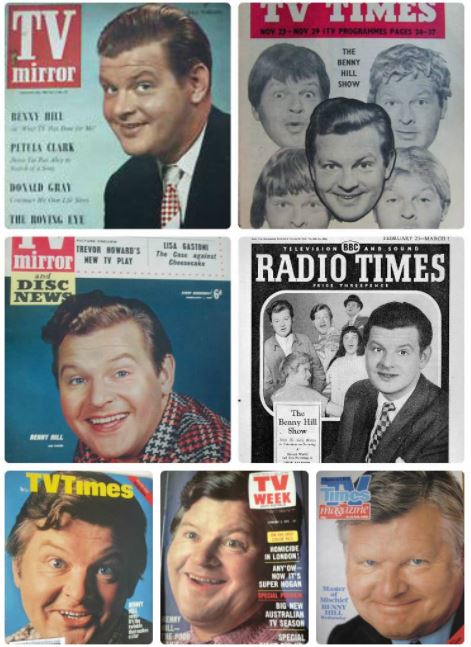
I was going to begin this blog entry with a familiar greeting by Fred Scuttle, one of Benny Hill's famous characters, but I don't know if the phrase is copyrighted or not. We're a few days away from April 20, 1992...a sad day for millions of Benny Hill fans around the world. It was on that day Benny Hill passed away. Those who knew him personally may have expected it...but in the years since a lot of us fans have become aware of Benny's final weeks. There's been a lot of essays and commentary about his death in the last 30 years...and I'd say there's been a heavy dose of commentary circulating about him within the last 10 years. The video hosting site, YouTube, came along in 2005 and within 5 years video content from around the world had been accessed tens of millions of times, combined. Benny Hill videos...specifically his comedy sketches, comedy monologues, and Hill's Angels features...gained an entirely new audience. There had been a market established for Benny's comedy on VHS tape and on DVD...but with YouTube it enabled the content from those VHS and DVD releases as well as full episodes of his hour long television specials to be readily available. All a person needed to do is simply type in Benny's name in a YouTube search box and the results are nearly endless. Benny was chased off of television in 1989...after 20 years at Thames TV. Prior to his association with Thames he worked at the BBC. His television specials at the BBC were titled The Benny Hill Show. Highlights from his BBC programs have been issued on VHS and DVD...they're in black and white and can be accessed online. In the BBC episodes some of his supporting players were usually Jeremy Hawk, Patricia Hayes, and Rita Lloyd. 

It's been reported that his first performance to a mass audience was on a radio series, Variety Bandbox, in 1947. Benny made his television debut in 1950. He appeared regularly on the BBC airwaves throughout the 1950s and 1960s. In 1956 he starred in the comedy movie, "Who Done It?". He had a radio series, Benny Hill Time, for 2 years (1964-1966) and 26 episodes in total. He headlined a couple of television specials for ITV and ATV during his long association with the BBC but the most significant change happened in 1969 when he joined Thames Television. It's with this company that Benny became an international comedy star. His hour long television specials would be sprinkled throughout a calendar year...in most years he would deliver 3 or 4 one hour specials. His television specials became events and much anticipated. His supporting cast in the first decade of the Thames specials were Henry McGee, Bob Todd, Jackie Wright, and some faces familiar from his BBC years like Patricia Hayes and Rita Lloyd. In 1979 the syndicator, Don Taffner, brought Benny Hill to American television screens...and from America to television screens all over the world. Taffner conceived the idea of selling half hour installments of Benny's comedy to local television stations across America. An editing team carefully pieced together numerous half hour episodes using the footage from Benny's hour long television specials for Thames TV.

These half hour episodes aired practically all over the world in late-night time slots or in pre-dawn, early morning time slots. Benny also added a collection of female dancers to his show around this same time and he called them Hill's Angels. The dancers also doubled as comedic foils for Benny. As the 1980's progressed and the edited half hour Benny Hill programs were spiking local television ratings, becoming increasingly popular in various non-English speaking territories (thanks to a lot of pantomime sketches), the comics in his own homeland were on the verbal attack...and by 1989 with mounting pressures from British comics, critics, and feminist groups (collectively a very loud minority of people), Thames TV canceled the Benny Hill television specials. The last television special aired on May 1, 1989. The half hour episodes were still airing around the world...including America. 


Due in large part to the success that the half hour shows were still having in America the syndicator, Don Taffner, asked Benny if he would do another television special and that he'd handle the distribution. They hit on a concept called Benny Hill's World Tour. The television specials would spotlight a different major city/town in nearly every country on the planet. The first, in this proposed World Tour series of specials, spotlighted New York City. The USA Network bought the broadcast rights and Benny Hill's World Tour: New York! hit the airwaves on May 30, 1991. It was his first comedy special since 1989. Unfortunately, Benny's health began to decline as the year went on...in February 1992 he suffered a mild heart attack. He declined further medical treatment (a bypass) and experienced kidney failure and he passed away on April 20, 1992. His body was discovered by his long-time television producer, Dennis Kirkland, several days later. Several people had called Benny's house and there were no answers for several days. The lack of reply caused great concern, obviously, and with the help of the police Dennis Kirkland was able to get inside Benny's locked house where they found him sitting in front of the television in his favorite chair, non-responsive. 

The memorials and outpouring of grief was almost immediate once the news broke. It was revealed that among the mail in Benny's living room was a contract awaiting his signature...a contract for a series of new television specials for Central Independent Television. Apparently, and I'm just guessing, but this was the company Benny would've worked for on the World Tour series of television specials...with syndication rights perhaps held by Don Taffner. Nobody outside of a few has ever seen the actual unsigned contract so any number of us over the decades have made wild speculations as to what it may have contained. Benny Hill reruns have been scarce on television since the early 1990s. In the last 20 plus years BBC America and Antenna TV have aired variations of Benny's show. BBC America aired edited hour long episodes whereas Antenna TV in 2011, and added again to the line-up this year, air edited copies of the half hour edited programs. Antenna TV has been airing the half hour episodes in program blocks from 12am to 2am early Sunday morning. So, as I mentioned earlier, Benny Hill is always going to be there...ready to be discovered by successive generations of people.