Tuesday, April 5, 2022

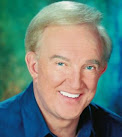
C.W. McCall: 1928 - 2022

A few months ago news was released that C.W. McCall had been placed under the care of hospice. The news was abrupt and matter of fact without too much information given as to the reason why. Then, out of the blue, news surfaced that C.W. had passed away on April 1st at the age of 93 from cancer. He was born Billie Fries, according to most websites, and later legally changed his name to William Fries, Jr.. He was born November 15, 1928 in Audobon, Iowa. He had a career in the advertising business when he created the character, C.W. McCall. He didn't portray the character in the television commercials but the product, Old Home Bread, became something of a major sales hit in the Omaha, Nebraska area in 1973. The commercial won a Clio Award, which is the Oscar of the advertising world, in 1974. The commercials spawned professionally recorded songs with emphasis on the sights and culture of the Plains States (Nebraska, Iowa, Colorado). Bill Fries became C.W. McCall on recordings. He wrote the lyrics to his recordings while Chip Davis wrote the music. His first single release, "Old Home Filler Up and a Keep on a Truckin' Cafe", was a direct tie-in with Old Home bread and it became a Top-20 country music hit and landed on the Hot 100 pop chart as well. "Wolf Creek Pass" was his second single and it, too, reached the Top-20 on the country music chart and reached Top-40 status on the Hot 100 pop chart. In 1975 "Classified" reached the country Top-20 followed by the chart hit, "Black Bear Road". 

His style was narration...meaning that he didn't sing too much on his single releases. He wasn't sad in his recitations like Red Sovine famously happened to be but given the narration approach and the mostly up-tempo, rollicking music arrangements it gave McCall a style and sound that set him apart. The massive hit single in his career came along later on in 1975... the iconic "Convoy". This recording was massively popular...a monster hit...a million selling country and pop hit. It was officially released in November of 1975 and it, as I said, was a monster hit. 

It reached Number One on the country and pop charts here in America. It was number one for 6 weeks on the country chart. It hit number one on the pop chart in Canada early in 1976 and the Top-10 on their country chart. It also hit number one in Australia and New Zealand. The single popularized the C.B. fad that swept the entire country and Canada. The recording cemented C.W. McCall's long-lasting popularity as a 'truck driver singer'. There are many compilation albums filled with songs specializing in the truck driving industry...and there's almost always inclusion of "Convoy" or several other singles from his career. The single, being incredibly popular and spearheading a national fad, ultimately had it's share of detractors/critics. The critics were definitely in the minority opinion, however. 

Now, as it turned out, 1976 turned out to be the peak year for C.W. McCall's recording career. There wouldn't be another recording by him that would match the phenomenal popularity of "Convoy" but he continued recording and releasing singles. He would have several chart hits during the remainder of the decade but nothing else reached the charts as the new decade began. Some of those latter day recordings that hit happened to be "There Won't Be No Country Music", a country Top-20. "Crispy Critters", "Four Wheel Cowboy", and "Round the World with the Rubber Duck" all reached the country charts in 1976. 

In 1977 he issued a couple of recordings...first up is "Audubon", a recording about his hometown in Iowa which serves as something of a prequel to his first single release. It's mid-tempo and highly entertaining...he mentions Mavis Davis, a character from the Old Home bread commercials and there's a refrain of his first single's chorus heard in this recording. For whatever reason it didn't register as high on the Country singles charts as his previous releases. The follow-up, the mellow "Roses for Mama", was his last major hit single...reaching the Top-10 on the country music charts here in America and in Canada early in the fall of 1977. Red Sovine recorded a version of the recording, too. McCall would have one final chart hit...a commentary on country music titled "Outlaws and Lone Star Beer" in 1978. It clocks in at just under 2 minutes and it features him singing...a departure from his recitations. In the song he laments that most people see country music as nothing but what the song's title says...so he decides to reveal there's more to country music. "Convoy", in the meantime, inspired a truck driver movie starring Kris Kristofferson, Ali McGraw, Ernest Borgnine, and Burt Young among others. The movie was released in 1978 and it featured a revised recording of the song by McCall. 

C.W. McCall officially 'retired' from country music following his 1979 album containing "Outlaws and Lone Star Beer". There is the existence of two rare single releases by him in the 1980's...the first being "Kidnap America" in 1980. A social/political commentary on the Iran Hostage crisis. The other is 1983's "Pine Tar Wars", commenting on the charged use of excessive pine tar on the bat of Major League baseball player, George Brett. Living in Colorado he ran for and was elected the mayor of Ouray, Colorado in 1986...a small town/hamlet in the mountains...and he remained mayor of the town until 1992. 

He maintained a low profile and kept out of the spotlight until just this year...soon after news broke that he was in hospice care he was asked about the Freedom Convoy that was taking place in Canada and the potential for it to move into the United States. The organizers received McCall's consent to use his "Convoy" song during the protests and he was quoted as being enthused and energized in the knowing that there was a revival of interest in his song and it's overall message. His quoted statements are from a February 9th conversation. He passed away on April 1, 2022 at the age of 93!

Sunday, January 16, 2022

Ralph Emery: 1933-2022

It's been such a sad couple of weeks in the world of country music. On New Year's Eve (December 31, 2021) the wife of legendary entertainer/comic Ray Stevens, Penny Ragsdale, passed away at age 78. The two had been married since 1961. Songwriter, musician, music executive/record producer, Jerry Crutchfield, passed away on January 11th at 87. Legendary songwriter, Dallas Frazier, passed away on January 14th at age 82 and the news broke yesterday afternoon that legendary country radio and television broadcaster, Ralph Emery, passed away at age 88.

Born Walter Ralph Emery on March 10, 1933. Ralph, according to his memoir, became infatuated with radio as a way to escape the realities surrounding his childhood. He cites WLAC radio personality, John Richbourg, known on-air as John R, as a major influence. Ralph has often cited sportscaster, Curt Gowdy, as an influence, too. Ralph's broadcasting career began in 1951, first on regional small watt radio stations, and then onto larger radio stations. The early radio stations that Ralph Emery called home between the years of 1951 and 1957 were WTPR, WNAH, WAGG, WSIX, and WMAK. In 1957 he joined WSM radio and he became the all-night disc jockey there. The all-night show, as it was informally called, was officially titled Opry Star Spotlight. The focal point of the show was to play a majority of songs from Grand Ole Opry members, take requests/calls from listeners, deliver weather reports and other information. Truck drivers made up a lot of his listeners even though he didn't specifically tailor the show as a "truckers show". Eventually country music artists began to call-in. One thing led to another and Ralph's all-night radio show became must-hear conversation. Country music artists not only called in to Ralph's show but many of them stopped by in person to talk one on one with Ralph. He'd play their latest recordings or their most recent...if it happened to be a legendary performer Ralph more than likely played that artist's best known songs in between the conversation. On Ralph's programs he preferred to focus on conversation rather than act as a promoter. I've seen quotes from him stressing how didn't want his program to become an arm of a record label's publicity department and that publicity for a singer's latest product would be secondary to the interview/conversation. 

While at WSM Ralph became one of the announcers on the Grand Ole Opry in 1961. It was not too long after this that he ventured into television in a big way. In 1963 he became the host of an early morning local television show called "Opry Almanac" which aired 6-7am Central time. Now, keep in mind, Ralph was hosting the all-night radio program on WSM. This show aired from 12am until 5am Central time, Monday-Friday. This meant that an hour after his all-night show ended he'd have to be in the television studio awaiting his cue to go on the air. This schedule eased up considerably by 1966 when the morning show moved to the afternoons and was re-titled "Sixteenth Avenue". This series ended in 1969. In 1971 he began a brand new syndicated radio program. This show would feature a different guest co-host each week. The co-hosts were country music artists. The program ran 1 hour, five days a week. Ralph recorded 5 hours worth of shows in recording blocks. Those 5 hour recordings were edited down into 5 separate hour long radio programs. This syndicated radio series was in production for more than 15 years. In 1972 Ralph retired from the all-night radio program on WSM after a run of 15 years. The same year he returned to local morning television with "The Ralph Emery Show" in the same 6-7am time slot. 

Ralph's next major career move was becoming the host of the nationally syndicated country music show, "Pop! Goes the Country". This show, due to it airing nationally, is the program that introduced Ralph Emery to most of the television viewers in the United States. In the decades before this show came along Ralph was regionally popular/famous on local radio and television. "Pop! Goes the Country" aired all over the United States. The program debuted in 1974 and Ralph hosted it until midway through 1980. After Ralph stepped down as host in 1980 the show remained in production for another two years...hosted by Tom T. Hall. Cable television station, TBS, went country and hired Ralph to host it's talk/performance show, "Nashville Alive!". This program aired for a season, 1981-1982. The same year it was announced that a brand new cable television station was in the works...called The Nashville Network...it became known by it's initials, TNN. This channel went live in 1983...and Ralph hosted the nightly talk show, "Nashville Now", during the station's first 10 years (1983-1993). This program brought Ralph a lot of Cable Television awards and nominations during this era in his career. He became known as the Johnny Carson of Cable Television. Ralph's other industry nick-names were The Dick Clark of Country Music; The Mike Wallace of Country Music; and Dean of Country Music Broadcasters. He co-authored four books: Memories, More Memories, The View from Nashville, and 50 Years Down a Country Road. The last book, published in 2000, was in reference to Ralph's broadcasting career nearing it's 50th anniversary. 

Ralph's career as a broadcaster brought him numerous awards. In 1989 he was inducted into the Country Radio Hall of Fame. In 2007 he was elected to the Country Music Hall of Fame. In 2010 he was inducted into the National Radio Hall of Fame. He married his wife, Joy, in 1967. They remained married until his death...a union of nearly 55 years. He had previously been married to country singer, Skeeter Davis, for four years (1960-1964). 

There hasn't been any information released about Ralph's funeral or what he passed away from. 

In 2019 Ralph was among those who spoke at the election of Ray Stevens into the Country Music Hall of Fame. Ralph and Ray were great friends...he was one of Ray's strongest supporters within the music industry. Ray appeared as a guest on every radio and television show Ralph hosted from the early 1960's to the early 2000's. 

Ralph Emery: 1933 - 2022

Saturday, August 21, 2021

Tom T. Hall: 1936-2021

I found out the news that Tom T. Hall passed away when I arrived from home in the latter half of yesterday. It was by pure luck that I decided to check the internet Friday evening after spending most of yesterday watching national news. I went to the social media sites I frequent and learned that Tom T. Hall had passed away at age 85. It's eerie because I had recently watched a vintage clip on YouTube of Tom T. from the late '60s on an episode of The Del Reeves Show. I've always liked the songs of Tom T. Hall and I've known of his music for more than 30 years. I first heard of him through television. On the weekends there used to be a lot of country music television shows that aired on a local channel...and I'd see him in television commercials for Tyson products. I also think I saw him doing a commercial for Purina as well...but I'm for certain I've seen commercials he did for Tyson in the early 1980s. If you are familiar with his songs then you're very, very familiar with his speaking voice. Ralph Emery once described the vocal performances of Tom T. Hall as being the closest thing to sung narration. Tom T. had a style all his own...it was like rhythmic narration. No, I'm not saying it was primitive rap music, but it was definitely a narration set to music. As I struggle to find a proper description let's simply say, as I previously stated, he had a style all his own. His songs were not filled with a lot of instrumentation and almost all of the songs he wrote were based on something that had happened in his life. He once had an album out called I Witness Life. His songs had such descriptive storylines that he was nicknamed The Storyteller...and it's a nickname that remained with him throughout his career and into retirement. If you are of a certain age, or, like myself, you love hearing classic country music...well, once you hear the nickname The Storyteller you know it's a reference to Tom T. Hall. He was born in Olive Hill, Kentucky on May 25, 1936.

Some of Tom T.'s classic songs run the gamut from heartbreak, aspiration, inspiration, social comment, good fortune, misfortune, and the simplicity of living simply without a lot of trappings and grandeur. "I Love" is the song that had the biggest commercial impact in pop music for Tom T., the singer, as it crossed over from country to pop in late 1973 / early 1974. "I Love", statistically, was his biggest hit as it reached number 1 on the country music chart here in the U.S., for 2 weeks, and it the top in Canada on their country music chart while it peaked just outside the Top-10 on the pop music charts here in the U.S. and in Canada. 

Tom T. Hall was, of course, equally known as a songwriter. While "I Love", written by Tom T., spent several weeks at number 1 country and was a Top-20 pop hit, therefore becoming his biggest hit as a singer, his biggest overall hit came with a song he'd written but was a hit for Jeannie C. Riley. That hit, "Harper Valley, P.T.A.", was massive. It hit the country and pop music charts here in the U.S. in 1968 and it was a smash hit nearly all over the globe. Sales reportedly reached 6,000,000. Tom T. had been a pretty successful songwriter throughout the early and mid 1960s. Mercury Records, in 1967, issued "I Washed My Face in the Morning Dew". The song became a Top-40 country hit...his first chart appearance as a singer. It was followed up by two more chart hits in the first half of 1968 and then, perhaps in the aftermath of Jeannie C. Riley's massive success with "Harper Valley, P.T.A.", Tom T.'s name was elevated to a more higher profile and when Mercury Records issued their fourth single on Tom T. late in October of 1968, "Ballad of Forty Dollars", it became a Top-10 hit early in 1969. 

Tom T.'s albums were produced by Jerry Kennedy throughout the latter half of the '60s and into most of the '70s. Tom T. would eventually move to RCA Records...releasing an album referencing the change in record labels: 1978's New Train Same Rider. He released several albums and singles for RCA during a three year period, until 1980, when television took up a lot of his time. Ralph Emery had retired from hosting the syndicated country music show, Pop! Goes the Country following the 1979-1980 season. Tom T. became the program's new host...unlikely selection some may have thought...but he remained the host of the series for two seasons, 1980-1981 and 1981-1982. Did you know Tom T. Hall recorded a duet album with Earl Scruggs? Oh yes he did! Columbia Records released the album, The Storyteller and the Banjo Man, in 1982. 

Tom T. returned to Mercury Records and released his first solo album in three years in 1983: Everything From Jesus to Jack Daniels. The album reunited him with record producer, Jerry Kennedy. 

In the photo off to the left it's me and the box set that Mercury Records released in 1995 on Tom T. Hall called Storyteller, Poet, Philosopher. When I began purchasing my own music in the mid and late 1990s Tom T. Hall was more or less out of print and there was hardly anything available at retail stores. This 1995 box set is something I came across at a larger music store in a shopping mall several dozen miles away. I bought the box set, as you can see, and I immediately discovered a whole lot of Tom T. Hall recordings that I'd never heard before. The booklet gave me a lot of information about him beyond what I'd already knew. In the beginning of this memorial blog entry I mentioned that Tom T. had written and sang so many songs...and nearly all of them are based in real life experiences he'd had. You can hear the reality hit home on so many of his songs. One of the many wonderful songs from Tom T. is "The Ballad of Bill Crump". The song is simply about a man who was a great craftsman and Tom T. had this ability to make you, the listener, care for the people he was telling you about in his songs. If you're a Tom T. fan then you'll all recall the name, Clayton Delaney. Tom T. told us about "The Year Clayton Delaney Died". Although none of us I suspect have ever seen or met Clayton Delaney...or have met the person that the song is actually based on...Tom T., through his songwriting talents, has us mourning the loss when we listen. The songs he wrote and directed toward children such as "I Care", "Sneaky Snake", "One Hundred Children", and "The Mysterious Fox of Fox Hollow" just to name three, are intelligent and they lack a lot of the other ingredients that populate songs that were 'written for kids'. In other words Tom T. didn't talk down to kids or give lengthy, moral lectures. "One Hundred Children" could be seen as social commentary but I always took it as being aspirational. Speaking of social commentary...Tom T. could infuse contemporary happenings into his songs if he wanted to. There are several that leap to mind: "Watergate Blues", "The Monkey That Became President", and a song that Dave Dudley had a big hit with, "What We're Fighting For". Tom T. had previously written another social commentary recording, "Hello Vietnam". That song spent three weeks at number one for Johnny Wright in 1965. 

A lot of Tom T.'s early songwriting hits came from recordings released by Dave Dudley...and the two of them eventually released a duet together, "Day Drinking", which Tom T. wrote. Some of the songs Tom T. wrote that became hits for Dave Dudley: "Mad", "Listen Betty I'm Singing Your Song", "George and the North Woods", "This Night Ain't Fit for Nothin' But Drinkin'", and "The Pool Shark". Bobby Bare had hits with Tom T. songs "Margie's At the Lincoln Park Inn" and "That's How I Got to Memphis". Jimmy C. Newman had a hit with "D.J. for a Day". A song Tom T. wrote in 1967 would become a hit for George Jones in 1980, "I'm Not Ready Yet". In addition to all of the songs that Tom T. wrote for himself as well as for other recording artists he was also an author of books. A couple of his books were The Storyteller's Nashville and later, The Laughing Man of Woodmont Coves and What a Book!

He was elected to the Kentucky Music Hall of Fame in 2002. He was elected to the Country Music Hall of Fame in 2008. When he was elected he was part of the larger group of country music artists that were going into the Hall of Fame that year. The Class of 2008 included not only Tom T. Hall but Emmylou Harris, Pop Stoneman, and The Statler Brothers. One of the ironies is the B-side of The Statler Brothers hit, "Flowers on the Wall", was a song written by Tom T. called "Billy Christian". 

Tom T. was elected to the Nashville Songwriters Hall of Fame in 1978. He was given the Icon Award from the International Bluegrass Music Association in 2012. He and his wife, Dixie, were elected to The International Bluegrass Hall of Fame in 2018. In 2019 Tom T. was elected to the National Songwriters Hall of Fame.

What a lot of people might not know about Tom T. is he had a love for Bluegrass music. He actually started out playing Bluegrass, locally, but didn't professionally record Bluegrass until many years into his recording career. He put out an album in 1976 titled The Magnificent Music Machine...an album chock full of Bluegrass flavored songs. "Fox on the Run" leads off that album. The title track was written by his brother, Hillman Hall. The album features a duet with Bill Monroe on "Molly and Tenbrooks". In 1982, as previously mentioned, he released a duet album with Bluegrass legend, Earl Scruggs titled The Storyteller and the Banjo Man. In 1997 Tom T. issued the Bluegrass flavored, Home Grown...and from that album came his single, "Bill Monroe For Breakfast". It was his final studio album for Mercury Records. A decade later, in 2007, he released Tom T. Hall Sings Miss Dixie and Tom T. This became Tom T.'s final studio album of his career...but he remained moderately active within the Bluegrass community as a writer. He passed away at the age of 85 on August 20, 2021.

Tom T. Hall had a fascinating career...and he had a fascinating life...and all of us got to hear a glimpse of the things he experienced as he witnessed life. 

Tom T Hall: 1936 - 2021